What Cardi B Understood About Her Customer That Most Beauty Brands Never Will
Grow Good Beauty sold out in 45 minutes — not because of celebrity, but because of strategy. The price point was deliberate, the ingredients were cultural, and the marketing spoke a language the industry has spent decades ignoring. On the morning of April 15, 2026, Belcalis Marlenis Almaanzar, known to the world as Cardi B,...
 Black News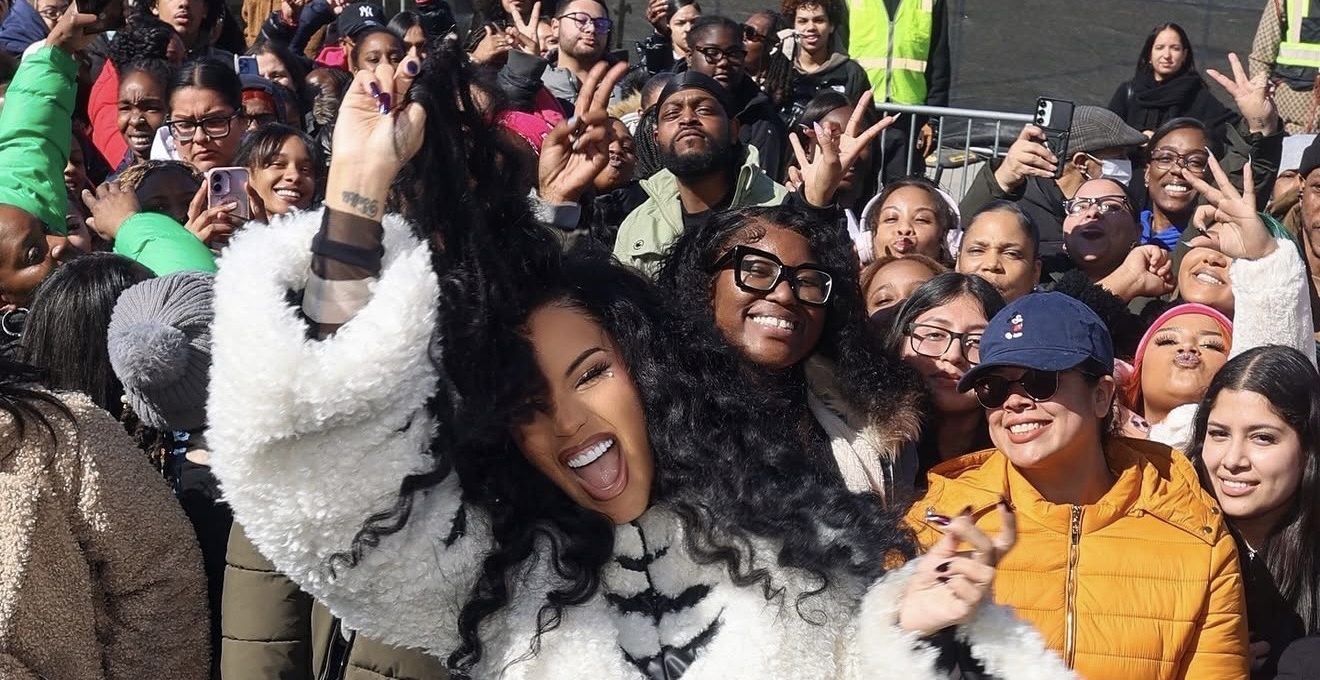
Grow Good Beauty sold out in 45 minutes — not because of celebrity, but because of strategy. The price point was deliberate, the ingredients were cultural, and the marketing spoke a language the industry has spent decades ignoring.

Photography by Freshmadeit
On the morning of April 15, 2026, Belcalis Marlenis Almaanzar, known to the world as Cardi B, watched her debut hair care line, Grow Good Beauty, sell out in 45 minutes. Every product. Gone. Not because she is one of the most recognized entertainers on the planet, though she is. But because she did something, the beauty industry, with all its resources and market research, has rarely managed to do with sincerity: she built a product for a woman who has been shopping in beauty supply stores her entire life and has never once seen herself on the label.
The Brand Started Where Most Brands Are Embarrassed to Begin
Before the wigs, the red carpet moments, and the viral beauty looks, Cardi B had a complicated relationship with her hair. She has said it plainly, without the softening language that public relations teams typically smooth over. “So I’m not even gonna lie, when I was younger, I really used to hate my hair. My cousins, they had really long hair, like the Disney princesses. Not only was my hair really coarse, but it was also really short. I used to really hate my hair texture, because when I put gel on my hair, instead of being flat, it just kind of crinkles.”
That is not a brand narrative written in a conference room. That is a memory shared by millions of Black and Afro Latina women who grew up navigating hair that the mainstream beauty industry spent decades either ignoring or incorrectly formulating for. Cardi B did not hire a consulting firm to identify her target customer. She was her target customer.
At just seven years old, she convinced her mother to let her get a perm. The damage that followed forced a significant cut and a full start over. By her teenage years, she had bleached her hair at home, watched it break, and eventually returned, in her mid-20s, to the Dominican beauty rituals she grew up with. Those rituals, not a laboratory brief, became the foundation of Grow Good Beauty.
The Price Point Was a Policy Decision
The beauty industry’s most persistent failure is mistaking accessibility for compromise. Cardi B rejected that assumption entirely.
At $19.99, the Get Rich Hair Mask is the most affordable celebrity deep conditioning mask currently on the market. Wash Cycle Shampoos and Repair conditioners are priced at $14.99. The Everything Serum sits at $17.99. The entire six-product line can be purchased for under $120, a figure that would not cover a single item from several competing celebrity-backed collections.
Revolve Group Chief Brand Officer Raissa Gerona, one of Cardi’s key partners on the line, put it plainly: “She was very adamant that when she was growing up, she was going to beauty supply stores and places like Duane Reade. So it was important to create something with incredible ingredients and branding, but at a price point that her audience could access.”
A founder insisting that her community be able to afford her product is not a small detail. It is the brand’s entire thesis.
The Ingredients Are Not a Trend. They Are a Tradition.
The Get Rich Hair Mask is formulated with avocado, coconut, banana extract, and aloe vera, drawn directly from Cardi’s DIY kitchen treatments and the Dominican beauty rituals at the heart of the brand. These ingredients carry a documented history of use across Caribbean and Afro Latina households, passed down through generations not as a wellness trend, but as practical knowledge about what works on textured, coarse, and chemically damaged hair.
The beauty industry has spent years repackaging those same ingredients at a premium for a consumer who did not originate them. Cardi B put them back where they belong, in an affordable product, made by and for the community that developed them, and used a proprietary plant-derived complex called Fiberlace to reinforce the science behind the tradition.
“I was doing my own masks in my kitchen, using what I already knew from my family’s recipes and what I learned from my own research,” she told Women’s Wear Daily. “I really took my time to get my hair looking healthy again after years of damage. And guess what? It worked.”
The Marketing Spoke the Language
Before the national launch, Grow Good Beauty debuted via a branded tour bus designed to look like a beauty supply bodega, parked outside the Bronx’s Hip Hop Museum, open for one day, built to mirror the beauty supply stores, bodegas, and neighborhood staples Cardi B grew up visiting. The brand came home before it went anywhere else.
The campaign imagery extended that same cultural fluency. Cardi B appeared in promotional content deep conditioning her hair with a paper bag over her head, a visual that required no explanation for any woman who has ever improvised on wash day, used a plastic bag to hold in heat, or learned her hair routine from her mother’s kitchen rather than a salon menu. It was specific. It was deliberate. And for the women it was made for, it was instantly recognizable.
No luxury aesthetic. No aspirational distance. Just a woman who grew up the same way her customer did, showing exactly how she takes care of her hair.
What the Sellout Actually Means
The presale had already moved through its inventory before April 15 arrived. When the official launch went live, the collection was gone in 45 minutes. The restocks of Get Rich Mask and Everything Serum sold out in 10 minutes.
Revolve Group, Cardi B’s partner on the venture, reported total net sales of $1.23 billion in 2025, and its beauty category is one of its fastest-growing divisions. They did not build this infrastructure around a celebrity cameo. They built it around a founder with a genuine customer relationship and a product with actual demand.
According to Revolve co-founder Michael Mente, Cardi B was involved in testing every product and approving every ingredient, a degree of hands-on involvement he described as increasingly rare in celebrity beauty.
What Grow Good Beauty exposed is not a gap in the market. The gap has always been there. What it exposed is how little effort most brands have made to fill it honestly. A woman from the Bronx, who hated her hair as a child, spent three years building a product rooted in her culture, priced for her community, marketed in her language, and launched in her neighborhood first.
The market responded in 45 minutes.
For women entrepreneurs building brands right now, the lesson is not about celebrity reach or influencer strategy. It is about the depth of your understanding of the person you are building for. Cardi B did not study her customer. She was her customer — and she never let the brand forget it.