Burundians Face New Visa Requirement When Transiting Through Belgium
The measure took effect on Aug. 1 and applies to Burundian nationals transiting through Brussels and other Belgian airports, with several exemptions.
 Black News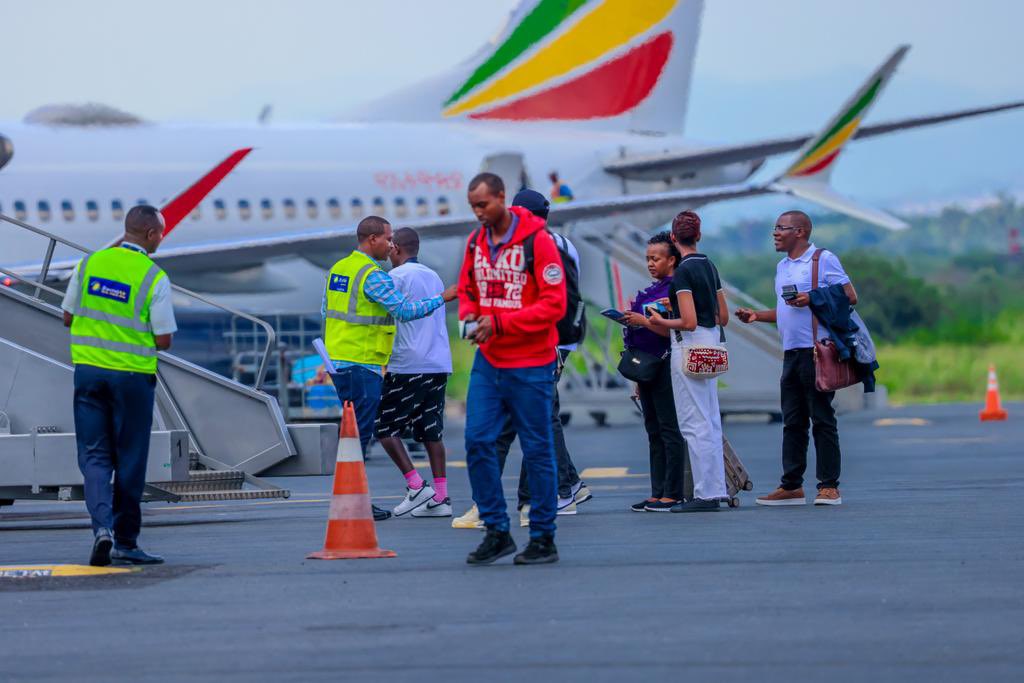

Burundian nationals transiting through Belgian airports will be required to obtain an airport transit visa from Aug. 1, a measure that applies regardless of where they reside, according to the Belgian embassy in Burundi.
The requirement applies to Burundian citizens travelling to third countries or returning to their country of residence from a third country while transiting through Brussels Airport and other Belgian airports, the embassy said in a recent statement.
“From 01/08, Burundian nationals travelling to third countries … transiting through Brussels Airport and other Belgian airports must be in possession of an airport transit visa (visa A) for Belgium,” the embassy said.
An airport transit visa, or type A visa, allows a traveller to pass through the international transit area of an airport in a Schengen member state but does not permit entry into the country’s territory.
The new Belgian requirement includes several exemptions. Burundian nationals holding a valid diplomatic passport are exempt, while service and special passports are not.
The requirement also does not apply to Burundians holding a Schengen visa, a national type D visa or a residence permit issued by a Schengen state.
Other exemptions include holders of valid visas or residence permits issued by Canada, the United States, Japan, Cyprus or Ireland, as well as holders of residence permits from Britain or Andorra. Holders of visas or residence permits from Aruba, Curacao, Sint Maarten, Bonaire, Sint Eustatius and Saba are also exempt.
Members of the families of European Union nationals and flight crew are also exempt, according to the embassy.
The Belgian government has added Burundi to a list of nationalities subject to airport transit visa requirements imposed specifically by Belgium. The list also includes the Dominican Republic, Guinea, Guinea-Bissau, Haiti for ordinary passport holders, Nepal, South Sudan, Sudan, Syria, Turkey, Yemen for ordinary passport holders, Palestinians, Uzbekistan and Tajikistan.
Burundian authorities said they were aware of the decision.
“Yes, we are informed,” Caline Nduwayo, spokeswoman for Burundi’s Ministry of Foreign Affairs, told Breaking Burundi.
“Each country is sovereign in making decisions concerning the life of its country, and according to the motivation,” Nduwayo said, without elaborating on the possible consequences of the measure.
The Belgian measure comes as Burundians also face tighter U.S. visa requirements. Since January 2026, Burundian nationals who are otherwise eligible for a U.S. B1/B2 visa may be required to post a visa bond of $5,000, $10,000 or $15,000, with the amount determined at the time of the visa interview, according to U.S. Department of State.
The measures have fuelled concerns among some Burundians about the growing difficulty and cost of obtaining visas to travel to Europe and the United States.
“Already, obtaining a passport in our country is very difficult because not everyone can afford the fees for this travel document, without even considering the visa fees required by the United States or Belgium,” said Eugene ND., a young Burundian who spoke to Breaking Burundi.
Some young Burundians say such requirements could further reduce their chances of pursuing education, employment and other opportunities abroad.
The Belgian embassy has not publicly stated the reasons behind the new airport transit visa requirement.