Choices Nobody Tells You About
Sanidia Oliver Stone founded The Morgan Oliver School for Anti-Racism in Kirkwood in 2020 to provide Black and brown students with access to high-quality education, experienced teachers, and small classrooms, as well as a curriculum built around math, literacy, enrichment, and anti-racism. The post Choices Nobody Tells You About appeared first on The Atlanta Voice.
 Black News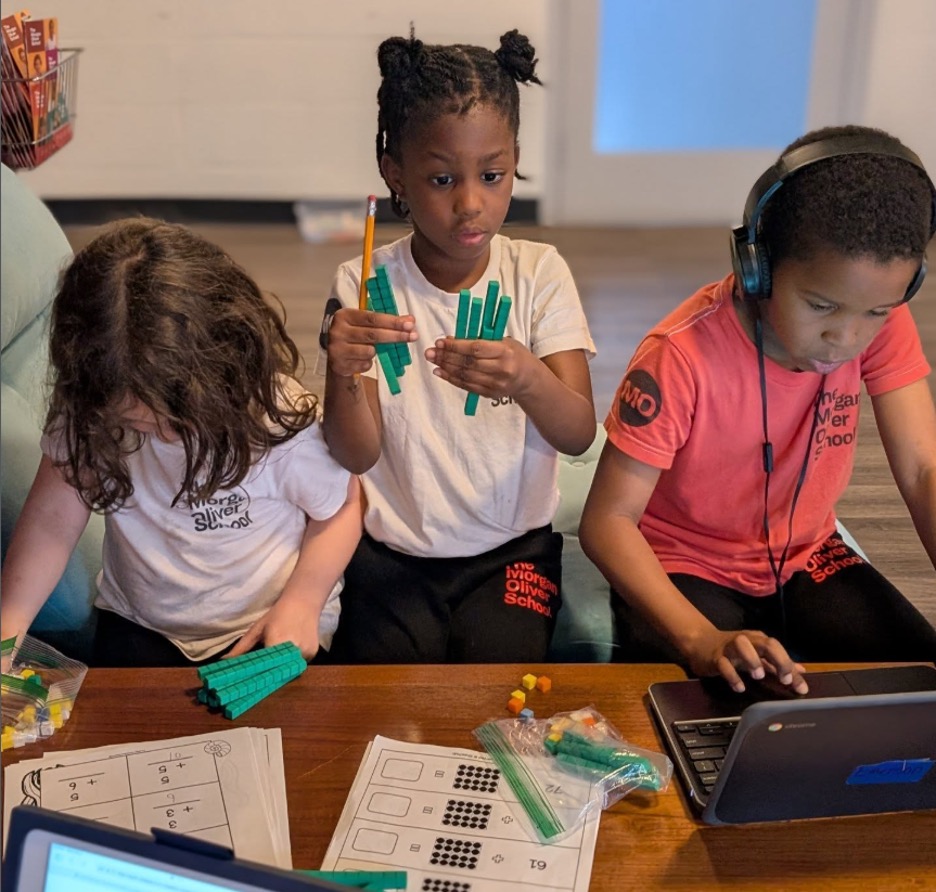


My mother moved me from one of the best public school districts in Mississippi to one of the worst the summer before my sophomore year. She had just gotten remarried. I didn’t have a say in it, nor did I understand or care about the disruptions that come with life. All I knew was that I went from a school that had everything I needed to one that looked at me sideways when I asked if they had a club I could join.
I went from a high school with resources, scholarships to pursue, and teachers who encouraged me to push beyond my limitations to one that had very little of any of these. I still made the grades. I was still the overachiever. But I was miserable, and my mother was unable to see past her new chapter long enough to hear me.
I carried that with me into parenthood. When my first son was old enough for school, I didn’t wait to see what the system would offer him. I put him in a Montessori daycare in Cobb County. In a smaller setting, he received more attention from teachers who were close enough to actually know him. Then life did what it does. I got married, moved to DeKalb County, and had to pull him out of a setting that was working. My son was paying a price, and history was repeating itself. A new marriage had rearranged the geography of his education, and I was now standing exactly where my mother once stood. The elementary school he landed in was probably one of the worst experiences he had.

I started paying attention to test scores. Like Atlanta weather, one side of town looked one way, the other side looked entirely different, and I knew that if I picked up my kids and moved, their chances would move with us. That’s the reality of Atlanta. Equity in Education, an Atlanta-based organization dedicated to ensuring all students have access to high-quality education, laid it out clearly in their 2023 school landscape report, Two Atlantas. The report profiles two students in Atlanta Public Schools, one in Buckhead and one in Lakewood, with vastly different outcomes shaped entirely by geography. As Courtney English, the chief policy officer to Mayor Andre Dickens, states in the report, you have to feed them, house them, and make sure they’re safe before you can expect them to learn.
That disparity is what led Sanidia Oliver Stone to found The Morgan Oliver School for Anti-Racism in Kirkwood in 2020. Sanidia, a former public school educator, saw the same patterns across metro Atlanta and decided not to wait for the system to correct itself. She built something instead.
With an 8:1 teacher-to-student ratio and only 32 students, the Morgan Oliver School operates nothing like a traditional classroom. Every teacher holds a master’s degree and brings at least ten years of experience. The curriculum is built around math, literacy, enrichment, and anti-racism, a deliberate counter to the removal of DEI programs and Critical Race Theory from public school classrooms. Sanidia understands that Black and brown students need to see themselves in what they’re learning and that a comprehensive history isn’t optional.
The proof is that 100% of Morgan Oliver School students perform at or above grade levels in literacy. Across Atlanta, according to the Annie E. Casey Foundation, only 21% of Black and brown children are proficient. That gap is a crisis that the Morgan Oliver School is already addressing.
What makes the model work is what I’ve been chasing for my own children across three schools and two sides of DeKalb County: experienced teachers in small classrooms who have the space to know each child individually. Sanidia explains it simply: “The student body is diverse, including children from generational trauma, environmental scarcity, and affluent backgrounds. It’s crucial to have experienced teachers in these spaces to meet the individual needs of every student.” A class of 30 can’t do that. A class of eight can.

Credit: Photo Submitted
I arrived at school choice through parenting, not policy. I was paying $1,700 a month in tuition at one point. Most parents I know can’t do that, and it’s unreasonable to expect them to. That’s what makes places like the Morgan Oliver School different. Six tuition tiers, with nearly half of its families paying under $2,000 a year. If I had known about a school like that when I was writing those monthly checks for Montessori, that would have changed my math entirely.
There’s also the Georgia Promise Scholarship, which provides up to $6,500 per student per year at approved private schools. The Morgan Oliver School qualifies. But here’s the catch, and this is the part that frustrates parents like me: right now, only new students entering kindergarten from qualifying public schools are eligible. Returning families are still waiting on the legislature to catch up.
There is privilege in knowing your options. There is privilege in being able to pick up and move to a better school district. I did it. I left the Avondale Estates side of DeKalb for Druid Hills, and my rent went from $1,900 to nearly $3,000 a month. Not every family can do that. But what families can do, what they should have access to, is to know that places like the Morgan Oliver School exist, understand what funding is available, and make an informed decision for their child.
Sanidia calls microschools “acts of survival, created by educators and parents who refuse to wait for systems to change.” I’d take it further. School choice, at its core, is empowerment. It’s a parent figuring out the educational experience their child needs and making it happen, even when the system wasn’t designed to help them do that.
You might not be able to make that move this year. Maybe not next year either. But you can start putting things in place. You can visit a school. You can look into what your state offers. You can test your child outside of what the district tells you. And you can stop waiting for a system that wasn’t built for your child to suddenly decide to prioritize them.
The post Choices Nobody Tells You About appeared first on The Atlanta Voice.