Court-Martial rejects Manjang’s bid to strike out desertion charge
The General Court-Martial, presided over by Justice Omar Cham, has dismissed a defence application seeking to strike out the desertion charge against Sanna Manjang or, alternatively, substitute it with a charge of Absence Without Leave (AWOL). The application challenged the legal sufficiency of the charge preferred against Manjang under Section 53(1)(a) of the Gambia Armed Forces Act, with the defence arguing that the particulars of the offence failed to establish the essential ingredients of desertion, particularly the requirement relating to active service or orders for active service. The defence maintained that the allegations, as presented, disclosed no more than AWOL and did not sufficiently establish the offence of desertion. However, the prosecution, led by Director of Public Prosecutions (DPP) AM Yusuph, opposed the application, arguing that the relevant provisions of the Armed Forces Act must be read together, particularly Sections 53 and 55. The State contended that Manjang remained subject to military law when he allegedly left his duty post and that his prolonged absence did not terminate his military status. It further argued that the application amounted to an abuse of court process. In its ruling, the court examined the particulars of the charge, the submissions of both parties and the applicable statutory provisions. On the question of whether the particulars disclosed desertion, the court acknowledged the distinction between desertion and AWOL, noting that prolonged unauthorized absence alone does not necessarily establish desertion where the law requires an intention not to return or to remain permanently absent. The court stated that such intention must be proved by the prosecution at trial. However, it distinguished between a charge that fails to disclose a legally essential element and one whose allegations are disputed or may be difficult to prove. It held that disputed allegations or difficulties in proving a case do not, by themselves, justify striking out a charge. On the issue of active service, the defence argued that the requirement was an essential condition of the offence and that the particulars did not allege sufficient facts to establish it. The prosecution, in response, maintained that the Act must be interpreted as a whole, relying on the qualification contained in Section 2 and the relevant provisions governing desertion. The court agreed that the legislation must be read as a whole but observed that the qualification in Section 2 did not, by itself, eliminate a condition expressly imposed by Section 53. It therefore treated the active-service question as one of statutory interpretation rather than simply a factual disagreement between the parties. The court declined to accept that the charge must automatically fail merely because the existence of active service was disputed, leaving the issue for further analysis. The court also rejected the prosecution’s argument that the application constituted an abuse of process. It held that the dismissal of an earlier jurisdiction challenge did not automatically prevent the defence from bringing a subsequent application raising a distinct question about the statutory ingredients of the charge. On the request to strike out or substitute the charge, the court described striking out as a serious remedy applicable where a charge is legally unsustainable and the defect cannot be cured. It further stated that the prosecution, rather than the court, must initiate any amendment in accordance with the applicable procedural law. The court also declined to substitute the desertion charge with AWOL merely because the defence disputed the prosecution’s allegations. Ultimately, the court dismissed the defence motion and its prayers, leaving the desertion charge in place. The prosecution was represented by Mr Yusuph, assisted by P. Gomez, A. Tambari, A. Drammeh, and RV Ojikutu, alongside Major Suwaibou Jammeh and AK Conteh. The defence was led by counsel SK Jobe, assisted by M. Bah, Commander Alieu Sanneh, Captain Augustus Mendy, and WO2 Baba FM Jaiteh.
 Black News
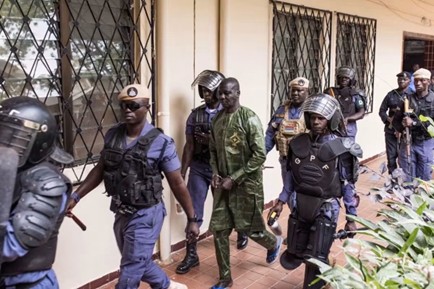
The General Court-Martial, presided over by Justice Omar Cham, has dismissed a defence application seeking to strike out the desertion charge against Sanna Manjang or, alternatively, substitute it with a charge of Absence Without Leave (AWOL).
The application challenged the legal sufficiency of the charge preferred against Manjang under Section 53(1)(a) of the Gambia Armed Forces Act, with the defence arguing that the particulars of the offence failed to establish the essential ingredients of desertion, particularly the requirement relating to active service or orders for active service.
The defence maintained that the allegations, as presented, disclosed no more than AWOL and did not sufficiently establish the offence of desertion.
However, the prosecution, led by Director of Public Prosecutions (DPP) AM Yusuph, opposed the application, arguing that the relevant provisions of the Armed Forces Act must be read together, particularly Sections 53 and 55.
The State contended that Manjang remained subject to military law when he allegedly left his duty post and that his prolonged absence did not terminate his military status. It further argued that the application amounted to an abuse of court process.
In its ruling, the court examined the particulars of the charge, the submissions of both parties and the applicable statutory provisions.
On the question of whether the particulars disclosed desertion, the court acknowledged the distinction between desertion and AWOL, noting that prolonged unauthorized absence alone does not necessarily establish desertion where the law requires an intention not to return or to remain permanently absent.
The court stated that such intention must be proved by the prosecution at trial.
However, it distinguished between a charge that fails to disclose a legally essential element and one whose allegations are disputed or may be difficult to prove. It held that disputed allegations or difficulties in proving a case do not, by themselves, justify striking out a charge.
On the issue of active service, the defence argued that the requirement was an essential condition of the offence and that the particulars did not allege sufficient facts to establish it.
The prosecution, in response, maintained that the Act must be interpreted as a whole, relying on the qualification contained in Section 2 and the relevant provisions governing desertion.
The court agreed that the legislation must be read as a whole but observed that the qualification in Section 2 did not, by itself, eliminate a condition expressly imposed by Section 53.
It therefore treated the active-service question as one of statutory interpretation rather than simply a factual disagreement between the parties.
The court declined to accept that the charge must automatically fail merely because the existence of active service was disputed, leaving the issue for further analysis.
The court also rejected the prosecution’s argument that the application constituted an abuse of process. It held that the dismissal of an earlier jurisdiction challenge did not automatically prevent the defence from bringing a subsequent application raising a distinct question about the statutory ingredients of the charge.
On the request to strike out or substitute the charge, the court described striking out as a serious remedy applicable where a charge is legally unsustainable and the defect cannot be cured.
It further stated that the prosecution, rather than the court, must initiate any amendment in accordance with the applicable procedural law.
The court also declined to substitute the desertion charge with AWOL merely because the defence disputed the prosecution’s allegations.
Ultimately, the court dismissed the defence motion and its prayers, leaving the desertion charge in place.
The prosecution was represented by Mr Yusuph, assisted by P. Gomez, A. Tambari, A. Drammeh, and RV Ojikutu, alongside Major Suwaibou Jammeh and AK Conteh.
The defence was led by counsel SK Jobe, assisted by M. Bah, Commander Alieu Sanneh, Captain Augustus Mendy, and WO2 Baba FM Jaiteh.