Dangote Refinery IPO: A New Chapter for African Capital
Africa’s capital markets are approaching a landmark moment as Nigeria’s Dangote Petroleum Refinery prepares to launch what is expected to become the continent’s largest-ever initial public offering. More than a.
 Black News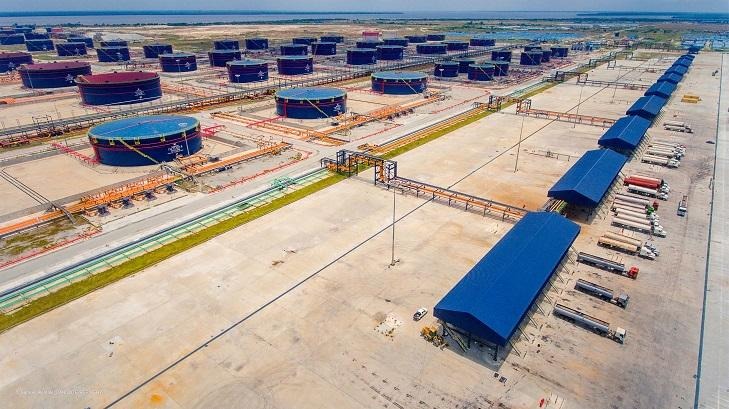

Africa’s capital markets are approaching a landmark moment as Nigeria’s Dangote Petroleum Refinery prepares to launch what is expected to become the continent’s largest-ever initial public offering. More than a major corporate transaction, the offering signals the growing potential for African capital to finance African industrial ambition.
On September 7, Dangote Refinery signed the documents for its public offering, paving the way for an IPO expected to raise about ₦2.15 trillion, or $1.63 billion, through the sale of 4.1 billion shares at ₦525 each. The offer is scheduled to open on September 14 and close on October 13, with trading expected to begin later in November.
READ ALSO: Dangote IPO 2026: Africa’s Largest Listing Transforms Nigerian Markets
The numbers behind the refinery are equally significant. Built at an estimated cost of $20 billion, the facility has a nameplate capacity of 650,000 barrels per day and has tested production at around 700,000 barrels per day. The company now plans to invest a further $14.3 billion to increase capacity to 1.4 million barrels per day by 2029.
The development demonstrates what patient industrial capital can achieve.
Nigeria has historically depended heavily on imported refined petroleum products despite being one of Africa’s largest crude-oil producers. The Dangote refinery represents an attempt to capture more value domestically by processing crude into refined products and petrochemicals.
Its transformation is already reflected in its financial performance. The refinery reported $1.82 billion in profit during the first half of 2026, compared with a $476 million loss during the same period of 2025.
For Africa’s wider industrialisation agenda, this matters.
The refinery is not simply an energy project. Its expansion is linked to storage, petrochemicals, exports and wider regional supply chains. Dangote has also announced plans for a new refinery in Kenya, signalling an ambition to develop an integrated energy business with a continental footprint.
The proposed IPO also creates a potentially important opportunity for African investors. According to reporting by the Financial Times, the offering is designed to reach as many as 10 million retail investors across Africa, widening participation beyond institutional and foreign capital.
That is an important development for African capital-market deepening.
For policymakers, the lesson is clear: large African infrastructure projects require financial ecosystems capable of mobilising domestic savings, institutional capital and international investment. Pension funds, insurance companies, sovereign investment vehicles and retail investors can become important sources of long-term capital when markets are transparent and well regulated.
The challenge now is to ensure that the IPO becomes more than a landmark transaction.
African governments and financial institutions should use this moment to strengthen local capital markets, improve investor confidence and create pathways through which African savings can finance African businesses.
The Dangote IPO demonstrates that Africa is capable of building industrial assets at global scale. The next question is whether the continent can develop the capital markets required to finance many more of them.