Disposable nappies: Oshikoto’s growing waste problem
In the 1940s, mother of three Valerie Hunter-Gordon from England was fed up with washing cloth nappies. She then used cotton wool and old parachutes to design the world’s first disposable nappy. The ‘Paddi’ was patented in 1948 and went into production the following year. Seventy years on, what was meant to be a solution […] The post Disposable nappies: Oshikoto’s growing waste problem appeared first on The Namibian.
 Black News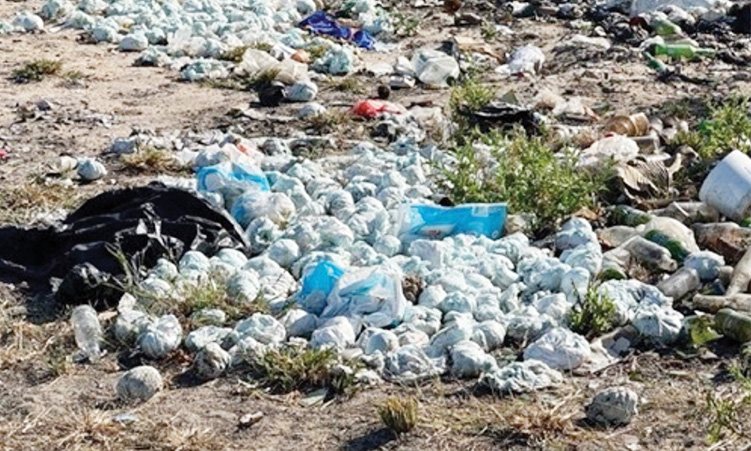
In the 1940s, mother of three Valerie Hunter-Gordon from England was fed up with washing cloth nappies.
She then used cotton wool and old parachutes to design the world’s first disposable nappy.
The ‘Paddi’ was patented in 1948 and went into production the following year.
Seventy years on, what was meant to be a solution has become an environmental nightmare for the Oshikoto region.
At Omuthiya, disposable nappies become a challenge for Ester Sheekeni, a mother of a one-year-old child, when she visits her home village of Okakoko.
Unlike at the town, where she uses bins provided by the local authority, Sheekeni has to find another way to dispose of the waste.
“At the village, I dig a hole where I bury the nappies.
When I leave to return to town, I close the hole,” she says.
Her experience reflects a growing environmental concern in the Oshikoto region, where improper disposal of disposable nappies is contributing to pollution and putting pressure on already limited waste management systems.
The warning is contained in the Strategic Environmental Assessment for the latest Oshikoto integrated regional land-use plan, which identifies disposable nappies as one of the region’s biggest waste management challenges.
The problem is particularly evident in the Onyaanya, Oniipa and Onayena constituencies.
The study found that limited formal waste disposal facilities have led to widespread littering and illegal dumping across the region.
The report says disposable nappies are often found in open spaces, near streams and rivers, and at unmanaged dumping sites.
The assessment found that nappies containing human waste are frequently discarded close to water sources, increasing the risk of contaminating both surface water and groundwater used by communities and livestock.
Environmental experts involved in the study warn that plastics and chemicals found in disposable nappies break down over time into microplastics.
These tiny particles enter the soil and water systems.
The concerns come as Namibia marks World Environment Day today, which is observed annually and encourages awareness and action to protect the environment.
“Disposable nappies contain synthetic fibre and micro-plastic materials made from polyurethane that can take over 500 years to decompose if left in the environment,” the report says.
It describes solid waste management in Oshikoto as a “high” environmental concern. It points to population growth and increasing waste generation as key factors behind the problem.
Poor disposal of nappies also poses health risks to communities.
The assessment states that unmanaged waste creates unhygienic conditions and exposes people to harmful materials, including medical waste, broken glass and other dangerous objects mixed with household refuse.
The report notes that the problem comes at a time when several constituencies in Oshikoto already face water shortages and inadequate sanitation infrastructure.
To address the issue, the report recommends that regional and local authorities strengthen waste management systems and improve waste collection and disposal services in partnership with communities and the private sector.
It also calls for dedicated disposal solutions for non-recyclable products such as disposable nappies and female hygiene products, which currently have limited disposal options.
The report recommends public awareness campaigns to encourage proper waste disposal and reduce the amount of nappy waste ending up in the environment.
It warns that if the problem is not addressed, the growing accumulation of disposable nappies could place further pressure on water resources, public health and the environment in the Oshikoto region.
The World Economic Forum (WEF) says every minute more than 300 000 disposable nappies around the world are incinerated. It also states that disposable nappies are one of the biggest contributors to plastic waste globally.
Oshikoto Regional Council spokesperson Petrus Nehale says the council has not received any complaints from Onayena residents regarding a shortage of bins or challenges they experience in disposing of nappies.
Nehale says public bins are available in the area and are emptied regularly by the council.
“We do have public dustbins, and every month we go out and empty them,” he says.
He urges residents to use the available waste disposal facilities and help keep their surroundings clean.
Environmental activist Freddy Koujo from Aminius said addressing the issue of nappy dumping requires public education and greater investment in waste management infrastructure.
“But municipalities and authorities also need to invest in waste collection, transportation and containment,” he said.
He argued that waste management is often overlooked because it is not viewed as a revenue-generating service.
“Very little investment is made in environmental protection because waste is often seen as something that does not make money.
As a result, it becomes both an aesthetic and environmental problem,” Koujo said.
The post Disposable nappies: Oshikoto’s growing waste problem appeared first on The Namibian.