DRC hits major gold supply deal with UAE to expand supply network through Dubai
The government of the Democratic Republic of Congo (DRC) has signed a gold supply agreement with UAE-based Paradigm Holdings, marking a fresh step in efforts to expand the Central African nation’s access to global bullion markets through Dubai.
 Black News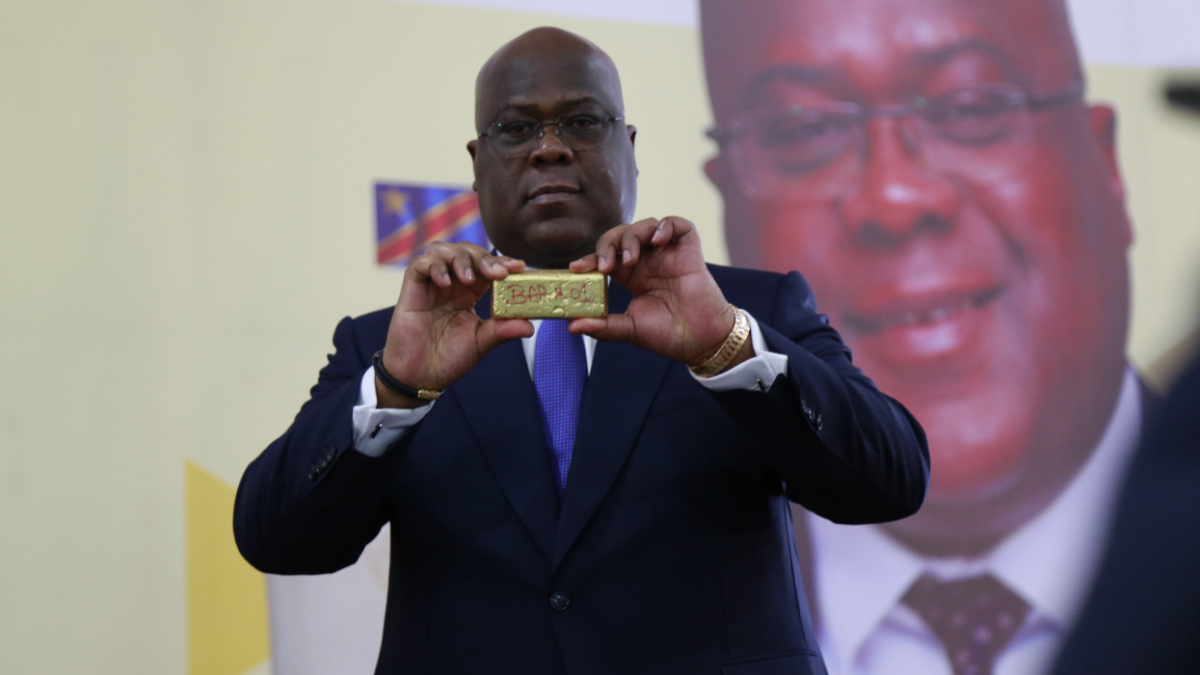

![President of the Democratic Republic of the Congo Felix Tshisekedi holds the first gold legally exported at a ceremony in Kinshasa, Democratic Republic of the Congo, on January 13, 2023. [Photo by Justin Makangara/Anadolu Agency via Getty Images]](https://ocdn.eu/pulscms/MDA_/a891dee0a4d69b9567fa03a042d80bae.jpg)
The government of the Democratic Republic of Congo (DRC) has signed a gold supply agreement with UAE-based Paradigm Holdings, marking a fresh step in efforts to expand the Central African nation’s access to global bullion markets through Dubai.
- The Democratic Republic of Congo has signed a gold supply agreement with UAE-based Paradigm Holdings to strengthen export routes via Dubai.
- The deal highlights the UAE’s growing role as a global hub for bullion trading and refining, linking African producers to international markets.
- Paradigm is expanding its footprint with refinery projects across Africa, aiming to build an integrated supply chain.
- The partnership reflects a broader shift in commodity markets toward vertically integrated models and regional value addition.
The deal underscores the United Arab Emirates' growing role as a key intermediary in global gold flows, linking resource-rich African producers with international buyers. Dubai, in particular, has strengthened its position as a major trading and refining hub, attracting commodity firms seeking efficient export routes and financial infrastructure.
Paradigm Holdings said the agreement would support the development of a long-term supply chain while securing access to one of Africa’s most mineral-rich economies. The DRC is a leading producer of gold, copper, and cobalt, which are critical to global manufacturing and the energy transition.
The partnership is the company’s third government-backed agreement with an African country in two years, reflecting a broader strategy to scale operations across the continent and integrate them with Middle Eastern trading networks.
Steven Hawkins, founder of Paradigm Holdings, highlighted the strategic importance of the UAE base to the firm’s expansion.
“Being based in the UAE gives us a powerful platform to operate globally,” he said, pointing to the country’s infrastructure and regulatory framework as key enablers of cross-border commodity trade.
He added that the DRC deal represents a significant milestone in building a broader supply network.
“With three government partnerships now in place and new refinery projects underway, we are building a scalable, long-term supply network that connects directly back into the UAE’s role as a global trading centre,” Hawkins said.
The agreement comes amid a wider shift in the commodities sector, where companies are increasingly pursuing vertically integrated models that combine sourcing, processing and trading.
Analysts say such approaches can improve supply chain transparency, lower transportation costs, and allow firms to capture more value across different stages of production.
As part of its expansion plans, Paradigm is advancing refinery projects in Cape Verde, Morocco and Rwanda. These facilities are intended to increase processing capacity closer to mining sites, reducing reliance on external refining centres while maintaining export links through the UAE.
The move aligns with a broader trend among African producers seeking to retain more value domestically by developing local processing capabilities, even as they continue to depend on established global hubs like Dubai for distribution and financing.
Paradigm Holdings, a private investment group headquartered in Dubai, operates across commodities, real estate and clean energy. The company says it has more than a decade of experience in precious metals and mineral trading, with a presence spanning the Middle East, Africa and South America.
While financial terms of the DRC agreement were not disclosed, the partnership signals deepening economic ties between African resource producers and Gulf-based trading firms, at a time when global supply chains are being reshaped by shifting demand patterns and geopolitical competition.