From Political Depression to Creative Praxis
Diaspora is conventionally understood as the dispersion of a people from a shared homeland—a formulation that could reproduce binary imaginaries of centre and periphery, origin and afterlife, homeland and shadow. Such frameworks also tend to tether diasporic belonging to lineage and return, treating political life as something transmitted through continuity. As David Eng (2010: 13) […] The post From Political Depression to Creative Praxis appeared first on Made in China Journal.
 Black News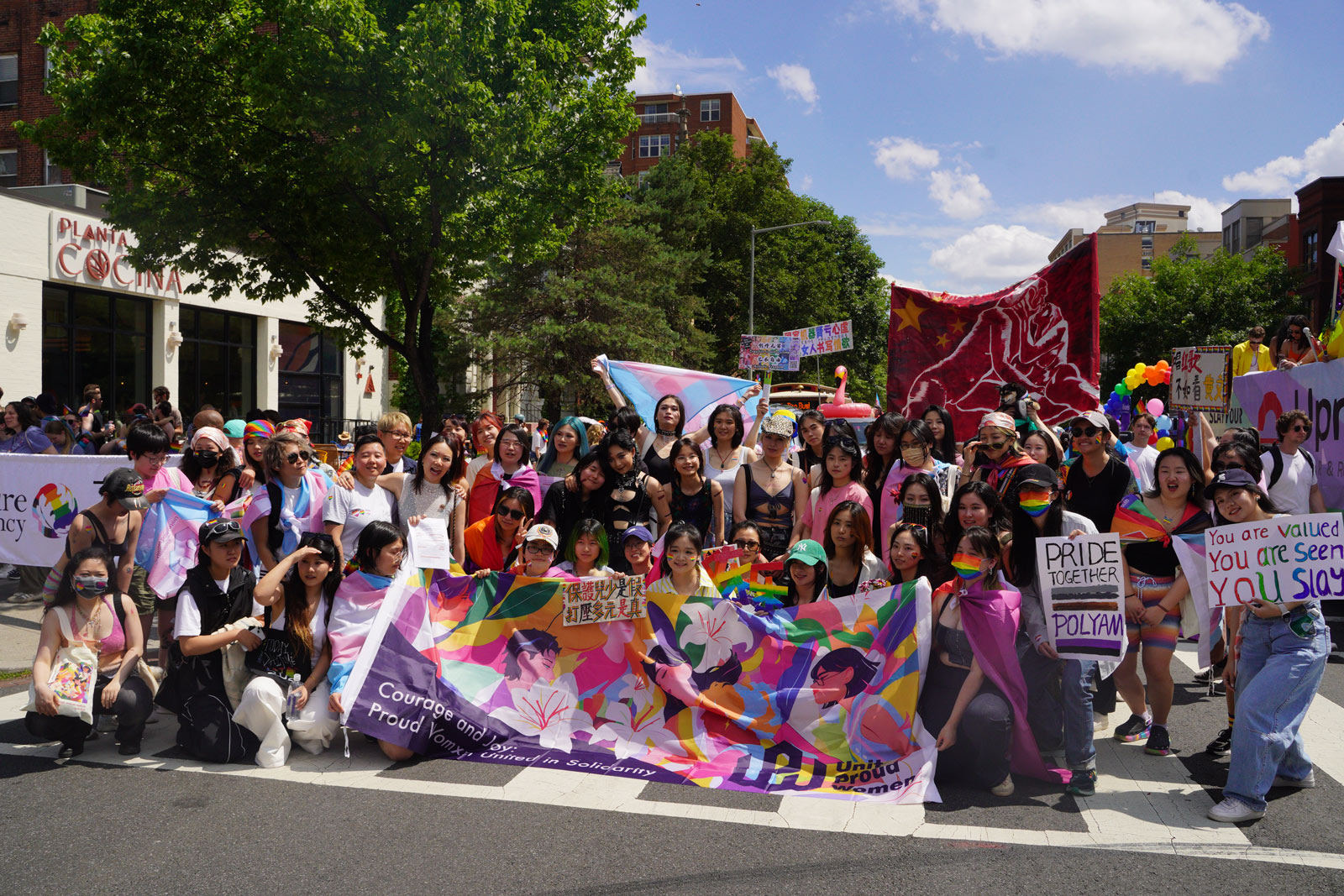

Diaspora is conventionally understood as the dispersion of a people from a shared homeland—a formulation that could reproduce binary imaginaries of centre and periphery, origin and afterlife, homeland and shadow. Such frameworks also tend to tether diasporic belonging to lineage and return, treating political life as something transmitted through continuity. As David Eng (2010: 13) argues, this spatial logic risks remaining ‘attached to genealogical notions of racial descent, filiation, and biological traceability’. On the one hand, we pay necessary homage to both earlier generations of feminist thought and to the more recent relocation of Chinese feminist activists, especially to the United States, under mounting political constraint (Lü 2023; Fincher 2016). On the other hand, we question the assumption of linear inheritance and instead centre rupture and discontinuity as generative conditions through which queer feminist worlds can be imagined and enacted in diasporic spaces. From this perspective, diasporic politics does not simply project an unbroken political tradition outward from a national origin. It catalyses new subject formations and action born of fracture (Barlow 2021).
It is this imperative to invent under fracture that brings diaspora into contact with political depression—a socially produced affective condition in which blocked possibility and the persistence of injustice saturate the horizon of collective life. In contemporary China, such a condition has intensified amid deepening surveillance. It is sharpened by the closure of community venues and by the waning momentum that followed the White Paper protests, both of which contribute to a broader foreclosure of meaningful public action. Political depression also takes shape under a state-managed happiness regime in which positivity is mobilised to legitimate authoritarian rule. Dissent is pathologised, while collective heaviness is denied a legitimate public language.
Yet, political depression does not result in indifference. We ask how political attachment instead endures through displacement and how it may be redirected into less legible but still consequential forms of collective life. We therefore move away from models of activism that privilege direct confrontation and visibility as the only recognisable forms of politics. What appears as detour or even incoherence may in fact constitute a way of sustaining political commitment under conditions of impasse.
At the same time, diasporic space is uniquely vulnerable. Perceived scarcity proliferates, as time and resources feel rationed, inviting zero-sum thinking and converting differences into antagonisms. Past trauma seeks an object and often finds it close to home; boundary policing promises control when the world refuses to yield. The heaviness tends to become a mode of governance that channels unresolved grief into intra-community adjudications over voice and belonging. This loop is vicious: infighting confirms futility and deepens the depressive realism that made conflicts likely in the first place. Attrition concentrates labour on a smaller caring cadre who are often feminised and least protected, who burn out and then exit, thinning relational infrastructure. Groups can become a theatre for triaging affects rather than building power, and paranoid reading becomes the default interpretative stance. Under these conditions, the difficulty of organising is not a failure of will but the structure of the impasse itself. The challenge intensifies in host countries where racism, the pressure to assimilate, changing migration policies, and transnational surveillance all shape what is possible. Diasporic politics thus unfolds under a double pressure of the carried impasse of home and the external constraints of settlement abroad.
In the face of such challenges, the spectre of political depression is not merely a mood to be carefully managed but also an affective structure calling for radical reimagination. The question is not only how to voice dissatisfaction, but also how to create collective structures that can hold contradiction and sustain participation amid fragmentation.
Here, we turn to United Proud Womxn (UPWomxn), a US-registered 501(c)(3) nonprofit organisation that brings together queer women across North America, Asia, and Europe. Initially formed in response to an intracommunity conflict, UPWomxn has developed into a transnational space for feminist and queer world-making through scholarly seminars, Pride-related events, interest groups, and local gatherings, attracting thousands of online followers and hundreds of attendees across all continents. Staying true to our lived experience and defining our own terms, we embrace multiplicity as a constitutive feature of queer feminist politics. UPWomxn represents a living experiment in diaspora as generative ground, a space where contradiction and displacement can be reworked into new forms of collective life.
In the rest of this essay, we first examine a more visible and affectively immediate form of feminist politics, such as stand-up comedy or what we call ‘fast feminism’. Such forms can create powerful moments of catharsis and public validation. Yet, they also raise further questions: What comes after release? If critique names the impasse, what forms of collective practice can metabolise its weight rather than momentarily discharge it? With these questions, we discuss the limits of these forms as primary political strategies, especially when catharsis replaces durable praxis. Finally, we usher in the case of UPWomxn as an invitation to reimagine possibilities of queer feminist world-making.
The Appeal and Limits of Humour as ‘Fast Feminism’
In diasporic spaces shaped by political depression, humour has emerged as an intuitive and accessible political response. Stand-up comedy has become an important platform for discussing sexism, marriage, and everyday gender inequality in both mainland China and the diaspora. Scholars note that such ‘softer’ feminisms must negotiate commercialisation and moderated critique to survive (Meng and Literat 2024; Xu and Liu 2025; Zhang and Zhou 2023). In diasporic settings, however, activists have transplanted stand-up to reclaim its censored public and political potential. Feminist and/or queer groups have proliferated in cities including New York, Boston, and Vancouver. Media coverage celebrates the phenomenon as subversive spaces where humour fights patriarchy and voices political dissent. Comedy offers an accessible venue in which shared frustration can be named without requiring specialised expertise. The laughter it produces can generate catharsis and a fleeting sense of collective recognition. Its force lies in testimonial identification: a performer narrates an injury and the audience either recognises itself in that account or comes to apprehend dimensions of oppression it has not experienced at first hand. In this way, such events can create what Lauren Berlant (2008) calls intimate publics—affective scenes in which strangers momentarily experience themselves as part of a shared world. In conditions of political depression, that promise of recognition matters.
Yet, as a primary political strategy, humour remains limited. It often operates, in Berlant’s (2008) terms, as a juxta-political form: not outside politics, but adjacent to it, repeating the crisis more readily than transforming the conditions that produce it. The intimacy it convenes is powerful but fragile. It relies heavily on shared linguistic and cultural references, which can quickly turn recognition into exclusion. The inside joke binds those already in the know while subtly positioning others as outsiders. Laughter itself becomes a new metric for political alignment, a tool of social distinction that fragments the very public it claims to build by sorting the ‘enlightened’ from the ‘problematic’.
Participation requires resources that are unevenly distributed, including disposable income and leisure time. Under such constraints, feminism risks sliding from material struggle into cultural distinction—a lifestyle marker more accessible to the economically secure than to those most burdened by inequality, those juggling reproductive labour, precarious employment, or mental illness. The question ‘Are you a feminist?’ risks being equated with, ‘How many talk shows have you performed on?’ ‘Feminism’ can be reduced to a set of marketable skills, such as crafting humour and public speaking, while other forms of essential praxis, from theoretical work to infrastructure-building, are obscured.
The testimonial form also privileges the retrospective telling of trauma, the polished anecdote of a harm that has been processed and packaged for consumption. While this narrative arc of overcoming and empowerment can be emotionally satisfying, it obscures the unmastered trauma of those who cannot yet—or may never—frame their suffering in the past tense. Systemic violence is too easily framed into personal stories of triumph that validate the speaker. When healing does occur, it is often enabled by material supports of stable income, health care, and community resources, yet the performance format can misattribute recovery to the retelling itself rather than to those vital but less-visible material conditions.
Relatedly, the drive to counter the weight of political depression and trauma can turn into an affective requirement. A norm of cheerfulness can pre-empt more difficult, ambivalent content that cannot be readily recoded into humour. The atmosphere also places an unacknowledged burden of emotional labour on the audience by implicitly creating an obligation to produce laughter. These dynamics shift the event from one of critical reception to one of affective maintenance and risk reproducing the very ‘happy and harmonious’ social script it claims to resist.
Like their counterparts in mainland China, these events are not immune to the logic of commodification. ‘Fast feminism’, much like fast fashion, can become what we call a commodified sociality. It becomes a weekend diversion, a time-killer that serves the dual function of performative political engagement and affinity-building with like-minded peers. In this economy, dissent itself is packaged and sold. Participation risks being displaced onto the acts of buying a ticket, applauding, or sharing a clip online. The political critique is transformed into an affiliation signified by the material tokens of a political identity. The act of consumption, of buying the merchandise, applauding, or sharing the post, comes to impersonate the act of political participation. It offers the immediate satisfaction of agreement with a clever take, the feeling of action in place of sacrifice or the slow labour of actual world-making.
Meanwhile, the infrastructure of these events runs on the extensive, and often feminised, free labour of volunteers. Much of the payment, however, flows eventually to the owners of the venues. It prompts the necessary inquiry: who, in this economy, truly has the last laugh? In this transactional loop, already intersectionally precarious communities are repositioned not as co-producers of a new world, but as consumers of their own liberation. Their scarce resources of time and money are absorbed by a logic that offers temporary release at the cost of long-term political capacity.
When stand-up becomes the dominant or even the most intuitive mode of political action, the consequences are grave. The very features that make it effective—speed, wit, and affective release—can foreclose other necessary political processes. With its indefinite stretches into time, political depression holds meditative and generative power (Cvetkovich 2012). Humour, on the other hand, is mostly engineered for quick release. An open mic demands witty punchlines, not the painstaking labour of metabolisation. It risks becoming an affective bypass, a painkiller that numbs the nerve of collective suffering but does not heal the wound (Ahmed 2015). The format encourages enumeration of grievances—a repetitive cataloguing of harms that, while validating, does not necessarily lead to new conditions of thinking. By retelling the language of loss, this form also risks binding the community to the very heaviness it identifies (Brown 1995), allowing them only to manage their oppression rather than fundamentally dismantle it.
The point is not to dismiss these spaces or silence the laughter, but we must remain cautious about how even the most well-intentioned movements can reinforce the very logics of power they seek to resist. When performance is mistaken for political culmination, economic resources are extracted, political energy is dissipated in catharsis, and collective intellectual labour is narrowed by a format that privileges polished delivery over shared analysis. What is needed, then, is not the abandonment of these spaces but a more accumulative strategy—one that consciously routes what public moments generate back into the infrastructures capable of sustaining collective capacity over time. This is the unglamorous yet essential work of building a different world.
Beyond Critique
Having traced the appeal and limits of a popular form of feminism, the question that follows is what it would mean to build a political form capable not merely of expressing depression, but also of metabolising it. After all, political depression is not something to be simply discharged or cured through momentary release. Nor is it best understood through the increasingly individualised languages of mental health alone. It is both affect and diagnosis, wound and way of knowing.
UPWomxn approaches political depression as a condition from which thought must begin. It asks what kinds of knowledge become possible when one does not seek immediate remedy or cheerful resolution but instead remains with disorientation and exhaustion long enough for them to brew new conditions of thinking. In this sense, UPWomxn cultivates a different relationship to knowledge itself—one that treats historical impasse not as the end of thought, but as the condition for producing it otherwise.
This orientation resonates with historian Tani Barlow’s insistence that subjects are formed within historically specific conditions of intelligibility rather than freely standing outside them. At any given moment, political actors are bounded by what appears conceivable or actionable. Yet, those limits are also inherently unstable. UPWomxn’s practice begins from this tension to challenge the feeling of constriction in political depression. It seeks to identify the conditions under which feminist and queer knowledge can be produced in the present while also orienting itself towards what Barlow might call a future anterior: not simply what is, but what will have become thinkable through collective experiment.
In line with this philosophy, UPWomxn’s reading groups, seminars, and public conversations are designed to treat theory as a tool for collective production rather than individual acquisition. They are oriented towards radical revolt: collective attempts to name the conditions of the present era, to read through the violence of the episteme, and to turn shared, intense emotions into sociohistorical understanding. Theory becomes useful to the extent that it unpacks the conditions that produce political depression and illuminates cracks within. This orientation runs against a common reflex in diasporic activist spaces, where sustained, rigorous scholarly analysis is too readily dismissed as ‘inaccessible outside of elites’ or ‘produced by inherently oppressive institutions’, thus foreclosing the very forms of knowledge and solidarity crucial to any sustainable revolution.
We invite scholars to reflect on the historical and political conditions that made ideas possible. Such conversations treat scholarship not as detached knowledge, but as embedded in struggles over subject formation. We think with Tani Barlow, Gail Hershatter, Judith Butler, and Jack Halberstam, among others, not to stage an abstract canon, but to actively put into conversation transnational feminist histories. The point is not to resolve differences into coherence, but to generate new angles of vision from those collisions. Through this process, gender and sexuality appear less as fixed identity categories than as proliferating and historically contingent forms.
On the other hand, political depression thrives on disorientation. It narrows horizons, making the present an overwhelming totality. UPWomxn responds by building collective sites in which the present can be historicised and made available to thought experiment. It treats depression as evidence of social contradiction and blocked transformation. Once shared feelings of impasse are rendered legible as historically conditioned, they can begin to be reorganised into analysis, and from there into action.
Chaotic Community
This intellectual practice is inseparable from UPWomxn’s organisational form. The organisation itself emerged from intracommunity conflict. Rather than disavowing that origin, we underwrite conflict as the very grammar of queer feminist life in a shattered world. Rather than staging packaged humour, we face head-on the stakes of queer life and queer death: their precarity, failure, and gory cruelty become a dark humour all their own. Rather than craving the fantasy of order, we embrace the chaos.
Political depression often generates an impulse towards control that can take forms of boundary policing and purification. These measures become attractive precisely because the external world feels ungovernable. UPWomxn resists this inclination by questioning the value of control. In practice, this means hierarchy is deliberately flattened through self-organised projects, in which responsibility follows from labour rather than formal title. Members are encouraged to build new initiatives and challenge existing practices, rather than wait for permission from a centralised leadership. In this sense, we reject not only external authoritarianism, but also any shadows of authoritarianism that can emerge within oppositional communities when marginalisation is displaced into internal discipline.
In fact, UPWomxn’s commitment to inclusion becomes clearest at the very point such threats emerge. Organisers debate priorities, interrupt one another, criticise, feel wounded, and temporarily withdraw. Yet, these moments do not automatically trigger expulsion or moral quarantine. In a political landscape in which many queer communities are exhausted by infighting and attrition, UPWomxn instead strives for a social infrastructure of persistence—the capacity to remain politically and socially attached even when conflicts cannot be fully resolved.
This is one way through which UPWomxn metabolises political depression. Rather than allowing unresolved pain to harden into paralysis or intracommunity annihilation, it creates a structure in which conflict can be worked through without becoming fatal to collective organisation. If political depression is partly sustained by the sense that every fracture suggests futility, a community that survives disagreement without idealising consensus is a powerful displacement of that logic.
The values of radical inclusion and plurality also guide our programs. UPWomxn blends street-level pragmatism with theoretical ambition, creating a space in which practical survival and conceptual inquiry are not opposed but mutually constitutive. Reading groups coexist with practical workshops, Pride events sit alongside legal consultations, mock interviews, and technical skill-sharing. We recognise that under contemporary conditions of precarity, livelihood is not a side job in relation to feminist politics. Economic vulnerability and immigration pressures are not distractions from queer world-making but among its central conditions. By addressing these needs directly, the organisation refuses the split between ‘pure’ political work and the supposedly secondary work of everyday sustenance.
The same orientation shapes its transnational collaborations. Exchanges with feminist and queer organisers, legal advocates, and scholars across multiple national settings widen the organisation’s repertoire without collapsing difference into sameness. These collaborations do not presume a uniform stance. Rather, they generate practical and conceptual resources that can travel unevenly across contexts. In practice, this means building infrastructure rather than imposing structure: organising salons, workshops, reading groups, legal conversations, translation projects, and compilations of conflicting or even irreconcilable writings, so that disagreement can be openly dissected without being forced into premature closure. What emerges is not a unanimous global feminism, but a transnational infrastructure of partial solidarity based on improvisation.
Revolutionary Advocacy
UPWomxn’s response to political depression is at once intellectual, organisational, and explicitly political. Yet, its advocacy differs from the spectacular model of visibility. Rather than centring public performance as an end in itself, we seek to convert moments of visibility into grounded intervention. We organise with intention around accumulated micro-efforts to produce lateral shifts in everyday conditions, so that our fidelities reside less in spectacle than in the conditions that make political women subjects possible (Barlow 2004; Badiou 2005).
This is evident in its use of Pride and other public-facing events. Such occasions can provide tactical openings for direct statements against state violence and gendered injustice. But within UPWomxn, visibility is treated as a means rather than an end. Public actions are valuable insofar as they are tethered to longer-term projects of preservation, pedagogy, and collective capacity. This is why the organisation treats documentation as an important form of advocacy. We publish manifestos that guide our actions (Yang and Yang 2023) and work with open-access counter-institutional projects such as ‘positions press’ by archiving oral-history initiatives that encourage community members to preserve archives from generations of women across war and revolution (Hershatter 2013; Freedman 2023). These materials enable knowledge creation for contemporary and future intellectuals and researchers, directly answering longstanding arguments about the political power of archiving (Benjamin 2002).
Archiving is especially important under political depression, where historical discontinuity often intensifies despair. When repression fragments historical memory and isolates actors from longer genealogies of struggle, the present can appear utterly hopeless like a black hole. Community-based archiving pushes against that temporal contraction. It situates current impasses within longer histories of women’s and queer world-making. In so doing, it transforms solitary confusion into a sense of collectivity based on a sociohistorical account of the present. Such transformation is politically consequential because it reorients affect. Despair becomes less a proof of personal problems than an index of historical conditions that can be studied and thus contested.
UPWomxn’s attention to resources also marks a deliberate rupture from the commodified circuits of modern organising. Rather than monetising belonging through merchandise, it emphasises transparent circulation and material accountability. During Pride events, for example, we distributed free materials as gestures of solidarity rather than selling merchandise. This commitment extends to full financial transparency, and we maintain full public disclosure of all financial activities including itemised expenditure and a donor list. Heeding The Revolution Will Not Be Funded (Incite! 2017), our deliberate practices reflect a broader political commitment to keeping queer feminist labour from being immediately recaptured by the logics of consumption and the nonprofit industrial complex. We relentlessly drag the question away from the theatre of symbolic affiliation and force it back to the bedrock of material consequence: where do resources flow, who controls them, and how might they be routed back towards the community?
The praxis of UPWomxn amounts to what we term a modest universality. It is not the false universalism that erases difference, nor the thin particularism that cannot breathe outside its own immediate experience. It is instead a situated but expansive commitment to building forms of organising that outlive the conditions that first called them forth. Through the steady, iterative rhythm of our shared labour, UPWomxn works to force open the horizon of possibility. It is in these microscopic but irrevocable shifts that we quietly rewrite the baseline conditions of collective life.
What we seek, then, is not to advance a simple countermodel to ‘fast feminism’, but to inaugurate a different political temporality. If the former privileges affective release and legibility, UPWomxn anchors itself in the slower and less glamorous forms of creation including but not limited to study, archiving, practical support, and organisational experimentation. We do not disavow the pleasures of recognition or the value of public expression, but we refuse to mistake the spark for the fire. We will not accept a fleeting release as the culmination of politics. Ultimately, this is the wager of diasporic queer feminist world-making. When political depression saturates the horizon, the task is not only to critique the structures that produce despair, but also to build vessels capable of holding our collective exhaustion and reworking it without collapsing under its weight. This requires spaces that do more than ventilate injury. It demands enduring structures that preserve memory, redistribute labour, and sustain our participation—even, and especially, when the future remains stubbornly out of reach.
Featured Image: ‘United Proud Women 2025 DC World Pride Contingent’. Source: Mengmeng Wu (@moeeee08 on instagram)
References
Ahmed, Sara. 2015. The Cultural Politics of Emotion. 2nd edn. London: Routledge.
Badiou, Alain. 2005. Being and Event. London: Continuum.
Barlow, Tani E. 2004. The Question of Women in Chinese Feminism. Durham, NC: Duke University Press.
Barlow, Tani E. 2021. In the Event of Women. Durham, NC: Duke University Press.
Benjamin, Walter. 2002. The Arcades Project. Edited by Howard Eiland and Kevin MacLaughlin. Cambridge, MA: The Belknap Press.
Berlant, Lauren. 2008. The Female Complaint: The Unfinished Business of Sentimentality in American Culture. Durham, NC: Duke University Press.
Brown, Wendy. 1995. States of Injury: Power and Freedom in Late Modernity. Princeton, NJ: Princeton University Press.
Cvetkovich, Ann. 2012. Depression: A Public Feeling. Durham, NC: Duke University Press.
Eng, David L. 2010. The Feeling of Kinship: Queer Liberalism and the Racialization of Intimacy. Durham, NC: Duke University Press.
Fincher, Leta Hong. 2016. ‘China’s Feminist Five.’ Dissent 63(4): 84–90.
Freedman, Estelle B. 2023. ‘“Not a Word Was Said Ever Again”: Silence and Speech in Women’s Oral History Accounts of Sexual Harassment.’ The Oral History Review 50(1): 4–22.
Hershatter, Gail. 2013. The Gender of Memory: Rural Women and China’s Collective Past. Berkeley, CA: University of California Press.
Incite! 2017. The Revolution Will Not Be Funded: Beyond the Non-Profit Industrial Complex. Durham, NC: Duke University Press.
Lü, Pin. 2023. ‘Stay Angry and Leave Hope for Tomorrow: Understanding the Feminist Movement in China.’ Made in China Journal 8(1): 26–31.
Meng, Xingyuan, and Ioana Literat. 2024. ‘#AverageYetConfidentMen: Chinese Stand-Up Comedy and Feminist Discourse on Douyin.’ Feminist Media Studies 24(8): 1914–30.
Xu, Deya, and Tingting Liu. 2025. ‘“Normal Confident Guys”: Chinese Female Stand-Up Comedians Performing, Triggering, and Commercializing the “Female Complaint”.’ Feminist Media Studies 25(5): 1116–31.
Yang, Tori Shucheng, and Yuxin Yang. 2023. ‘Queer World-Making for Collective Change.’ positions politics. positionspolitics.org/queer-world-making-for-collective-change.
Zhang, Tong, and Kaiyuan Zhou. 2023. ‘Fun Young Ladies: Modern Feminism and China’s Stand-Up Comedy.’ Women’s Studies International Forum 99(July): 102788.
The post From Political Depression to Creative Praxis appeared first on Made in China Journal.