HAITI-UN High Commissioner warns Haiti must not be allowed to fail.
GENEVA, CMC -The United Nations High Commissioner for Human Rights, Volker Türk, says despite some success in containing their activity […]
 Black News

GENEVA, CMC -The United Nations High Commissioner for Human Rights, Volker Türk, says despite some success in containing their activity in parts of the capital, Port-au-Prince, the criminal gangs in Haiti “continue to adapt and expand, re-emerging in new areas and constantly rearming.
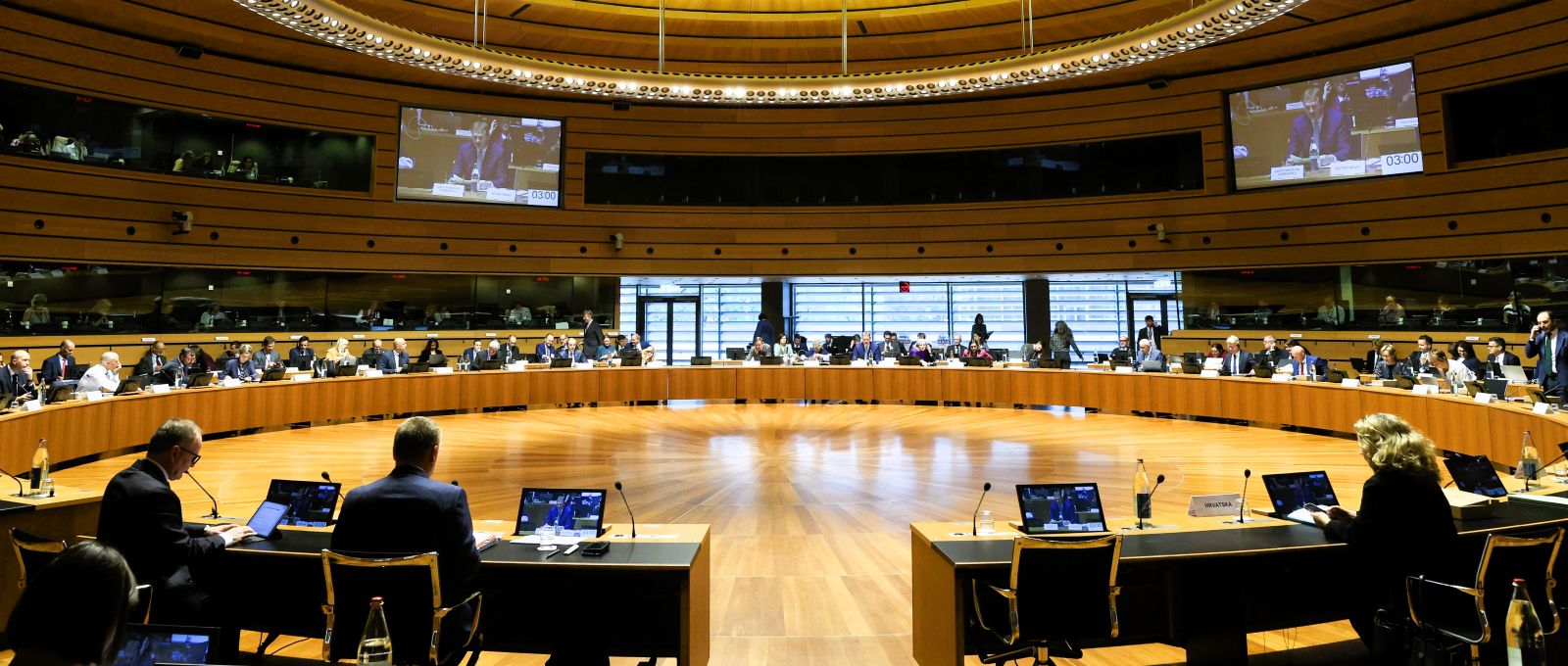
“My heart goes out to the people of Haiti, often trapped between gang violence and heavy-handed responses,” Volker told the 63rd session of the Human Rights Council in an update on the human rights situation in Haiti.
He said the recent attacks in Kenscoff and Gressier, and the growing gang presence in the Sud-Est department, point to a strategy of seizing new territory and key transport routes, threatening stability across and beyond Haiti and leaving destruction in its wake.
On Monday, at least 11 people were killed and several others injured in Gros-Morne’s third communal section as criminal gangs went on a shooting spree.
The interim Mayor, Hubert Cénéac, said the killings followed a confrontation between the Kokorat San Ras gang and a Sri Lankan contingent of the Gang Suppression Force (GSF) in the nearby Savane Longue communal section.
Also on Monday, the United Nations Security Council voted to extend the mandate of the 5,500-strong GSF by six months, until 31 March 2027, as Haiti prepares for elections in December.
Volker said the Gang Suppression Force’s (GSF) first operations, mandated by the UN Security Council, marked a long-awaited step toward greater security.
“But the Force remains far below the strength needed. This week’s renewal of its mandate needs to be followed by full, accelerated deployment with firm human rights safeguards embedded,” Volker said.
He is urging all countries to support the rapid, full deployment of the GSF with the equipment it needs and in full compliance with human rights.
“The Government needs to ensure that all security operations – by State or private actors – are firmly grounded in international human rights law. My Office has provided human rights training to members of specialized police units and the Gang Suppression Force, and we are ready to do more.”
The GSF had replaced an earlier Kenyan-led security mission. About 1,500 to 1,600 personnel are currently deployed, with its main function being to restore public safety, secure vital infrastructure, and allow the government to function. The GSF is expected to reach its quota of 5,500 personnel in Haiti by October this year.
Volker said during the reporting period, from January 1 to September 11 this year, his Office had documented at least 5,700 people killed or injured by gangs or during operations against them.
He said gangs have also kidnapped more than 230 people and raped over 1,000 women and girls. And the real figures are likely much higher.
Volker said that law-enforcement operations continue to raise serious concerns about the unnecessary and disproportionate use of force.
“Since the beginning of the year, more than half of all casualties occurred in the context of security operations, with hundreds of people struck by stray bullets and explosive drones,” Volker said, telling the Human Rights Council, adding that the number of summary executions carried out by specialized police units has fallen significantly, by almost half compared with 2025.
“However, people allegedly associated with gangs continue to be summarily executed.
In some areas, so-called self-defense groups killed or injured some 280 people so far this year.”
Volker said that relentless violence has crowded out attention and resources for the protection of basic rights. He said extortion, looting, and destruction of property are crippling economic activity. Constant danger prevents people from reaching schools, hospitals, and essential services.
Volker said that more than half of Haitians face acute food insecurity, 40 percent lack access to basic healthcare, and close to 1.5 million people are forcibly displaced, with many more living with their bags permanently packed.
But Volkver also noted that an estimated 30 to 50 percent of gang members are children, noting that last year, the recruitment and use of children by gangs nearly tripled.
“For many children in Haiti, joining a gang can be the only way to survive. But no child should be forced to choose between their own life and their neighbors’ safety. Children are exploited, trafficked, and abused – while mechanisms to prevent this and reintegrate them into society remain woefully inadequate.”
Volker said also that the prisons are packed to bursting, with inhuman, degrading conditions. He said across the French-speaking Caribbean Community (CARICOM) countries, prisons are, on average, operating at more than three times their official capacity and that at least 125 people died in detention this year alone.
The UN Human Rights official said that free and fair elections are the only legitimate way to restore constitutional order.
“However, given all I have just described, it is difficult to conceive that the conditions for credible elections later this year are in place. Those responsible for serious human rights violations and abuses must not be allowed to enter the race.”
The Provisional Electoral Council (CEP) said that since September 22, more than 628,755 voters had been entered into the electoral roll, two months after the registration process began, representing over 10 percent of the potential electorate, namely citizens holding a National Identification Card.
The first round of long-awaited presidential and legislative elections, alongside a constitutional referendum, is scheduled for December 13, marking the first time Haitians will cast ballots since 2016, when President Jovenel Moise was elected. Moise was later assassinated on July 7, 2021.
Volker said that “this chaos has deep, intertwined roots, fed by greed and impunity both within Haiti and beyond. The only way to cut those roots is through a comprehensive approach that looks beyond security.”
He said that a handful of powerful individuals are exploiting and perpetuating people’s grievances and the weakness of state institutions to pursue their own interests, adding, “These forces are strategic and well resourced.
“Many gang leaders are subject to international sanctions. Those sanctions also need to cover all those pulling the strings behind criminal networks and benefiting from them. And they need to be matched by accountability on the ground to strengthen their practical impact.”
He said regarding the arms embargo, to save lives and restore order, the continuous illicit flow of weapons and ammunition into Haiti must end.
“It is essential that the arms embargo imposed by the Security Council be fully respected and effectively implemented. States need to act urgently and decisively to crack down on arms trafficking and choke off these flows at their source.”
Volker said that nearly five billion US dollars in remittances flowed into Haiti last year, around one sixth of its gross domestic product (GDP).
“These transfers are a lifeline for the country’s economy and its people. Yet we are seeing a crackdown on Haitians who have fled abroad,” he said, noting, however, that so far this year “more than 220,000 people, including nearly 20,000 children, have been forcibly returned to Haiti from several countries in the region.
“Many of these people fled for their lives or those of their families. Sending them back puts those lives at risk once again, in violation of the principle of non-refoulement,” Volker said.
He said that the authorities also need to prioritize strengthening the rule of law and the justice system – to end impunity and to decongest prisons.
“Ensuring humane conditions of detention is paramount – particularly as the GSF scales up its operations.
Volker said that two specialized judicial units, supported by his Office and the UN Office on Drugs and Crime, are intended to help investigate mass atrocities, sexual violence, and complex financial crimes.
“I urge the authorities to make them fully operational, and all states to extend their support.
Broader efforts are also needed to fight corruption, poverty, and inequality. This is key to lasting stability and essential to prevent gangs from preying on children.
There is much work to be done, and across all these areas, the Haitian government needs real, sustained international support,” Volker said, adding that “those who profit from the current state of disorder are determined to see Haiti fail.
“They seek to fray its social fabric and destroy the prospects of a stronger state. We cannot allow that to happen.We need all eyes on Haiti.
“And we must never lose sight of the fact that, across the country, communities and individuals are showing extraordinary courage, resilience, and dignity – every day. Every morning, children leave homes without running water, dressed in immaculate, carefully ironed uniforms, and set out for school.
“We must help bring closer the day when hope – not fear – walks with them on the road,” Volker told the Council.
Meanwhile, Stéphane Dujarric, the spokesman for the Secretary-General, Antonio Guterres, said Friday that the UN and our humanitarian colleagues in Haiti say that, as a result of this week’s deadly attack in the commune of Gros-Morne, in the Artibonite department, several local and international humanitarian partners have temporarily suspended activities and staff movements in the area, disrupting the delivery of life-saving assistance.
“Nearly 90,000 people in Gros-Morne were expected to receive humanitarian assistance this year, with some 30,000 reached by the end of June. Continued insecurity is now delaying planned assistance for tens of thousands of people,” Dujarric told the daily UN press briefing.
“Once again, and here as well, we need safe, rapid and unhindered access for humanitarian colleagues so they can reach whoever needs it and wherever they may be,” he added.