Higher education institutions urged to embrace AI responsibly
Rethabile Pitso INSTITUTIONS of higher learning have been urged to adopt Artificial Intelligence (AI) responsibly, with speakers at a Higher Education Summit emphasising that the technology should enhance teaching and learning without compromising academic integrity. The call was made yesterday during the Higher Education Summit hosted by the Limkokwing University of Creative... The post Higher education institutions urged to embrace AI responsibly appeared first on Lesotho Times.
 Black News

Rethabile Pitso
INSTITUTIONS of higher learning have been urged to adopt Artificial Intelligence (AI) responsibly, with speakers at a Higher Education Summit emphasising that the technology should enhance teaching and learning without compromising academic integrity.
The call was made yesterday during the Higher Education Summit hosted by the Limkokwing University of Creative Technology (LUCT) in Maseru under the theme, “Advancing Higher Education in the Age of AI.” The event brought together professionals from the public and private sectors to discuss the opportunities and challenges presented by AI through presentations and panel discussions.
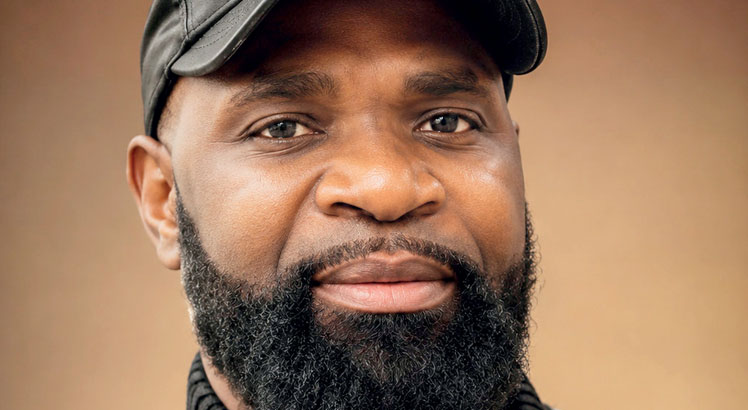
Among the keynote speakers was the Enterprise Technology Solutions General Manager, Desigan Naidoo, who encouraged universities and lecturers to integrate AI cautiously, stressing that the technology should complement, rather than replace, human knowledge, critical thinking and professional judgement.
Mr Naidoo said AI had the potential to address resource constraints faced by universities by expanding lecturers’ reach and providing personalised support to students.
“Lesotho has a good number of highly qualified lecturers but like in many other universities, they are facing some resource constraints. AI can extend the reach of one lecturer to thousands of students simultaneously through intelligent tutoring systems adapting to each learner’s pace, and that is remarkable,” Mr Naidoo said.
He said AI-powered assessment tools could help educators identify struggling students well before the end of the semester, allowing timely academic interventions.
“AI-powered assessments continuously monitor student progress, revealing before the end of the semester whether a student is likely to proceed or fail. This allows lecturers to put interventions in place before that happens,” he said.
Mr Naidoo added that AI could help level the playing field for students from disadvantaged educational backgrounds, particularly those for whom academic English was a second or third language.
“Used correctly, AI is not a shortcut but a scaffold — a support structure for students,” he said.
However, he cautioned that the benefits of AI could only be realised through proper governance and institution-specific policies.
“The difference between AI as an enabler and AI as a threat is governance. Every faculty needs a disciplined, faculty-specific AI policy. The Faculty of Engineering will require different guidelines from the Faculty of Philosophy. What is acceptable in a graphic design studio is very different from what is appropriate in law or medical education.
“Governance must be embedded in assessment design, examination procedures and curriculum implementation, not stored away in a filing cabinet. There should also be at least one person within every institution responsible for AI governance,” he said.
Mr Naidoo also warned against overreliance on AI-generated content, noting that speed should never be mistaken for accuracy.
“Quick answers are not always the most accurate or well-considered. Information generated by AI should always be verified before it is used in academic work.
“If your assessment can be completed entirely by AI in 30 seconds, then you are assessing the wrong thing. Alternatives such as oral presentations and in-person defences allow lecturers to evaluate genuine understanding. AI cannot look an assessor in the eye, but a student can,” he said.
LUCT Director of Academic Management, Dr Lelingoana Lerotholi, said the summit provided an important platform for higher education institutions to share knowledge and develop best practices for integrating AI into education.
“Today’s occasion provides an important platform for us to explore how AI can improve teaching and learning, support research and innovation, and equip graduates with the knowledge and skills needed to thrive in the digital space,” Dr Lerotholi said.
He acknowledged that while AI offered significant opportunities, it also presented ethical challenges that institutions could not ignore.
“Issues such as integrity, data privacy, equity and morality are among the concerns that require robust discussion in the AI space,” he said.
Dr Lerotholi further encouraged institutions to embrace AI as a catalyst for global competitiveness while maintaining high ethical standards.
“AI is shaping the way we teach, learn, conduct research and prepare students for the future. It speaks volumes about our quality assurance systems and processes. As institutions of higher learning and across various sectors of the economy, we have a huge responsibility to embrace technological innovation while ensuring absolute adherence to ethical conduct,” he said.
The post Higher education institutions urged to embrace AI responsibly appeared first on Lesotho Times.