Home Affairs cuts passport backlog
…as ministry moves to hire permanent staff to curb corruption Seithati Motsoeneng THE Ministry of Home Affairs says it has significantly reduced the country’s passport backlog while rolling out reforms aimed at improving service delivery and curbing corruption. Home Affairs and Police Minister Voeswa Tsheka this week announced that the ministry had processed 23 000... The post Home Affairs cuts passport backlog appeared first on Lesotho Times.
 Black News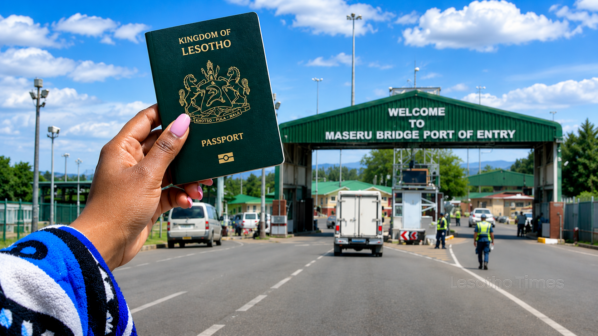
…as ministry moves to hire permanent staff to curb corruption
Seithati Motsoeneng
THE Ministry of Home Affairs says it has significantly reduced the country’s passport backlog while rolling out reforms aimed at improving service delivery and curbing corruption.
Home Affairs and Police Minister Voeswa Tsheka this week announced that the ministry had processed 23 000 passport applications, reducing the backlog from 61 000 to 38 000.
Ms Tsheka made the remarks this week in Maseru while addressing her maiden press conference since being appointed the minister in April.
She said the progress had been achieved despite the ministry continuing to grapple with outdated technology.
“This reduction has been achieved notwithstanding the persistent challenges posed by our existing systems. Our objective is to ensure passports are issued within prescribed timeframes, thereby upholding Basotho’s freedom of movement,” Ms Tsheka said.
The ministry has long faced criticism over delays in issuing passports, with thousands of Basotho struggling to obtain travel documents needed for employment, education, medical treatment and family commitments.
Ms Tsheka also revealed that 16 Home Affairs officials had been charged in court for allegedly demanding bribes from citizens seeking passports.
She said one of the biggest obstacles to efficient service delivery remained the ministry’s obsolete information technology infrastructure.
“We still operate on Windows 7, an obsolete operating system, and even if the ministry were to significantly enhance service provision, this systemic bottleneck would inevitably endure,” she said.
To improve operations, the ministry had purchased new printers and other essential consumables. However, Ms Tsheka said more work was needed to modernise internal systems.
“We have procured the printers and consumables; however, we still need to address certain internal operational discrepancies within the ministry to establish a fully automated system,” she said.
She expressed confidence that once the automation process is completed, the ministry would consistently meet turnaround times for both new passport applications and renewals.
Ms Tsheka admitted that the ministry had failed Basotho for years by taking too long to issue passports, a problem previously highlighted by the Ombudsman Advocate Tlotliso Polaki.
“For the longest time, we have consistently failed Basotho, as underscored by the Ombudsman, in the timely and efficient issuance of their passports.
“The ministry is now committed to rectifying these shortcomings and delivering improved services to Basotho,” she said.
Ms Tsheka also announced that the ministry would begin recruiting permanent staff as part of efforts to strengthen accountability and eliminate corruption.
She said the move followed numerous cases of misconduct involving Home Affairs officials and would ensure stricter recruitment standards.
“Home Affairs stands as one of the nation’s most critical institutions, akin to security agencies, and as such, it should emulate the rigorous hiring strategies and procedures employed by security institutions,” she said.
Under the new recruitment policy, all candidates for permanent positions would undergo comprehensive vetting before being appointed.
“Henceforth, permanent staff designated for Home Affairs will be rigorously vetted before deployment within the ministry to ensure staff credibility,” Ms Tsheka said.
She said the ministry had relied heavily on temporary staff over the years, a practice that had weakened oversight and allowed unqualified or compromised individuals access to sensitive processes.
According to Ms Tsheka, the shift to permanent employment would create a more stable workforce, provide clear career paths and strengthen performance monitoring.
She said the reforms were expected to improve service delivery while making it more difficult for corrupt practices to flourish within the ministry.
The post Home Affairs cuts passport backlog appeared first on Lesotho Times.