Howard University Students Didn’t Boo Muriel Bowser Because They’re Rude. They Booed Because They Live Here
Anybody pretending to be shocked has not been paying attention to the city Howard University students had to survive while earning their degrees.
 Black News
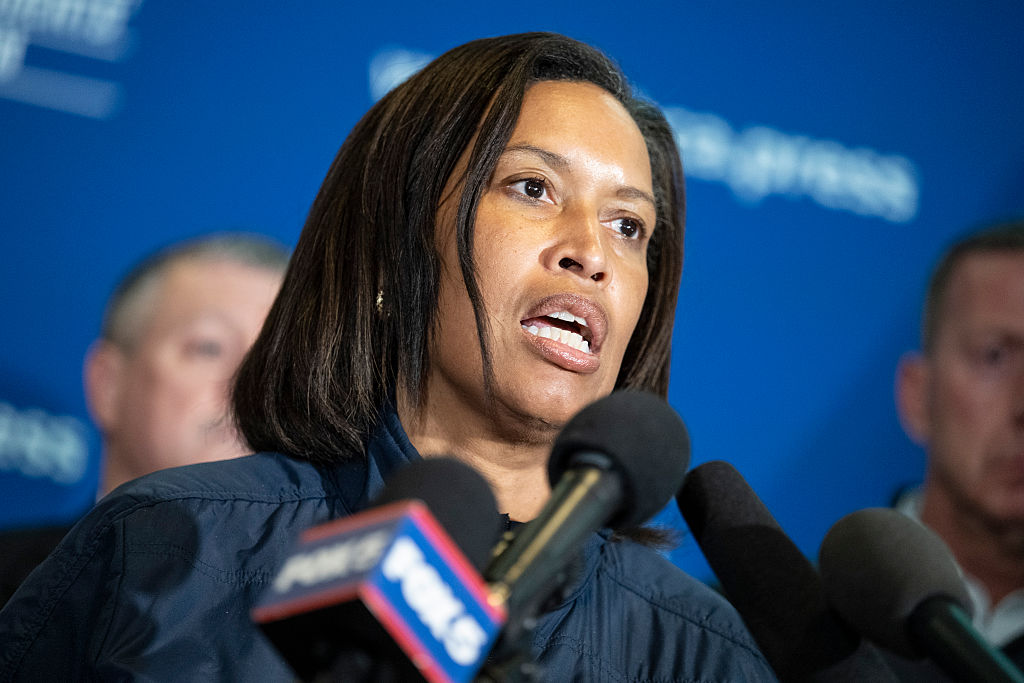
Washington, D.C., Mayor Muriel Bowser came to Howard University on Saturday, trying to graduate herself from City Hall, as if she and the Class of 2026 were walking the same stage.
But those students were not fooled. They were not there to be props in her farewell narrative. They were not there to clap for a mayor who wanted to borrow the glow of the Mecca without answering for what happened to the city around it.
The graduates booed her. Of course they did. What did people expect?
That a graduating class of politically literate, Gen Z, HBCU students, sitting on the Yard in the middle of DC, was going to pretend they had not spent the last four years watching this city become more expensive, more policed, more developer-friendly, and less livable for Black communities? Anybody pretending to be shocked has not been paying attention to the city those students had to survive while earning those degrees.
Bowser, who received an honorary doctorate degree from Howard, stood on the dais and said, “Just like you, I will be graduating, too. This is my commencement, too.”
She kept reaching for Howard’s history, symbols, rhythm, and sacred language, as if proximity to the Mecca could launder her record. She said she had learned the night before that receiving an honorary degree made her a Bison, then tried to play with “H-U” and “You Know” like students were supposed to forget rent, policing, displacement, Trump, Black Lives Matter Plaza, federal troops, downtown developer politics, and the cost of trying to survive in her DC.
Ma’am. No.
These students survived a pandemic, racially motivated bomb threats, cyber attacks, tuition aid cuts and a federal government shutdown, housing stress, internships, family sacrifice, campus pressures, DC rent, and a political climate openly hostile to Black institutions. They earned their Howard degrees. Bowser is leaving office. That is not the same ceremony, the same walk, or the same tassel. But she decided to climb into their milestone as if it were one of her downtown redevelopment projects.
The tone of Bowser’s speech was defensive before it ever became inspirational. She wrapped herself in Howard’s history, Black resilience, sacred tradition, and the language of courage. She told them Howard and DC are “inextricably linked,” invoked DC emancipation, Charles Drew, Sharon Pratt, Adrian Fenty, “Don’t Mute DC,” the Voting Rights Act, Black excellence, democracy, autocracy, and The Hilltop student newspaper.
She wrapped herself in the language of Black freedom while presiding over a city where Black people have been pushed out, housing has become obscene, and students have had to figure out how to live while being priced out of DC, study and work, buy groceries, and breathe in a city that increasingly treats them as temporary consumers rather than young Black people trying to build a life. Howard’s own student newspaper has covered local residents and students connecting homelessness and displacement to gentrification. Underneath all that commencement polish was a mayor trying to justify her record to a crowd that already knew too much to be charmed.
She also condescendingly told the graduates, “You know a lot, but compared to what you will learn over the course of your life, you know relatively little.” Ma’am. Read the Yard!
These students knew enough to boo her in real time. And they knew enough to hear the gap between the freedom language and her governing record. They knew enough to know that invoking “Free DC” while presiding over the gentrification of DC is not a flex.
Her words landed like quick little pats on the head. It sounded like: you are young; you do not yet understand power. But they do understand power. That is why they booed. They understand that politicians love Black students as symbols but rarely listen to them as constituents. They understand that HBCU students are constantly celebrated as “the future” while being told to shut up in the present.
These students have lived through rent hikes, campus housing pressure, gentrification, policing debates, Trump-era threats to home rule, and the slow whitening and pricing-out of Chocolate City. They watched Shaw, U Street, Georgia Avenue, LeDroit Park, Columbia Heights, and neighborhoods surrounding the Mecca become playgrounds for developers, luxury apartments, investor money, brunch culture, and white gentrifiers treat the Yard like a dog run.
These are not children who wandered into a civics lecture. These are Howard students. They study law, journalism, policy, public health, political science, economics, education, history, and Black life under siege. They know what power sounds like when it is trying to flatter them into silence. And Bowser’s speech was full of that kind of language.
After comparing her departure from City Hall to the graduates’ commencement, she began reciting the familiar résumé of municipal achievement: she had run for office six times, set “bold goals like ending family homelessness,” created “more affordable housing, more per capita than any place in America,” strengthened public schools, accelerated Black homeownership, Black business growth, and created better opportunities for Black developers. It was meant to sound like legacy. But to many Howard students, it likely sounded like spin.
To these graduating Howard students, “affordable housing” often felt like a slogan, not a material reality. Everybody invokes affordable housing. Developers benefit from it. Politicians campaign on it. And still, ordinary people cannot afford to stay. A Washington Post investigation found that developers tied to Bowser had collected millions more than housing finance experts said would normally go to developers on a taxpayer-funded housing project for formerly homeless residents. DC’s housing story under Bowser is not simply “she built affordable housing.” It is also land deals, developer access, displacement anxiety, budget choices, and a city where affordability remains a daily insult. And Howard students watched the neighborhoods surrounding the Mecca become more polished for newcomers, and less hospitable to the Black people who gave DC its soul.
And then there are the cuts. Bowser’s FY2025 budget proposal was criticized because the DC Council reversed many of her proposed cuts to programs tied to equity, including early childhood educator pay, schools, the Earned Income Tax Credit, and other safety-net priorities. The DC Fiscal Policy Institute warned that remaining holes in the budget would destabilize residents already struggling with housing costs and worsen homelessness. In 2026, her final budget proposed $469 million in reductions, including cuts or limits affecting paid medical leave, early childhood educator pay, new affordable housing production, workforce programs, rapid rehousing, and no new housing vouchers.
So when she stood in front of Howard graduates and started talking about courage, strategy, and being misunderstood, the students heard the condescension underneath it. “Those not responsible for 700,000 lives will misunderstand,” she said. Baby, that is not a commencement message. That is a campaign defense with a cap and gown on.
In her speech, Bowser thanked Howard for its “$1.2 billion economic impact” and noted that Howard students spend “$25 million in our city every single year.” They know. They know because they are the ones buying groceries with student loan money, paying absurd rent for rooms in chopped-up rowhouses, commuting from farther and farther away because the neighborhood around their HBCU has become too expensive, and watching every “revitalization” plan somehow make life easier for developers than for students.
And then there is policing. Howard students are not politically asleep. They understand the machinery of state power. They know the difference between safety and surveillance. They know what it means when a Black mayor talks democracy while expanding punitive tools against young people. Just days before commencement, the DC Council passed a measure extending youth curfew-zone powers through 2028, allowing police to disperse groups of nine or more minors under 18 by 8 p.m. in designated areas. Bowser supported the curfew as a safety tool, while critics raised concerns about over-policing and the need for youth investment instead.
Howard students also remember the performance politics. When “Black Lives Matter” was painted in giant yellow letters near the White House in 2020, activists immediately called it a performative distraction from real policy change and demanded cuts to police funding and investment in communities instead. Protesters literally added “Defund the Police” to the mural because they understood exactly what was happening: symbolism was being used as a shield against structural accountability.
Those graduates also remember the encampment clearings across DC. They remember a city government willing to remove unhoused people from public view while affordable housing remained out of reach. The ACLU of DC called on Bowser to suspend encampment evictions under her CARE pilot program in 2021, and local advocates criticized the policy as harmful to unhoused residents rather than a real solution to homelessness.
And yes, they remember Trump and the federal takeover fight. Trump ordered a federal takeover of DC police in August 2025 and deployed National Guard troops, invoking the Home Rule Act in an unprecedented way while crime data showed violent crime and homicides had declined compared with 2024. Bowser criticized the move, but residents also watched her navigate, negotiate, cooperate, recalibrate, and try to present restraint as strategy.
That is what made her commencement speech so grating. She tried to preempt the criticism by recasting her capitulation as wisdom. She told graduates that “some will misunderstand on purpose,” that leaders must have “true courage,” that courage is not “I’m going to go down fighting courage,” and then she landed on the line: “Fight? Yes. Go down? No. Play your cards. Yes. Throw the dice on home rule. No.”
That was the whole speech right there. Not liberation, resistance, or Black political imagination. Just technocratic survival dressed up as ancestral courage. “Fight? Yes. Go down? No” is the kind of line politicians use when they want applause for not fighting too hard. It is the language of managed retreat. It is the language of people who want credit for standing in the doorway after they already opened it.
So all that booing was political literacy and institutional memory. That booing was every student who has watched DC become less Black, less affordable, and less hospitable to the very people whose culture made the city matter. That booing was for the rent. For the police and the troops. For the encampments. For the luxury buildings. For the symbolic murals. For the Trump dance. For the city that loves Howard’s economic impact but does not always love Howard students enough to make the city livable for them.
And the fact that Bowser also spoke at the University of the District of Columbia only makes the Howard moment even more telling. Because apparently one commencement wasn’t enough. She really tried to do the “I love Black education” victory lap at both schools, as if students at either institution have not spent years watching DC become more expensive, more policed, more developer-friendly, and less livable for the very Black communities these schools serve.
Bowser did not just show up at Howard. She also spoke at UDC on the same day, which tells you this was not simply about delivering a commencement address. This was a soft-launch legacy tour through Black educational institutions, and a final attempt to wrap her record in cap and gown and hope nobody asked why the city around those campuses has become so hostile to the people they were built to serve.
If Howard University means anything, it cannot only mean clapping when powerful people borrow the language of Black struggle. It has to mean discernment and knowing when somebody is trying to baptize policy failure in Bison pride.
SEE ALSO:
SCSU Students Said No To A Racist Politician For Commencement Speech
Black Folks Shouldn’t Feel Sorry For Candace Owens. She’s Not A Victim