Inside Parliament’s hunt for ghost staff
Long before the early morning Kampala mist cleared on Monday, October 19, 2026, long queues had already formed outside Conference Halls A and B. Some nervous employees arrived as early as 6:30 am, clutching thick manila folders filled with original appointment letters, academic transcripts, and national identity cards. Inside, they faced a high-stakes gathering addressed […] The post Inside Parliament’s hunt for ghost staff appeared first on The Observer Media Ltd.
 Black News

Long before the early morning Kampala mist cleared on Monday, October 19, 2026, long queues had already formed outside Conference Halls A and B.
Some nervous employees arrived as early as 6:30 am, clutching thick manila folders filled with original appointment letters, academic transcripts, and national identity cards.
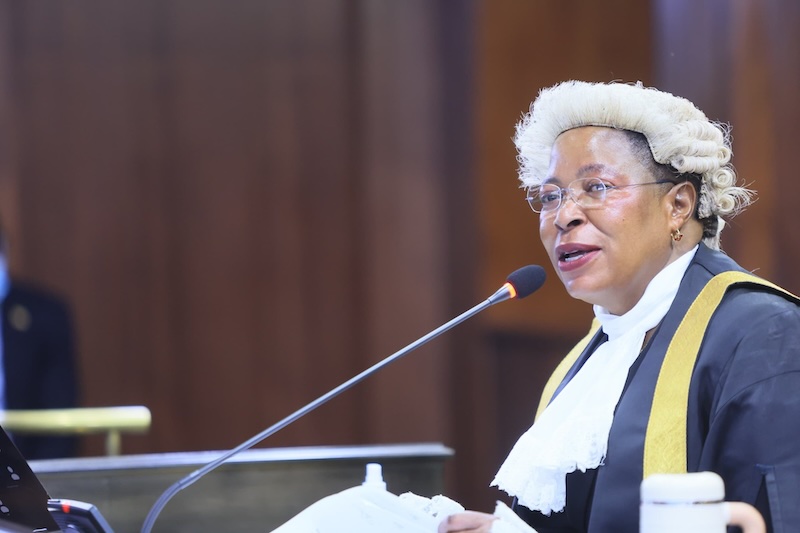
Inside, they faced a high-stakes gathering addressed by Speaker Jacob Markson Oboth, alongside Deputy Speaker Thomas Tayebwa, Leader of the Opposition Joel Ssenyonyi, and members of the Parliamentary Commission.
Thus began a week-long staff verification exercise that has thrown the legislative institution into deep anxiety. Triggered by a closed-door meeting on October 14 between Speaker Oboth and Lucy Nakyobe, the Head of Public Service, the audit is designed to review and align every personnel position with Parliament’s officially approved structure.
But beneath the administrative language of validation lies a reckoning over widespread allegations of irregular hiring, ghost workers, and nepotism inherited from the previous parliamentary term under former Speaker Anita Annet Among.
Ordinary Ugandans often view Parliament’s inner workings through the lens of public spending, as they struggle with the cost of living. In the 2026/27 financial year, Parliament was allocated Shs 1.23 trillion out of a national budget of roughly Shs 84 trillion to execute its legislative, oversight, and representative duties.
For context, the health sector received 5.23 trillion in the same budget. While the 11th Parliament recorded active legislative output during the 2025/26 term, holding 34 sittings, passing 18 Bills, concluding a petition, clearing 29 resolutions, and adopting 22 reports alongside faster enactment times, public trust has been persistently battered by corruption scandals.
At least seven parliamentary staff members are currently facing criminal charges before the Anti-Corruption Court. When an institution commanding over a trillion shillings of taxpayer money faces credible internal murmurs that more than 150 people may have been smuggled onto the payroll outside established legal frameworks, the stakes extend far beyond administrative housekeeping.
The week-long validation exercise, overseen directly by the Office of the Head of Public Service at the Speaker’s request, requires every employee to present a complete paper trail: original appointment, promotion, deployment, and confirmation letters, alongside O-level and A-level certificates, university degrees, and professional credentials.
According to insiders familiar with the institution’s human resource practices, the audit has already exposed glaring anomalies. Sources allege that government technocrats secured jobs for their children without public advertisements or competitive recruitment.
In some cases, junior staff with basic degrees were reportedly placed in positions where they supervised senior colleagues with master’s degrees, while others were slotted into non-existent roles outside the approved structure.
The web of patronage allegedly extends across various branches of government. Whistleblowers claim that senior judicial figures, past and present parliamentary commissioners, former opposition leaders, former electoral commission bosses, and retired security agency personnel managed to place relatives or transition themselves into lucrative parliamentary posts through opaque arrangements.
The physical verification process itself has laid bare surreal scenes. Several employees reported encountering unfamiliar individuals wandering the corridors looking for help because they had no idea which department they supposedly belonged to.
“This exercise has shown us that there were people earning free money from Parliament,” one source said.
“Most of them do not even know the departments where they belong or work from, while others were seen wandering around looking for where to seek [assistance]. In actual sense, their faces would tell that they do not belong here.”
Another staff member put it bluntly: “Every staff member is appearing and presenting their documents, qualifications and promotions. How did you get the promotion? Do you have the qualifications, and how did you join? It is basically a look into former Speaker Anita Among’s human resource practices.”
WHAT HAPPENS NEXT
The verification exercise is scheduled to run until Friday, October 23, 2026, as external evaluators comb through mountains of paperwork to determine whether employees genuinely meet the legal and professional requirements of the offices they occupy.
For the hundreds of legitimate civil servants queuing patiently in the corridors, the audit represents a painful but necessary cleansing of an institution whose reputation has been scarred by patronage.
For the leadership, the findings expected at the end of the week will test whether Parliament has the political will to clean its own house, and whether those who drew public salaries without ever stepping foot at a desk will finally be held to account.
The post Inside Parliament’s hunt for ghost staff appeared first on The Observer Media Ltd.