Johann Rupert’s gold bet turns €22 million into €80 million as gold surges
South African billionaire Johann Rupert built his fortune selling luxury goods to some of the world’s wealthiest consumers.
 Black News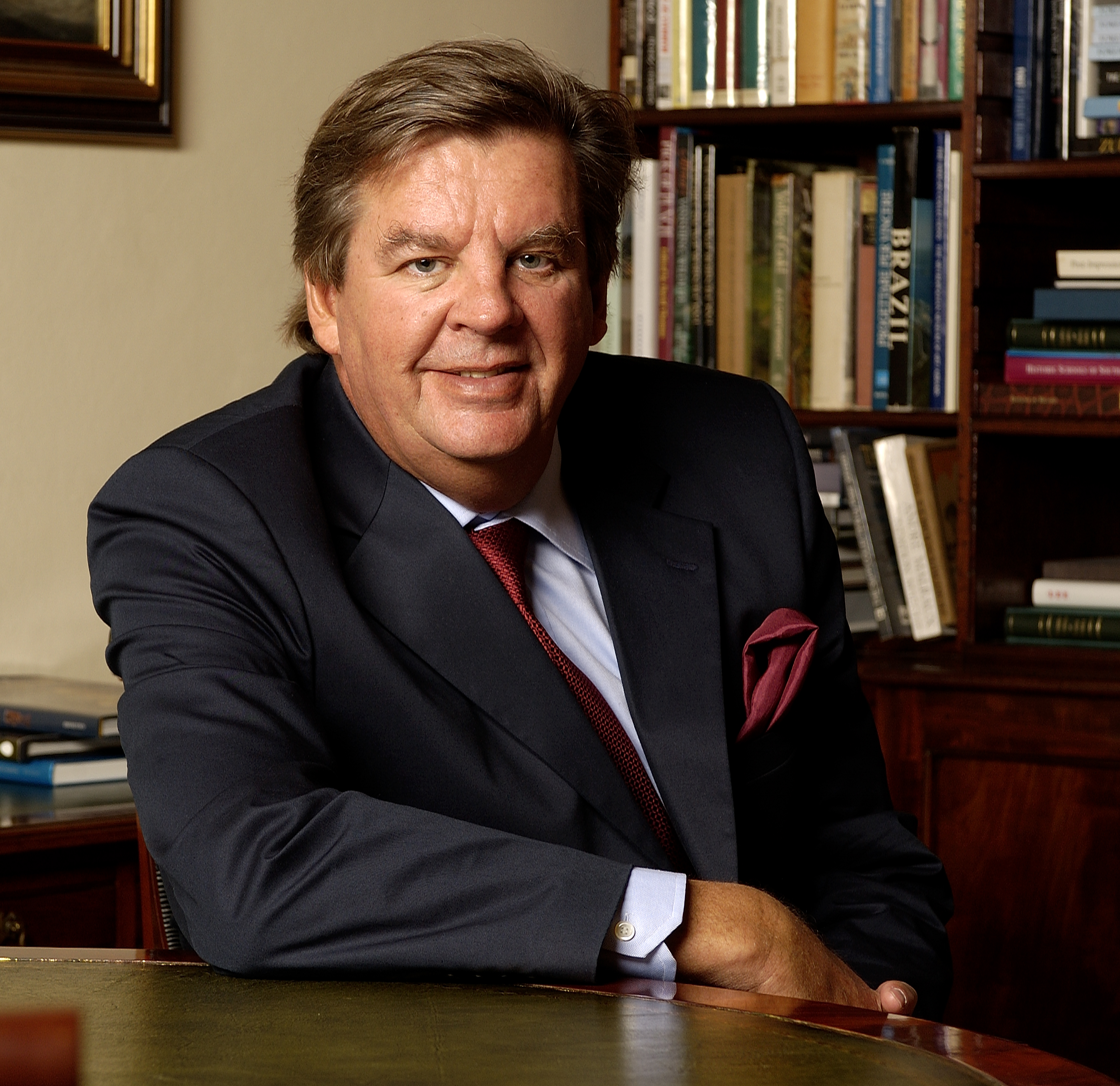
![Johann Rupert [Wikipedia]](https://ocdn.eu/pulscms/MDA_/aebad66ab0bab55d7cbdcc26c2c9d645.jpg)
South African billionaire Johann Rupert built his fortune selling luxury goods to some of the world’s wealthiest consumers.
- Johann Rupert’s Reinet Investments bought a €22 million stake in the world’s largest gold ETF in 2015.
- The position is now worth about €80 million after gold’s historic rally.
- Gold prices have climbed from around $1,100 per ounce in 2015 to above $3,000 per ounce in 2026.
- The investment offers insight into how one of Africa’s richest families protects wealth during periods of economic and geopolitical uncertainty.
Yet one of the most successful investments linked to his family’s fortune over the last decade has been remarkably simple: gold.
Long before artificial intelligence became Wall Street’s favourite trade and years before geopolitical tensions sent investors scrambling for safe-haven assets, Rupert’s investment vehicle quietly bought into the world’s largest gold exchange-traded fund.
More than a decade later, that decision is paying off.
According to Reinet Investments’ latest annual results, the Luxembourg-listed investment company chaired by Rupert holds 230,000 shares in SPDR Gold Shares, the world’s largest physically backed gold ETF.
The position, acquired in 2015 for about €22 million, was valued at roughly €86 million at the end of March 2026 before easing to around €80 million in recent weeks as gold prices retreated from record highs.
The investment has generated a gain of more than €58 million, turning a relatively modest allocation into one of the quieter success stories within the Rupert family’s portfolio.
The disclosure offers a rare glimpse into how one of Africa’s richest families approaches wealth preservation.
A billionaire’s hedge against uncertainty
Unlike many investors who treat gold as a short-term trade, Rupert has repeatedly framed the metal as insurance against uncertainty.
In commentary accompanying Reinet’s latest results, he said gold can provide protection against inflation and preserve value during periods of political and economic instability.
That philosophy has been rewarded over the past decade.
When Reinet established the position in 2015, gold traded near $1,100 per ounce. Since then, the world has navigated Brexit, the COVID-19 pandemic, surging inflation, rising interest rates, banking sector stress, and multiple geopolitical conflicts.
Gold has emerged as one of the biggest beneficiaries.
Prices climbed above $3,000 per ounce this year for the first time in history as investors sought protection from market volatility and geopolitical risks.
The rally has also been supported by central banks, particularly in emerging economies, which have increased gold purchases as part of efforts to diversify reserves and reduce dependence on the US dollar.
Swimming against the market consensus
What makes the Rupert family’s gold investment notable is the timing.
The position has been maintained through one of the strongest equity bull markets in modern history.
Since 2015, technology companies have created trillions of dollars in market value. The emergence of generative AI triggered another wave of investor enthusiasm, helping drive massive gains in major US technology stocks.
Many institutional investors reduced exposure to defensive assets during that period in favour of higher-growth opportunities.
Reinet did not. Instead, the company continued holding the gold position even as markets became increasingly dominated by technology and artificial intelligence themes.
That approach reflects a broader investment style often associated with Rupert, whose business career has been defined more by patience and capital preservation than by aggressive speculation.
Why gold is back in focus
Gold’s resurgence in 2026 has renewed interest in the role the metal plays within large investment portfolios.
Data from the World Gold Council show that physically backed gold ETFs attracted billions of dollars in inflows during the first five months of the year, while total assets held by gold funds climbed to record levels.
The renewed demand comes as investors confront a growing list of uncertainties, including trade tensions, geopolitical conflicts, concerns over sovereign debt, and questions about the long-term path of global economic growth.
For wealthy families and institutional investors, gold is increasingly viewed not as a vehicle for rapid gains but as a strategic hedge against unpredictable risks.
That appears to be how Rupert has approached the asset.
A small stake with a big lesson
The gold investment remains a relatively small component of Reinet’s overall portfolio.
The company is better known for its stake in British American Tobacco and its investments in private equity funds and other businesses.
Rupert’s personal fortune, meanwhile, is largely tied to luxury goods giant Richemont, owner of Cartier, Montblanc, and Van Cleef & Arpels.
Forbes estimates Rupert’s net worth at roughly $11.5 billion, making him one of Africa’s richest people.
Yet the gold holding offers a revealing lesson about long-term investing.
While financial markets spent the last decade chasing the next big trend, one of Africa’s wealthiest families quietly held onto an unfashionable asset that has nearly quadrupled in value.
In an investment era defined by artificial intelligence, cryptocurrencies, and fast-moving market narratives, Rupert’s gold bet demonstrates that sometimes the most successful strategy is simply refusing to sell.