Kenyan billionaire businessman Adil Popat’s Simba Corp commits $7.7 million to EV production as Kenya emerges as East Africa’s electric mobility hub
One of Kenya’s oldest family-owned business groups is making a major bet on electric mobility, joining a growing list of investors pouring capital into local vehicle production as East Africa positions itself for the next phase of automotive manufacturing.
 Black News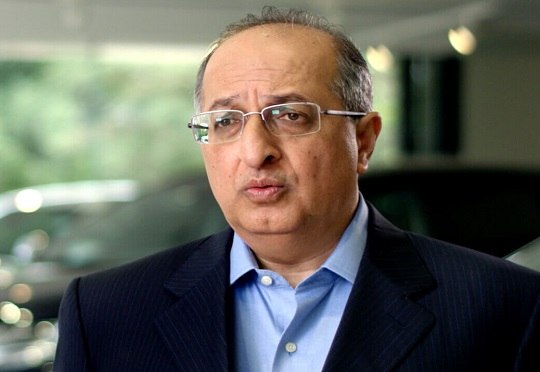
One of Kenya’s oldest family-owned business groups is making a major bet on electric mobility, joining a growing list of investors pouring capital into local vehicle production as East Africa positions itself for the next phase of automotive manufacturing.
- Simba Corp is investing $7.7 million (Sh1 billion) in a dedicated electric vehicle assembly line through subsidiary AVA.
- The investment supports Kenya’s ambition to become a regional hub for electric mobility and vehicle manufacturing.
- AVA already assembles electric vehicles for companies including BasiGo, Rideence Africa and Car and General.
- The move comes as Chinese automakers and local investors increase their presence in East Africa’s emerging EV sector.
Simba Corporation, chaired by Kenyan billionaire Adil Popat, is investing $7.7 million (Sh1 billion) in a dedicated electric vehicle assembly line through subsidiary Associated Vehicle Assemblers (AVA), a long-established vehicle assembler based in Mombasa.
The investment will fund specialised EV assembly equipment, factory modifications, technician training and certification programmes as the company expands production capacity for electric vehicles.
The move comes at a time when Kenya is increasingly attracting electric vehicle manufacturers seeking a foothold in East Africa.
DON'T MISS THIS: Kenya’s automotive sector gains momentum with new EV assembly initiatives
Government incentives, including lower taxes on electric vehicles and favourable treatment for locally assembled units, have encouraged companies to establish assembly operations rather than rely solely on imports.
“Associated Vehicle Assemblers, part of the Simba Corp portfolio, is committing an estimated Sh1 billion to a dedicated electric vehicle assembly line, with 60 trained technicians already on the floor,” the company said.
“It is also the platform for a longer-term move toward full vehicle manufacturing in Kenya, and ties directly into the National Automotive Policy and its implementation.”
Beyond assembly
While the investment focuses on expanding EV assembly, Simba says the project is part of a broader ambition to deepen Kenya’s automotive manufacturing capabilities.
For decades, Kenya’s vehicle industry has largely depended on assembling imported kits rather than manufacturing vehicles and components locally.
Industry players argue that greater local production could create jobs, strengthen industrial capacity and reduce reliance on imports.
AVA currently assembles a range of passenger cars, buses, trucks and three-wheelers for multiple automotive brands and has become one of the key players in Kenya’s automotive assembly ecosystem.
The company has already begun assembling electric hatchbacks and 16-seater electric vans for Rideence Africa, the distributor of Beijing Henrey’s Xiaohu electric vehicles in Kenya.
It also assembles electric three-wheelers for Car and General and electric buses for BasiGo, one of the country’s leading electric bus companies.
China’s growing presence
Simba’s investment also reflects the growing influence of Chinese electric vehicle manufacturers across Africa.
In December 2025, Chinese automotive giant Dongfeng announced plans to begin local assembly of electric passenger vehicles through a partnership with AVA and local distributor ePureMotion.
The partnership is expected to start with the ePureCitie compact electric hatchback before expanding into other passenger and commercial EV models.
AVA’s existing partnerships with Beijing Henrey and Jiangsu Joylong further underscore how Chinese manufacturers are increasingly using local assembly arrangements to enter African markets.
Simba itself plans to begin assembling electric vehicles under the MG brand, which it has historically imported as fully built units from China.
“Assembling the MG range locally with AVA lets us put modern electric vehicles within reach of the Kenyan customer, and do it with local jobs and local skills,” said group chief executive Dinesh Kotecha.
DON'T MISS THIS: See what Kenya is using to attract investment from global EV firms
Betting on future demand
The investment comes even as Kenya’s EV market remains relatively small.
According to the Electric Mobility Association of Kenya, the country had 9,144 registered electric vehicles at the end of 2024.
Of the 14,750 electric vehicles registered between 2018 and 2024, only 326 were passenger cars, with electric motorcycles and bicycles accounting for about 90% of the fleet.
Despite those numbers, investment across the sector continues to rise.
Toyota dealer CFAO Mobility Kenya has separately committed about $18.5 million (Sh2.4 billion) to its subsidiary Kenya Vehicle Manufacturers, highlighting growing confidence in local automotive production.
Industry players are effectively building capacity ahead of demand, betting that lower battery costs, supportive government policies and rising interest in cleaner transport solutions will accelerate electric vehicle adoption across East Africa over the coming years.
Founded in 1948 by the late Abdul Karim Popat, Simba Corporation has grown from a used-car dealership into one of Kenya’s most diversified business groups, with interests spanning automotive distribution, hospitality, finance and trade.
Its latest $7.7 million (Sh1 billion) investment signals confidence that electric mobility is no longer a niche market but an industry with the potential to reshape transport and manufacturing across East Africa.