Mokhothu calls for single African currency
…and unified migration system Mohloai Mpesi LEADER of the Opposition, Mathibeli Mokhothu, has called for the free movement of goods and services across Africa, arguing that a single African currency is key to strengthening the continent’s economies and curbing migration pressures. Exclusively speaking to the Lesotho Times this week, the Democratic Congress (DC) leader said a common... The post Mokhothu calls for single African currency appeared first on Lesotho Times.
 Black News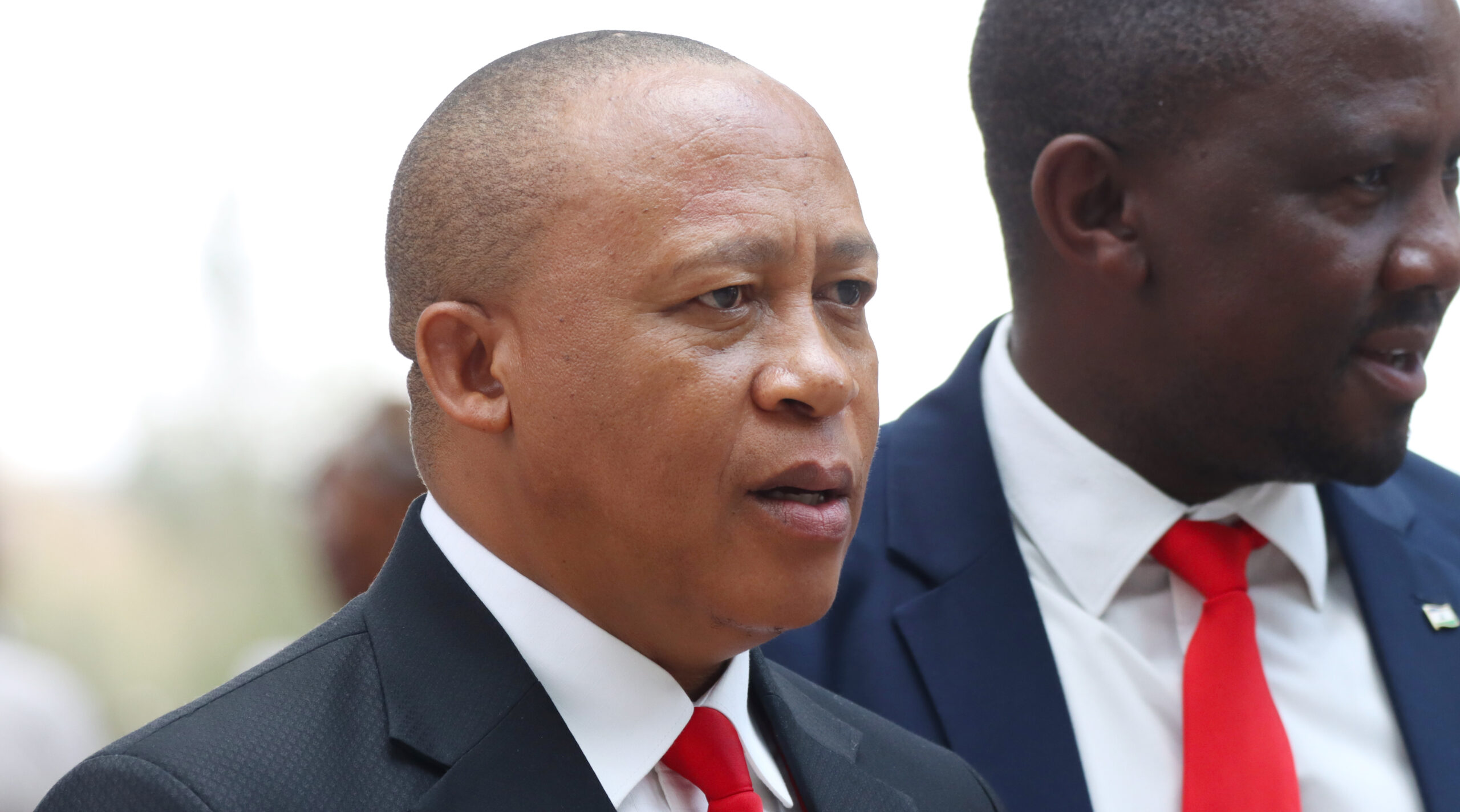
…and unified migration system
Mohloai Mpesi
LEADER of the Opposition, Mathibeli Mokhothu, has called for the free movement of goods and services across Africa, arguing that a single African currency is key to strengthening the continent’s economies and curbing migration pressures.
Exclusively speaking to the Lesotho Times this week, the Democratic Congress (DC) leader said a common African currency would help member states boost their economies, reduce cross-border barriers and create opportunities that would encourage citizens to remain in their home countries.
He said the free movement of goods, services and people across African borders was central to achieving this objective.
“It is one of the founding objectives of SADC, the Commonwealth and the African Union. We are calling for the implementation of the free movement of goods and services because it can help the Basotho nation and other African countries to have a common market,” Mr Mokhothu said.
“Africa as a continent should become one market. There should not be these hiccups at the border gates.”
He said the creation of a single currency and a common African passport would facilitate movement across the continent.
“We can use one passport, but identity documents can differ by country so that a person can be traced when they have committed a crime or an offence,” he said.
Mr Mokhothu also advocated for a unified migration system across the continent.
“We should have a single migration system. When you enter Zimbabwe, it should indicate that this person is from a specific country. We should train our police and armies and equip them with the skills to police African borders, while Prime Ministers and Presidents remain in their respective countries.
“This will also help remove the requirement for study permits when one wants to study at a university outside the country,” he said.
Xenophobic attacks
Asked whether a single migration system could fuel xenophobia by encouraging migration to stronger economies, Mr Mokhothu argued that a unified currency would strengthen all member states’ economies and create jobs, thereby reducing the incentive to migrate.
“Other countries would not overburden one another. For example, if we decide that our currency becomes a single African currency, it will be strong – not based solely on the South African economy. South Africa, too, will benefit from a stronger currency.
“People will not flock to South Africa. Every country’s economy will be strengthened. Zimbabwe has a problem of a weak currency, but when we bring Zimbabwe under an African currency, we cover Zimbabwe. Malawi’s people are spreading across the continent because their currency is very poor. But when we cover them under an African currency, Malawians will stay in Malawi and create jobs there.
“Basotho will also return home and create jobs in Lesotho. People, goods and services will move freely,” he said.
Mr Mokhothu drew parallels with other economic unions.
“America has over 50 states and they have no such problems. They trade under one dollar. Britain was strong with the pound, and when countries moved to the euro, that currency became very strong – it even surpasses the dollar at times.
“If we can have one Africa, we have one future. Countries can be boosted and create jobs because their money would be strengthened.”
Repatriation crisis
Turning to the ongoing crisis in South Africa, where vigilante groups and anti-immigrant movements have driven thousands of undocumented foreign nationals, including many Basotho, to flee or face deportation, Mr Mokhothu criticised the Lesotho government for its handling of the matter.
“The government has handled this issue messily. There should have been a response plan to address the ‘Abahambe’ campaign in South Africa – to open negotiations with Pretoria, and when negotiations failed, to begin bringing our people home in an orderly manner.
“Now that they are in the country, what is the plan? The Prime Minister has not even made a statement on this issue. What is the plan for integrating these people when they arrive? What are they going to eat when they come home?
“What is the economic integration plan? Are there stipends to help them for a period while they are home, even if they intend to return to South Africa? What jobs can they do? What are the strategies for fighting poverty and unemployment when these people from South Africa arrive?” he said.
Mr Mokhothu warned of a looming household crisis if returnees arrive without a plan in place.
“If a household was supporting nine people, and five were working in South Africa, when they arrive without any increase in local production, they are going to exhaust the little production that was already there.
“The government has no plan. This government is stranded; it is stuck. The crisis is in our hands and our people are here. That is a failure of leadership. They act as if it is business as usual.
“What is the government’s plan to document returnees when they fail to produce documents for Basotho citizens living in Lesotho?” he said.
Background
Anti-immigrant pressure in South Africa has intensified sharply in recent months. Vigilante groups, including the March and March movement and Operation Dudula, set an unofficial deadline of 30 June 2026 for undocumented foreign nationals to leave the country.
The campaigns have triggered violent incidents that have left at least four foreign nationals dead, including two Mozambicans, an Ethiopian and a Malawian, and have forced thousands to seek repatriation.
South Africa’s Border Management Authority reported that more than 13 000 foreign nationals – including about 9 000 Malawians, 3 000 Zimbabweans and hundreds of Ghanaians and Nigerians – were voluntarily repatriated or deported in the two weeks leading up to the deadline.
Basotho are also among those affected, with several businessmen and politicians organising buses to bring citizens home.
Lesotho and South Africa held bilateral talks in April 2026, when the Home Affairs ministers of the two countries met in Cape Town to receive a study on a new migration model commissioned by the Bi-National Commission. However, both governments clarified that the status quo remained unchanged and that all Basotho must continue to present valid passports at ports of entry, only increasing the visa validity from 30 to 90 days.
The post Mokhothu calls for single African currency appeared first on Lesotho Times.