Morocco’s naval gamble deepens as Spain prepares to deliver first warship to Rabat in 40 years
Morocco is set to receive its first Spanish-built warship in four decades as Madrid-based shipbuilder Navantia prepares to hand over a new offshore patrol vessel to Rabat before August, signalling a major step in the North African kingdom’s accelerating military expansion.
 Black News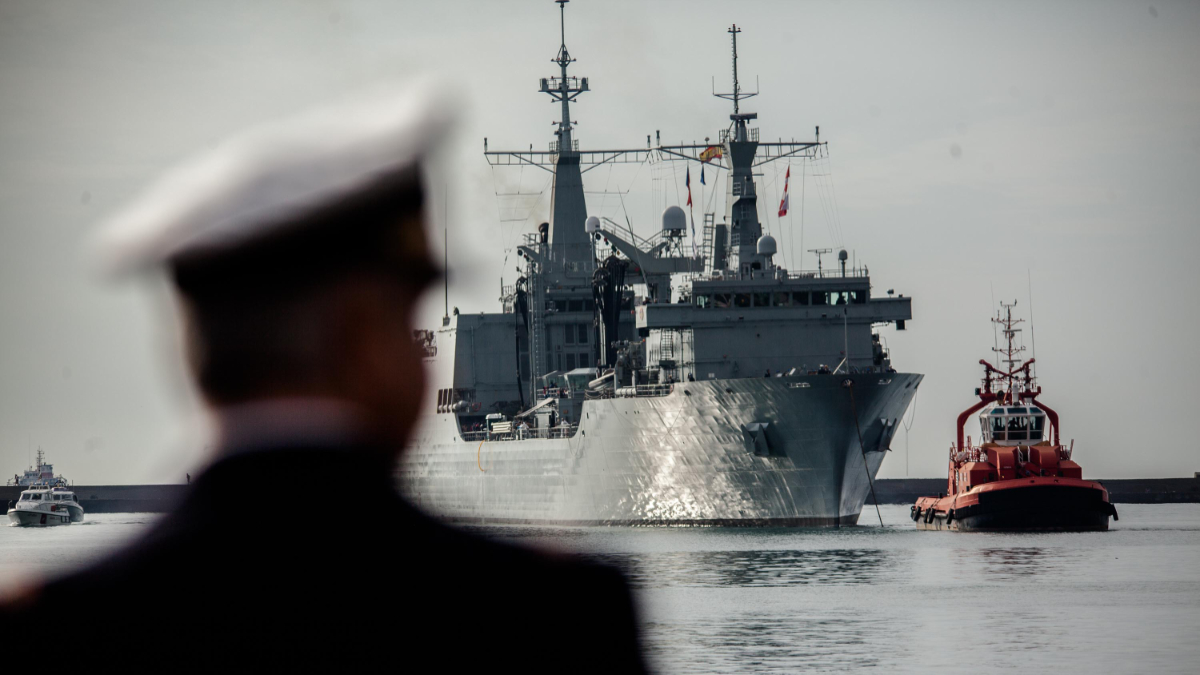
![A Navantia-built offshore patrol vessel undergoing sea trials near Cádiz ahead of its expected delivery to Morocco, as Rabat accelerates naval modernisation amid rising regional defence competition in North Africa. [Photo by Paolo Manzo/NurPhoto via Getty Images]](https://ocdn.eu/pulscms/MDA_/58f000762469c1598ba93f8f646c1daf.jpg)
Morocco is set to receive its first Spanish-built warship in four decades as Madrid-based shipbuilder Navantia prepares to hand over a new offshore patrol vessel to Rabat before August, signalling a major step in the North African kingdom’s accelerating military expansion.
- Morocco is set to receive its first Spanish-built warship in 40 years as Navantia prepares delivery of a new offshore patrol vessel before August.
- The move comes as Rabat sharply increases defence spending and pushes to modernise its naval capabilities amid growing regional tensions.
- The €130 million vessel is designed for advanced weapons integration and forms part of Morocco’s wider military expansion strategy.
- The delivery also highlights intensifying defence competition between Morocco and Algeria, two of Africa’s biggest military spenders.
The vessel, currently undergoing final sea trials off Cádiz, is expected to be delivered in July, according to Spanish outlet elEconomista. Its arrival comes as Morocco rapidly increases defence spending and pushes to modernise what has long been viewed as the weakest branch of its military — the navy.
The 87-metre patrol ship is being built at Navantia’s San Fernando shipyard and represents the first warship Spain has constructed for Morocco in 40 years. It is also the first naval platform supplied to Rabat by Navantia since the company was established in 2005.
But beyond the delivery timeline, the project reflects something bigger: Morocco’s growing ambition to reshape the military balance in North Africa.
The vessel is based on Navantia’s Avante 1800 design and can accommodate a crew of 60. Although the ship will be delivered without onboard weapons systems, Morocco is expected to arm it after delivery, depending on operational needs.
The platform is designed to support heavy military configurations, including a 75mm or 57mm main gun, secondary artillery systems, and missile launchers capable of air defence, point defence, and surface warfare missions.
While the contract’s official value has not been disclosed, estimates place it at roughly €130 million. In 2022, Banco Santander reportedly approved a €95 million loan to support the acquisition.
![King Felipe VI of Spain (L) and King Mohammed VI of Morocco (R) attend the signing of bilateral agreements at the Agdal Royal Palace on February 13, 2019, in Rabat, Morocco. [Photo by Carlos R. Alvarez/WireImage]](https://ocdn.eu/pulscms/MDA_/49b1e4b82159c008400118712908d0c9.jpg)
The agreement also includes technical assistance, logistics support, spare parts, operational tools, technical documentation, and training programmes for personnel from the Royal Moroccan Navy in Spain.
The delivery arrives at a time when Morocco is dramatically increasing military expenditure amid rising regional competition with neighbouring Algeria.
According to the latest figures from the Stockholm International Peace Research Institute (SIPRI), Morocco became Africa’s second-largest military spender in 2025 after allocating $6.3 billion to defence, a 6.6% increase from the previous year.
The country now spends 3.54% of its GDP on defence, placing it among the world’s top military spenders relative to economic size.
Yet Algeria continues to outpace Rabat militarily. Algiers spent an estimated $25.4 billion on defence in 2025, equivalent to 8.8% of its GDP, deepening one of Africa’s most closely watched arms rivalries.
Morocco’s naval ambitions may not stop at patrol vessels, as reports suggest Rabat is also exploring the acquisition of three submarines by 2027 to strengthen its maritime deterrence capabilities in the Atlantic and Mediterranean corridors.
Among the frontrunners are South Korea’s KSS-III submarine, built by Hanwha, and France’s Scorpène-class submarine, developed by Naval Group.
For Spain, the delivery of patrol vessels also carries strategic weight. The deal revives a long-dormant military export relationship with Morocco at a time of shifting geopolitical alliances and growing security competition across North Africa and the Mediterranean.
Although no additional contracts between Navantia and Morocco are expected in the short term, the delivery could open the door to deeper defence cooperation if Rabat continues to expand its naval modernisation drive.