Russia Steps Into Uganda’s Ebola Fight as Regional Fears Mount
Uganda is set to receive a team of Russian specialists to support its Ebola response, in a move that underscores both the urgency of the outbreak and the growing role of international actors in the country’s public health strategy. The deployment comes at a critical moment, as health authorities warn of increasing risk of cross-border […] The post Russia Steps Into Uganda’s Ebola Fight as Regional Fears Mount appeared first on Daily Star.
 Black News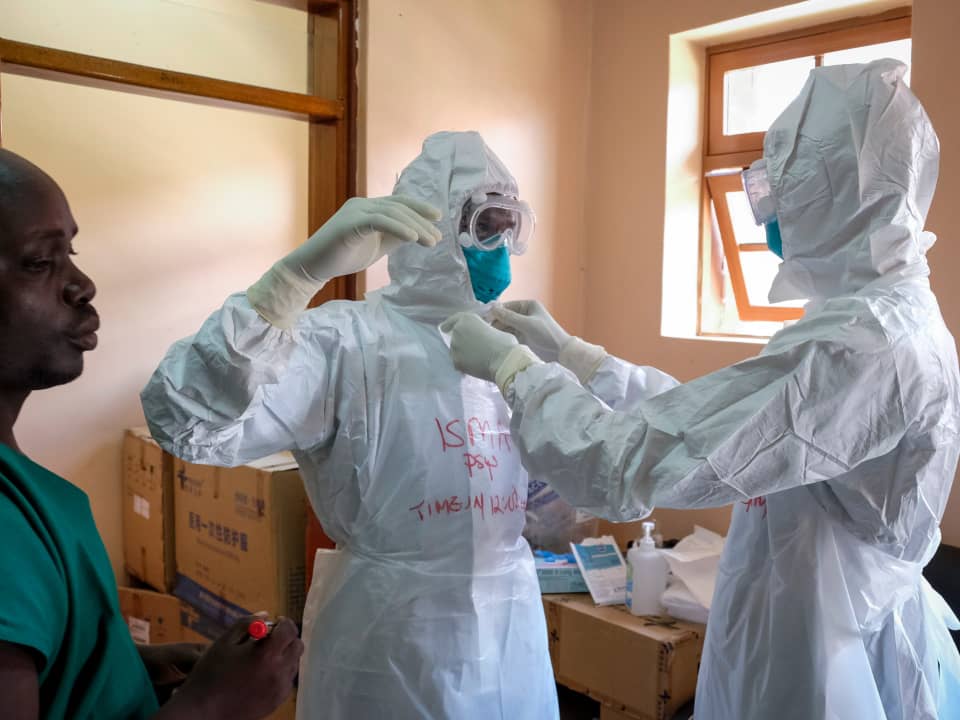
Uganda is set to receive a team of Russian specialists to support its Ebola response, in a move that underscores both the urgency of the outbreak and the growing role of international actors in the country’s public health strategy.
The deployment comes at a critical moment, as health authorities warn of increasing risk of cross-border transmission from the Democratic Republic of Congo (DRC), where the outbreak is believed to have originated. With cases already reported in Uganda, officials are racing against time to prevent a wider escalation.
According to reports by Russian news outlet Izvestia, citing the country’s consumer protection agency Rospotrebnadzor, the team will travel to Kampala following a request from Ugandan authorities. Their mission will focus on conducting an epidemiological investigation and reinforcing national response systems.
“In connection with the outbreak of Ebola caused by Bundibugio orthoebolavirus in the Democratic Republic of the Congo and cases of this disease in the capital of neighbouring Uganda, Rospotrebnadzor, at the request of the Ugandan side, will send a team of specialists to Kampala,” the agency reportedly stated.
While framed as a technical intervention, the move also reflects deepening health diplomacy between Kampala and Moscow, at a time when global powers are increasingly leveraging medical support to strengthen bilateral ties across Africa.
The Russian team is expected to work alongside Ugandan health officials to map transmission chains, improve surveillance systems, and guide containment strategies, particularly in high-risk zones.
In addition to human resource support, Russia has pledged material and technical assistance, including the delivery of Ebola diagnostic kits developed by its scientific institutions. These tools are expected to significantly boost Uganda’s capacity for early detection, a critical factor in preventing widespread transmission.
Public health experts say delays in testing and diagnosis can allow Ebola to spread silently, especially in urban settings where population density accelerates contact rates.
The intervention comes amid heightened regional anxiety, with the Great Lakes region once again confronting the threat of a fast-moving outbreak. Uganda’s proximity to eastern DRC—combined with porous borders and frequent population movement—has placed it at the frontline of the crisis.
On May 15, the Africa Centres for Disease Control and Prevention (Africa CDC) sounded the alarm, warning that the outbreak in Ituri Province posed a serious cross-border threat. The agency cited insecurity and high mobility in the region as key drivers of potential spread.
Africa CDC Director General Dr Jean Kaseya warned that affected areas maintain “intense movement” with neighbouring countries, particularly Uganda, increasing the likelihood of transmission if containment measures are not rigorously enforced.
In response, Africa CDC convened an emergency coordination meeting bringing together more than 130 stakeholders, including governments, humanitarian agencies, pharmaceutical firms, and global health institutions. The goal was to align response strategies and mobilise resources to prevent a regional health crisis.
For Uganda, the Russian support adds another layer to an already intensifying response effort. The Ministry of Health has scaled up surveillance at border points, strengthened screening in health facilities, and deployed rapid response teams to high-risk districts.
Contact tracing has also been intensified, with health workers tracking potential exposures in a bid to break chains of transmission before they expand.
Yet even as these measures are rolled out, the government has taken the unusual step of curbing major public gatherings.
President Yoweri Museveni recently announced the postponement of this year’s Martyrs’ Day celebrations, one of the largest religious events in the country, which typically draws millions of pilgrims to Namugongo from across the region.
“After consultations with the national epidemic response task force and religious leaders, we have decided to postpone the Martyrs’ Day to a later date,” Museveni said in a national address.
The decision reflects growing concern that mass gatherings could act as super-spreader events, particularly given the influx of pilgrims from neighbouring countries, including areas currently affected by Ebola.
Health experts have largely backed the move, noting that prevention remains the most effective tool in managing Ebola outbreaks, especially in the absence of widespread treatment options.
Ebola is a highly infectious viral disease transmitted through direct contact with infected bodily fluids or contaminated surfaces. Symptoms range from fever and fatigue to vomiting, diarrhoea, and in severe cases, internal and external bleeding.
Although the disease carries a high fatality rate, experts say it can be contained through swift identification of cases, isolation, rigorous contact tracing, and strict infection control measures.
Uganda has previously demonstrated resilience in handling Ebola outbreaks, drawing from years of experience and a relatively robust emergency response framework. However, the current situation presents unique challenges, particularly due to its regional dimension.
Russian authorities pointed to a growing history of cooperation with Uganda in the health sector. In 2024, Moscow donated a mobile anti-epidemic laboratory, which Ugandan officials say enhanced the country’s diagnostic capabilities during previous outbreaks.
The laboratory has since been deployed in field operations, allowing for faster testing in remote areas where access to conventional health infrastructure is limited.
Additionally, more than 80 Ugandan health professionals have undergone specialised training in Russia, focusing on laboratory diagnostics, biosafety, infectious disease surveillance, and decontamination procedures.
Analysts say such initiatives not only strengthen Uganda’s immediate response capacity but also build long-term resilience against future outbreaks.
Still, the arrival of Russian specialists highlights a broader shift in how global health emergencies are being addressed, with international partnerships playing an increasingly central role.
As the outbreak unfolds, the effectiveness of these collaborations will be closely watched, particularly in a region where health crises can quickly spill across borders.
For now, Ugandan authorities continue to urge vigilance among the public, emphasising the importance of early reporting, adherence to health guidelines, and cooperation with response teams.
With international support ramping up and containment measures intensifying, the coming weeks are likely to prove decisive in determining whether the outbreak can be contained—or whether it risks evolving into a wider regional emergency.
The post Russia Steps Into Uganda’s Ebola Fight as Regional Fears Mount appeared first on Daily Star.

![Pay Me Like I Might Die — Why Black Women Are Done Discounting Their Bodies For Surrogacy [Op-Ed]](https://madamenoire.com/wp-content/uploads/sites/9/2026/05/17780962383239.jpg?quality=80&strip=all&w=724&crop=0,0,100,483px#)