Museveni backs Balaam, Nameere in anti-corruption fight approach
President Yoweri Museveni has defended the anti-corruption inspection tours being conducted by Local Government ministers Balaam Barugahara and Justine Nameere, dismissing concerns that the ministers could be blindly searching for wrongdoing. Museveni says the inspections are responding to longstanding complaints from citizens about corruption, including alleged theft in government programmes, sale of local government jobs […] The post Museveni backs Balaam, Nameere in anti-corruption fight approach appeared first on The Observer Media Ltd.
 Black News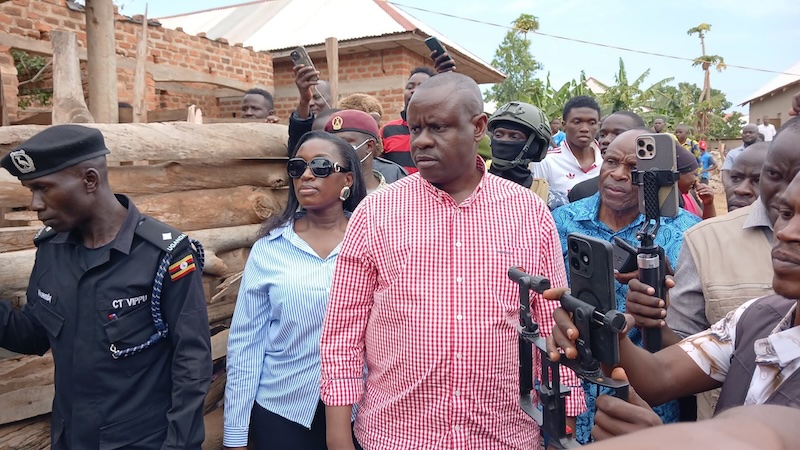


President Yoweri Museveni has defended the anti-corruption inspection tours being conducted by Local Government ministers Balaam Barugahara and Justine Nameere, dismissing concerns that the ministers could be blindly searching for wrongdoing.
Museveni says the inspections are responding to longstanding complaints from citizens about corruption, including alleged theft in government programmes, sale of local government jobs and “ghost” learners and teachers.
He has called for the Director of Public Prosecutions (DPP) to dedicate an officer to quickly assess evidence gathered during the operations and prosecute those implicated.
In a statement posted on his X account, Museveni said the operations were unlikely to be based on guesswork because of the frequency of corruption complaints and what he described as impunity among some public officials.
The President said he had personally encountered complaints about corruption during the recent campaigns, forcing him to interrupt some of his campaign activities to respond to angry citizens.
He cited complaints involving the Parish Development Model (PDM), the alleged sale of local government jobs and what he described as “ghosts” of learners and teachers in government schools and health centres.
Museveni said the scale of complaints means that the ministers’ decision to go into communities and inspect government programmes should not be dismissed as simply looking for problems.
“I have told you before that during the campaigns, my campaigns had to be interrupted to deal with the information from the angry citizens about corruption in PDM, etc.,” Museveni said.
“Earlier on, I had met a delegation of elders from the Bunyoro area talking about the selling of local government jobs. There are numerous stories about the ghosts of learners and teachers in government schools, as well as health centres of the government.”
Museveni’s comments come amid growing debate over the methods being used by Barugahara and Nameere during their nationwide inspections.
The two ministers have in recent months conducted impromptu inspections of government projects and services, publicly questioning officials over alleged misuse of public funds, poor-quality work, payroll irregularities and other forms of suspected abuse.
Some of the operations have resulted in arrests and interdictions, attracting praise from sections of the public who say the ministers are taking the fight against corruption directly to communities. However, the campaign has also attracted criticism.
Kabweri County MP Patrick Godfrey Wakida has said he supports the government’s anti-corruption agenda but disagrees with the methods being used by the ministers and has called for parliamentary scrutiny of Nameere’s operations.
The Uganda Institution of Professional Engineers (UIPE) has also criticised the public arrest and exposure of engineers during some of the inspections, arguing that corruption should be investigated while respecting professional procedures and due process.
The institution said it supports the fight against corruption but warned against turning investigations into public spectacles and urged the government to address structural problems affecting engineering departments in local governments.
Nameere has defended the approach, saying the operations are based on information from whistleblowers and investigations involving technical experts, the State House Anti-Corruption Unit, security agencies and engineers.
She has also rejected criticism that publicly exposing suspects amounts to trial by media, saying the investigations are backed by evidence and that some case files are already ready for prosecution.
Museveni, however, argues that the bigger problem has been the failure of officials and elites to report or act on corruption. He says some officials responsible for protecting public resources have instead covered up wrongdoing, while citizens with access to decision-making centres have sometimes failed to report what they know.
“The main problems on the issue of corruption have been two: the cover-up by the responsible officials that should be protecting national interests and the failure to report by the elite that have access to the decision-making centres,” Museveni said.
He argues that Barugahara and Nameere’s decision to engage directly with citizens through public gatherings, or barazas, is helping to overcome what he describes as this blockade.
“That is why Barugahara and Nameere, by going to the people directly in the form of barazas (public gatherings), have by-passed the blockade of the thieves manned by the responsible elements of the elite,” he said.
Museveni, however, acknowledged that not all members of the elite have failed in their responsibilities. He singled out Fred Byamukama, the minister of Works and Transport, whom he said previously reported an alleged extortion racket operating at State House.
Museveni said Byamukama’s information enabled authorities to set a trap that resulted in the arrest of the suspects.
“Some of the elites are, however, patriotic. One of them is Hon. Byamukama, who exposed to me the racket of extortionists that were operating in State House, here. He reported them to me, and we trapped the thieves and arrested them.”
Museveni said the experience demonstrates that corruption can be confronted when officials and citizens are willing to report wrongdoing. “This corruption in Uganda is stoppable,” he said.
The President also called on public officials to stop shielding colleagues accused of corruption and urged citizens to report suspected wrongdoing.
“Do not cover up if you are a government officer and report if you are a citizen,” he said.
Museveni said he had previously tasked former Local Government minister Raphael Magyezi with following up corruption complaints raised by citizens. He said Magyezi visited some of the areas where complaints had been raised, but questioned whether decisive action was subsequently taken.
“I had, indeed, sent the former minister Magyezi to follow up the issues of corruption the People had reported to me. He did go to these places but, it seems, decisive action had not been taken,” he said.
The President now wants the DPP to respond more quickly to the allegations and evidence emerging from the inspections. He said the DPP should have a dedicated officer capable of assessing the evidence gathered by the ministers and determining which cases should proceed to prosecution.
“The challenge now is for the DPP to have a dedicated officer who can quickly assess the abundant evidence against these criminals so that they are prosecuted,” Museveni said.
Museveni said the public response to the ministers’ activities reminded him of the early years of the National Resistance Movement, when large numbers of people attended government meetings voluntarily.
“We are back to the earlier NRM days when huge crowds would flock voluntarily to our public meetings without being given water to drink, food, hiring tents for the local elite while the masses stay in the rain or the sun,” he said.
The post Museveni backs Balaam, Nameere in anti-corruption fight approach appeared first on The Observer Media Ltd.