The miracle of FK Bodø/Glimt, the football team at the edge of the world
Arctic Gleam — The Norwegian underdogs have become darlings of European football after David and Goliath victories over some of the sport’s giants. Yet scratch below the surface, is a blueprint for success rooted in community and sustainability.
 Black News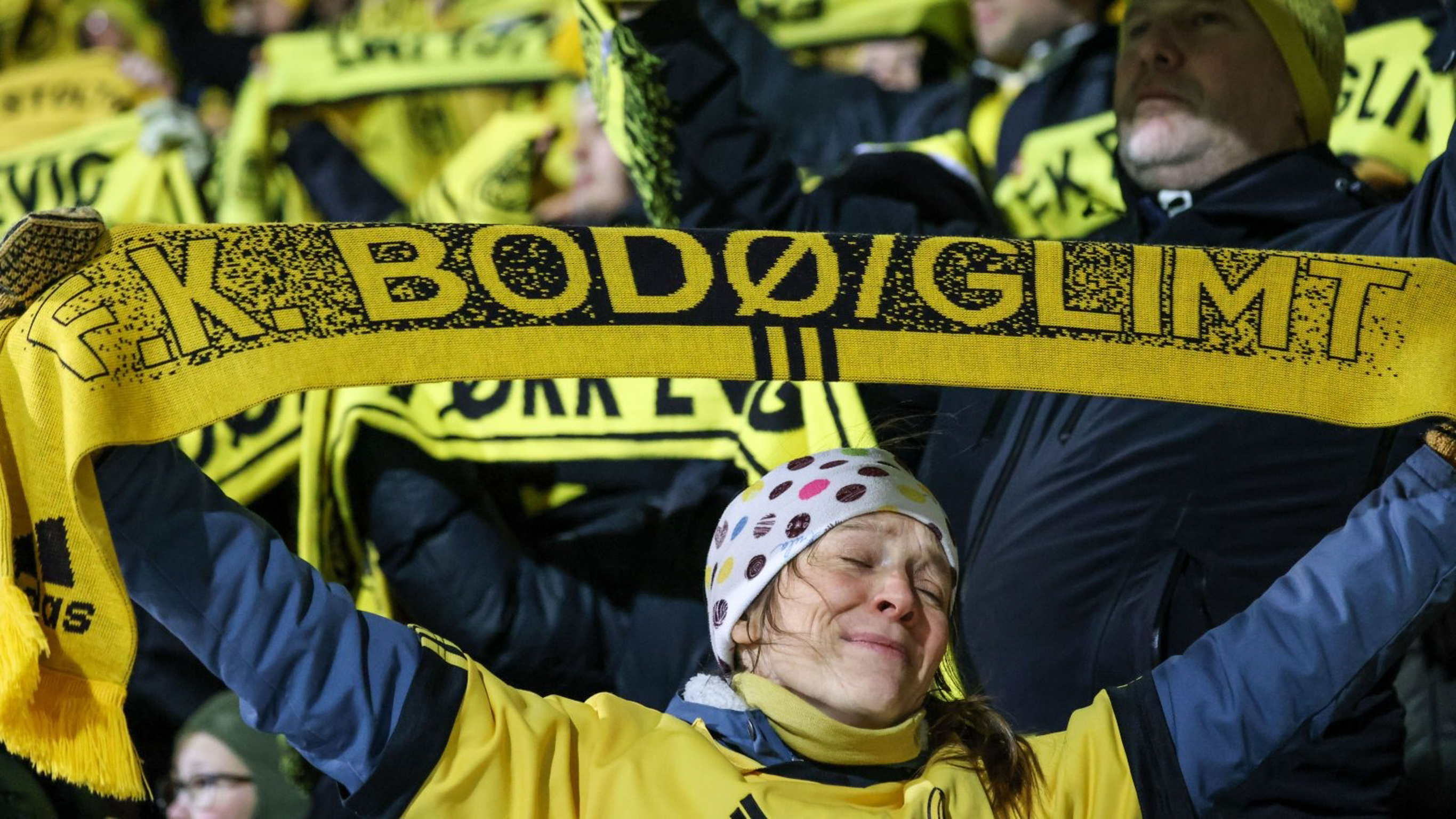
Arctic Gleam — The Norwegian underdogs have become darlings of European football after David and Goliath victories over some of the sport’s giants. Yet scratch below the surface, is a blueprint for success rooted in community and sustainability.
200 miles north of the Arctic Circle lies Bodø, a small Norwegian city of 55,000 people where winter temperatures regularly reach below -10C. In summer, from the start of June until mid-July, the midnight sun never dips below the horizon.
This is the home of Fotballklubben Bodø/Glimt, a team that has achieved unprecedented success since being promoted to Norway’s top division in 2018, winning four Norwegian league titles in the last six years. Glimt, which translates to ‘Gleam’ in Norwegian, has also developed a David versus Goliath reputation for its European exploits, reaching the Conference League quarter-finals in 2022, the Europa League semi-finals in 2025, and this season’s Champions League round of 16 after beating Atlético Madrid and Manchester City in the group stage, and Inter Milan in the round of 32.
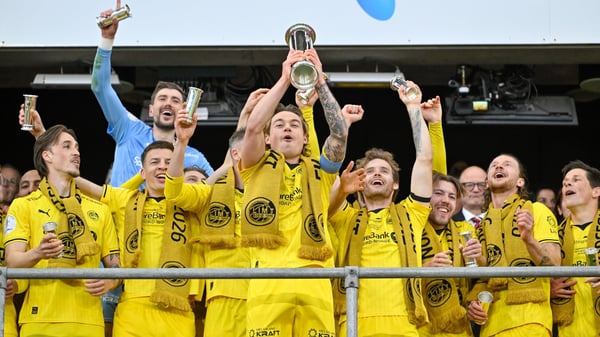
And on Saturday, May 9, the team added more silverware to its burgeoning cupboard, winning the Norwegian Cup after a tense final against SK Brann, after a 3-3 final score that saw goals traded in extra time, and ultimately a 4-2 penalty shootout victory.
It’s remarkable success for a club that’s focused largely on homegrown players, with star players including captain Patrick Berg, left back Fredrik André Bjørkan and left winger Jens Petter Hauge graduating from the academy, and the team is predominantly made up of Norwegian players. But Glimt’s growing reputation on the pitch has overshadowed its work as one of the most socially and environmentally-conscious elite clubs in world football off of it.
Read next: Bohemian FC is more than a football club
Almost one-fifth of Bodø’s population attends home matches, linking the club – which is self-owned by its members – with a greater percentage of its community than the giants it has been brushing shoulders with in the Champions League. This community connection has been increasingly lost in modern society’s ‘football as business’ model, but Glimt places particular focus on football’s influence as a tool for social inclusion.
Street Football, a concept unique to Norway, offers anyone who has/had long-term challenges with drug and alcohol addiction a social setting to build camaraderie and find support from people in a similar position to themselves. Organised by Norsk Toppfotball, 20 major Norwegian clubs have their own Street Football team, but Glimt has two: one for active users and one for those in recovery.
“Participants don’t need to be good players, just good teammates,” says FK Bodø/Glimt head of community Ørjan Berg, who brought street football to the club in 2021. Berg and his family are renowned in Bodø and epitomise Glimt’s community ethos. “My father [Harald Berg] played for Bodø/Glimt in the ’60s and ’70s, helping bring the club to the top and creating a pride in the Northern Norway community that still exists today," Berg says, who played over 100 times for the club himself. He is also the father of captain Patrick Berg, with all three having played for the Norwegian national team.
“The Street Footballers just try to get a little bit better day by day, week by week, have fun and develop that feeling of belongingness together,” he continues. “And it works. It’s the same culture in every team, whether it’s the first team, Street Football teams or our STAR team.” The latter of these serves children aged 6-17 with disabilities that prevent them from playing in a regular football team.
Research by the University of South-Eastern Norway (USN) has supported Berg’s claim, suggesting that Street Football is one of the most efficient forms of drugs and alcohol rehabilitation in the country while reintegrating people into society. Oslo Economics also found that Street Football across Norway in 2025 created health benefits and reduced costs in the health and justice sectors that led to 67,000,000 million Norwegian Krone in cost savings, equivalent to over £5 million.
In 2025, Glimt piloted a project with Nav (Norwegian Labour and Welfare Administration) to create a rotating trainee program of six-week work placements at different companies for young people struggling to enter the job market. The club has already hired one participant in its kitchen staff after the trainee period, while future additions may come from the ‘Action Now’ food truck, created in partnership with Coop Nordland and the local high school. Students from the school’s culinary program prepare meals using supermarket surplus to be served at Glimt matches. Automotive students from the same school are also responsible for maintaining the truck.
Every Glimt academy player down to the under-13s level is asked to work towards a specific United Nations Sustainable Development Goal over the course of a season. Past projects include visiting elderly homes to chat and bring cakes, as well as organising secondhand clothing exchanges.
“When you do it as a team, it’s much easier than if you pick one player and you tell them to visit someone in the elderly home,” says Berg. “When you get everyone as a team to do it together and it’s a project, it works really well.”
“The principle is when we make good money, we give something back to our community. We are a top club so it’s our responsibility, because kids need to have a place to play football.”
Glimt’s recent European success has enabled the club to amplify its local influence in the community. Every time the club qualifies for a European competition, Glimt’s board has committed donations to a local foundation that helps poor families keep children active in sports: £100,000 for the Champions League, £70,000 for the Europa League and £30,000 for the Conference League. “The principle is when we make good money, we give something back to our community,” says Berg.
The club is also investing in infrastructure around the city. Bodø has 15 football pitches that all use artificial turf. “You cannot have grass in Bodø,” Berg smiles, referring to the city’s Arctic climate. After 15 years of use, the artificial turf on many of the pitches is, as Berg describes, “totally wrecked” and needs replacing. The club is contributing equivalent to £2.5 million towards the replacement project, a collaboration with the Bodø Sports Council and municipality. “We are a top club so it’s our responsibility to the community, because kids need to have a place to play football,” Berg adds.
The club’s flagship architectural project, however, is building a new 10,000-capacity stadium that incorporates circular economy, energy efficiency and urban agriculture, which is due to be ready by 2028. The heart of the stadium will include the Star Lounge, adjacent to the tunnel where players head onto the pitch. Designed in collaboration with Nordland Hospital for young people facing serious illness, the space will feature state-of-the-art wheelchair access and separate ventilation in an effort to make football’s unifying and uplifting spirit tangible to more people.
Glimt’s first team is also a key focus for social and environmental initiatives. The team partnered with kit supplier Puma to release a third kit for the 2025/26 season featuring a design to raise awareness of melting ice caps. Ahead of Glimt’s Champions League clash with Manchester City in January, the club also held a Street Football match against Bryne, the team where City striker and Norwegian superstar Erling Haaland began his career.
“We see the Street teams as a fantastic initiative from the football family, one that genuinely makes a difference in people’s lives,” Haaland said, who along with his father (and ex-Bryne and Man City player) Alf-Inge Haaland, funded Bryne’s travel and accommodation for the match.
“We have this Street Football project in Norway, but it’s only in Norway,” says Berg. “It should be in every country we talk about football. It has to be the top clubs that lead the initiative because that’s what gives it power and makes it successful."
Berg says that Manchester City CEO Ferran Sorriano showed interest in Glimt’s Street Football program after the Glimt v Bryne match, and hints that there could be a future collaboration between the clubs to implement something similar in England.
Bodø/Glimt is setting a blueprint for the rest of world football in real time. With both silverware on the pitch and impacts on the tight-knit city surrounding it, the club on the edge of the earth has shown that modern football doesn’t have to be a playground for billionaire owners. A more holistic form of success, centred around the community and people who are integral to the club’s roots, is possible.
George Timms is a sport and sustainability writer. Follow him on X.
Buy your copy of Huck 83 here.
Enjoyed this article? Follow Huck on Instagram for more from the cutting edge of sport, music and counterculture.
Support stories like this by becoming a member of Club Huck.