‘NGOs Death Kills US Dollars In Uganda’: Depreciation Of Sliding Shilling Causing Concern In Uganda
By Black Star News Photos: YouTube Screenshots|Wikimedia Commons The uncontrollably sliding and plunged Uganda Shilling continues to generate much debate and cost of living concerns with economic analysts linking the ‘death of the Non-Governmental Organizations (NGO) sector’ in Uganda as the main killer of the local currency than the acclaimed war in the Middle East. The joint US/Israel airstrikes on Iran since February have escalated fuel prices worldwide which is threatening plunging the global economy into yet another down turn since 2008 and post-Covid-19 pandemic. Israel has, however, since left the US a loner bombing Iran; the territorial owner of the so far closed critical waterway in the Strait of Hormuz which controls 20% of the world’s fuel shipments. Asks Ugandan Philosophy Teacher, Jimmy Spire Ssentongo on October 10: “Besides Ebola and other global dynamics, do we expect the shilling to stabilize when: We scare away tourists with constant abduction, torture and exile stories? We scare away potential investors by creating an environment of an unpredictable political future? Passing a [Sovereignty] law that scares away several civic society funders, making them fear to risk their money on Uganda and fear to risk the lives of the beneficiaries? Suspending civil society organizations for no clear reason, creating a fear that any other can be suspended anytime, anyhow?” The Central Reserve—Bank of Uganda (BoU)—Governor, Michael Atingi-Ego warned MPs before they overwhelmingly voted in favor of the Protection of Sovereignty Bill; “We are going to have substantial depreciation because balance of payments will be greatly destabilized by the Sovereignty Bill.” On May 5, Uganda’s Parliament passed a widely rejected Protection of Sovereignty Bill into an Act of Parliament. Within days, the head of the executive, Gen Yoweri Museveni appended his signature on the dotted lines of the Act which is now law. The law has sweeping restrictions on the operations of NGOs in the country, foreign funding inflows, among other suffocations its critics claim are too draconian for an open democratic and civic space. In the immediate aftermath of passing the Protection of Sovereignty Act, 2026, a landlord claims to have lost a Community Based Organization (CBO) tenant because their funding was suddenly stopped. The CBO boss reportedly showed the landlord an email from the donor saying they operate in over 30 countries which are—“unlike Uganda” —more serious about the well-being of their own citizens. According to local economist, MP and CEO of an NGO in Uganda, Dr Patrick Wakida, the current economic downturn is more to do with endogenous factors than exogenous factors. The effect of the May 5, 2026-enacted Sovereignty Bill and NGO Bureau’s strict licensing; 87 NGOs were deregistered by August 2026, over 200 NGO bank accounts were frozen pending re-verification, USAID and EU 40% funding, too, were cut due to compliance risk. The economist legislator says donors moved grants offshore—[Kenya’s capital] Nairobi, Kigali [the capital of Rwanda] —awaiting clarity. He adds that BoU data on private transfers—NGOs included—fell $62 million in Quarter2 2026 Vs Quarter2 2025. As a result, several NGOs like South Korean World Vision closed many of their offices and many staff terminated. Others like Child Fund stopped school feeding in which 18,000 children were affected. According to Dr Wakida, RHITES stopped fuel vouchers; hotels, fuel stations and printers upcountry report 60% drop in NGO bookings and therefore, no dollars to exchange. “This is a silent dollar death—$250 million annually—never counted in coffee or gold—but was daily cash in bureaus. Traders now have no NGO dollars to buy,” regretted Dr Wakida on October 10. The death of the NGO sector, according to Dr Wakida, caused a loss of $250 million-dollar inflow and is a direct hit to his constituency Kabweri alone in eastern Uganda. “NGO Sector was $800 million per year; $66 million per month in grants dollars; the second-biggest service inflow after tourism-exchanged via banks and bureaus daily to pay salaries, field operations, pay rent and buy fuel,” he recalls. Dr Wakida submits that what broke between March and October 2026 when Offshore investors exited was the biggest endogenous shock. Then in May 2026, Parliament passed the Protection of Sovereignty Bill which regulates foreign funding, foreign agents and Offshore investors (JP Morgan, Citibank funds) feared capital controls; “they own roughly 70% of Uganda’s local bonds. They started selling shilling bonds, buying dollars to exit. [The end] result was $400-600 million left Uganda in four months; same as losing three months of coffee export dollars. To buy those dollars, they sold shillings—shilling flooded market and the market price fell”, he reminisces. But addressing the nation on Uganda’s 64th Independence Anniversary on October 9 from State House in Entebbe, Museveni sai
 Black News
By Black Star News
Photos: YouTube Screenshots|Wikimedia Commons
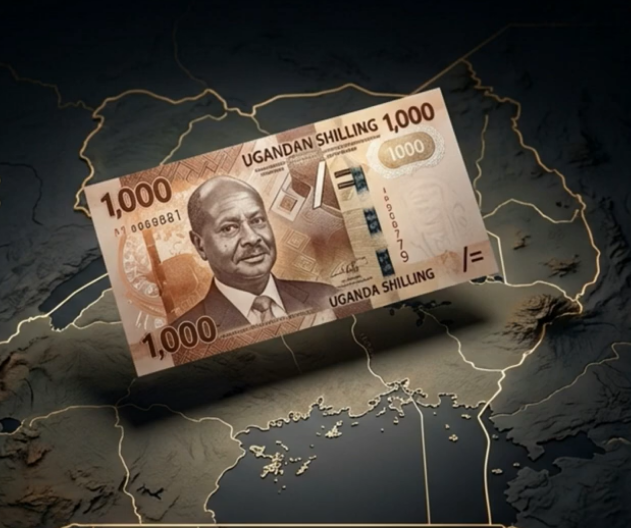
The uncontrollably sliding and plunged Uganda Shilling continues to generate much debate and cost of living concerns with economic analysts linking the ‘death of the Non-Governmental Organizations (NGO) sector’ in Uganda as the main killer of the local currency than the acclaimed war in the Middle East. The joint US/Israel airstrikes on Iran since February have escalated fuel prices worldwide which is threatening plunging the global economy into yet another down turn since 2008 and post-Covid-19 pandemic. Israel has, however, since left the US a loner bombing Iran; the territorial owner of the so far closed critical waterway in the Strait of Hormuz which controls 20% of the world’s fuel shipments.
Asks Ugandan Philosophy Teacher, Jimmy Spire Ssentongo on October 10: “Besides Ebola and other global dynamics, do we expect the shilling to stabilize when: We scare away tourists with constant abduction, torture and exile stories? We scare away potential investors by creating an environment of an unpredictable political future? Passing a [Sovereignty] law that scares away several civic society funders, making them fear to risk their money on Uganda and fear to risk the lives of the beneficiaries? Suspending civil society organizations for no clear reason, creating a fear that any other can be suspended anytime, anyhow?”
The Central Reserve—Bank of Uganda (BoU)—Governor, Michael Atingi-Ego warned MPs before they overwhelmingly voted in favor of the Protection of Sovereignty Bill; “We are going to have substantial depreciation because balance of payments will be greatly destabilized by the Sovereignty Bill.”
On May 5, Uganda’s Parliament passed a widely rejected Protection of Sovereignty Bill into an Act of Parliament. Within days, the head of the executive, Gen Yoweri Museveni appended his signature on the dotted lines of the Act which is now law. The law has sweeping restrictions on the operations of NGOs in the country, foreign funding inflows, among other suffocations its critics claim are too draconian for an open democratic and civic space.
In the immediate aftermath of passing the Protection of Sovereignty Act, 2026, a landlord claims to have lost a Community Based Organization (CBO) tenant because their funding was suddenly stopped. The CBO boss reportedly showed the landlord an email from the donor saying they operate in over 30 countries which are—“unlike Uganda” —more serious about the well-being of their own citizens.
According to local economist, MP and CEO of an NGO in Uganda, Dr Patrick Wakida, the current economic downturn is more to do with endogenous factors than exogenous factors. The effect of the May 5, 2026-enacted Sovereignty Bill and NGO Bureau’s strict licensing; 87 NGOs were deregistered by August 2026, over 200 NGO bank accounts were frozen pending re-verification, USAID and EU 40% funding, too, were cut due to compliance risk. The economist legislator says donors moved grants offshore—[Kenya’s capital] Nairobi, Kigali [the capital of Rwanda] —awaiting clarity. He adds that BoU data on private transfers—NGOs included—fell $62 million in Quarter2 2026 Vs Quarter2 2025.
As a result, several NGOs like South Korean World Vision closed many of their offices and many staff terminated. Others like Child Fund stopped school feeding in which 18,000 children were affected. According to Dr Wakida, RHITES stopped fuel vouchers; hotels, fuel stations and printers upcountry report 60% drop in NGO bookings and therefore, no dollars to exchange. “This is a silent dollar death—$250 million annually—never counted in coffee or gold—but was daily cash in bureaus. Traders now have no NGO dollars to buy,” regretted Dr Wakida on October 10.
The death of the NGO sector, according to Dr Wakida, caused a loss of $250 million-dollar inflow and is a direct hit to his constituency Kabweri alone in eastern Uganda. “NGO Sector was $800 million per year; $66 million per month in grants dollars; the second-biggest service inflow after tourism-exchanged via banks and bureaus daily to pay salaries, field operations, pay rent and buy fuel,” he recalls.
Dr Wakida submits that what broke between March and October 2026 when Offshore investors exited was the biggest endogenous shock. Then in May 2026, Parliament passed the Protection of Sovereignty Bill which regulates foreign funding, foreign agents and Offshore investors (JP Morgan, Citibank funds) feared capital controls; “they own roughly 70% of Uganda’s local bonds. They started selling shilling bonds, buying dollars to exit. [The end] result was $400-600 million left Uganda in four months; same as losing three months of coffee export dollars. To buy those dollars, they sold shillings—shilling flooded market and the market price fell”, he reminisces.
But addressing the nation on Uganda’s 64th Independence Anniversary on October 9 from State House in Entebbe, Museveni said: “You cannot start helping people who are importing dead people’s hair,” as he rejected Central Bank Governor’s proposal to deploy foreign reserves to save the uncontrollably sliding shilling. Museveni’s argument is that a weak local currency is good for exporters and only importers benefit from a strong shilling.
Data Analyst, David Soita Masinde, reacts to Museveni’s argument reasoning it deserves scrutiny because it turns a complex macro-economic trade-off into a simple political morality play: exporters are productive patriots, importers are people buying unnecessary things and a weak shilling is therefore good. That that framing is economically lazy. “First,” according to Masinde, “it creates a false dichotomy. Uganda does not have to choose between exporters and importers as though every importer is unproductive and every exporter benefits from depreciation [of the Uganda Shilling].
“Second, it commits a composition fallacy. What benefits a particular exporter does not necessarily benefit the national economy. A gain in one sector can be offset by higher input costs, inflation and losses elsewhere. Third, it risks confusing nominal changes with real competitiveness. Receiving more shillings for every dollar earned is not the same as producing more goods, improving quality or lowering unit costs.”
Masinde faults Museveni’s preposition for ignoring distribution. The consequences of depreciation differ between exporters, he asserts, import-dependent manufacturers, consumers, foreign-currency borrowers and businesses with mainly domestic costs. “This is why the phrase econometrics populism fits the argument: it uses a simplified economic story to make a politically-attractive conclusion sound self-evident, without demonstrating the conditions under which that conclusion holds.
“If supporting the shilling would waste reserves, make that case with evidence. If depreciation is helping exports, quantify the gains against the costs. But do not substitute a wig-importing punchline for an economy-wide assessment. An analogy is not a model. A slogan is not a cost-benefit analysis. And a currency losing value is not proof that a country is winning,” Masinde argues.
Dr Wakida, however, recommends that the impact of this endogenous failure is not imported inflation, but it is a home-grown dollar scarcity inflation. “The fix is not waiting for the Middle East peace,” Dr Wakida advises, “the fix is bringing the dollars in; restoring offshore investor confidence (clarify Sovereignty Bill), force gold exporters to repatriate 30% dollars, make tourism recover, make coffee dollars come home the same week.” Ugandans continue feeling the excruciating economic pinch anyway.