Nigeria targets $3bn livestock investment boom as private sector moves to unlock Africa’s largest market
Nigeria’s livestock industry is being positioned for a major commercial overhaul, with stakeholders mobilising a private sector-led investment drive targeting up to $3bn in pastoral market opportunities over the next three to five years.
 Black News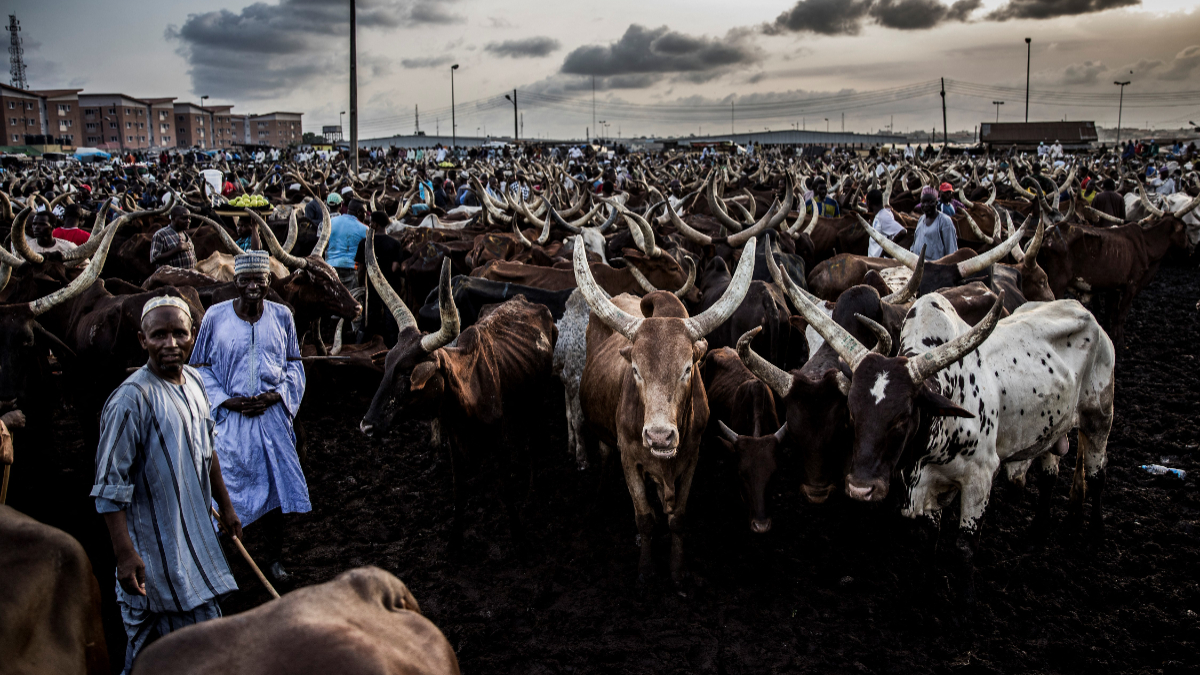

![Herdsmen along with their cows wait for buyers at Kara Cattle Market in Lagos, Nigeria. Kara cattle market in Agege, Lagos is one of the largest of West Africa receiving thousands of cows weekly due to the massive consumption of meat in Lagos area. [Photo by LUIS TATO/AFP via Getty Images]](https://ocdn.eu/pulscms/MDA_/41da371cb2c7cbb44b967bd5ba2ecc92.jpg)
Nigeria’s livestock industry is being positioned for a major commercial overhaul, with stakeholders mobilising a private sector-led investment drive targeting up to $3bn in pastoral market opportunities over the next three to five years.
- Nigeria is targeting up to $3bn in livestock market opportunities over the next three to five years through a private sector-led investment push.
- The initiative is backed by government reforms and international partners aiming to fix long-standing structural inefficiencies in the sector.
- Despite a livestock economy valued at about $32bn, Nigeria still imports around 60% of its dairy needs due to low productivity and high feed costs.
- Stakeholders say growth will depend on stronger private investment, improved infrastructure, and better access to finance across the value chain.
The initiative reflects growing alignment between government and industry actors on the need to address long-standing structural constraints that have limited productivity, investment flows, and value chain integration in one of Africa’s largest agricultural subsectors.
The push was central to discussions at a three-day high-level forum in Abuja, where producers, processors, financiers, and policymakers met to negotiate deals, establish supply arrangements, and attempt to rebuild confidence across a fragmented livestock value chain.
The event was organised by the African Union Inter-African Bureau for Animal Resources (AU-IBAR) under its Africa Pastoral Markets Development Platform (APMD), part of a four-year programme supported by the Gates Foundation aimed at shifting pastoral systems towards more market-oriented and resilient structures.
Nigeria’s livestock sector is significant in scale but underperforming relative to its potential. Speaking at the forum, Shekamang Ayuba, Director of Livestock Extension and Business Development at the Federal Ministry of Livestock Development, said the country holds West Africa’s largest livestock population, with around 54 million cattle and 250 million poultry birds.
Productivity gaps and high costs undermine livestock output
![Herdsmen along with their cows wait for buyers at Kara Cattle Market in Lagos, Nigeria. [Photo by LUIS TATO/AFP via Getty Images]](https://ocdn.eu/pulscms/MDA_/b2417d3a41bfe37f069cd4127671dc6a.jpg)
He noted that the sector supports an estimated 75 million households and contributes roughly 5 per cent of gross domestic product, valued at about $32bn. However, Nigeria still imports roughly 60 per cent of its dairy requirements, highlighting deep inefficiencies in domestic production.
Ayuba said the productivity gap remains the most pressing challenge. “Milk yields from local cattle are less than 10 per cent of global averages, while feed costs account for between 60 and 70 per cent of total production expenses, leaving producers highly vulnerable to price shocks,” he said.
He added that government efforts are underway to address these gaps through coordinated policy and investment frameworks. These include the National Livestock Master Plan, developed with support from the Livestock Productivity and Resilience Support Project, the International Livestock Research Institute, and the Gates Foundation, which focuses on feed systems, animal health, and market access.
He also referenced the National Livestock Growth Acceleration Strategy, which aims to expand the sector into an industry valued at $74bn to $90bn by 2035, driven by partnerships among federal and state governments, private investors, and international development actors.
Deal-making platform aims to unlock bankable livestock investments
![Hausa-Fulani pastoralists and cattle buyers wait for cattle transactions while sitting on a metallic fence at Kara Cattle Market in Lagos, Nigeria. [LUIS TATO/AFP via Getty Images]](https://ocdn.eu/pulscms/MDA_/e83f373f68e2d138e2cc8ea161ca6576.jpg)
In addition, the six-year, $500m World Bank-supported Livestock Productivity and Resilience Support Project (L-PRES), launched in 2022, targets productivity gains and commercialisation across 20 states, with expected benefits for about 1.43 million people, including significant participation by women.
“Government alone cannot drive the transformation of Nigeria’s livestock sector. The future depends on bold, private sector-led investment across the entire value chain, from feed to processing to market linkages,” Ayuba said.
AU-IBAR’s Private Sector Engagement Expert, Mohammed Eidie, said the Abuja forum was deliberately designed as a deal-making platform rather than a traditional policy dialogue.
“We are here to do something different. The APMD Platform exists to ensure that market-driven transformation in pastoralism is not left to chance. What we are facilitating in Abuja is the infrastructure of trust, the handshakes and contracts that make a sector function,” he said.
He explained that the platform focuses on strengthening private sector participation, improving policy environments, and building data systems to support investment decisions, while integrating gender inclusion, youth employment, nutrition, and climate resilience.
Call for investment-ready abattoirs
![Butcher skinning and cleaning goats for sale at the Birnin Kudu market. [Photo by Jorge Fernández/LightRocket via Getty Images]](https://ocdn.eu/pulscms/MDA_/382c2381cc9367648439f61f86089379.jpg)
Professor Ahmed Elbeltagy, Pillar Lead at APMD, said the reforms are expected to improve competitiveness and deepen market linkages.
“The livestock sector holds immense potential. Private sector-driven transformation will enhance Nigeria’s competitiveness in regional and international markets while strengthening food security and reducing poverty,” he said.
At the operational level, industry players highlighted persistent infrastructure and financing challenges. Raymond Odulate, Managing Director of ABAT CBD Limited, said licensed abattoirs remain central to connecting pastoral producers to urban markets but face structural bottlenecks.
He pointed to unreliable electricity and water supply, heavy reliance on diesel-powered generators, and the growth of informal slaughter slabs that bypass regulation and undercut formal operators.
“Until this imbalance is addressed, serious investors will remain cautious,” he said, adding that commercial lending rates above 25 per cent make it difficult to finance modern abattoir infrastructure.
Mrs Evangeline Yusuf, Operations Manager at SCL Future Food Systems, said the sector is at a critical point where clear frameworks are needed to attract incentive-based investment. She stressed that upgrading licensed abattoirs into investment-ready hubs is key to unlocking the broader potential of the livestock market.