Lucy Dacus on tending to what matters most
As the Virginia-born artist enters a new season, she reflects on love, loss, and the ways we show up for each other. The post Lucy Dacus on tending to what matters most appeared first on BRICKS Magazine.
 Black News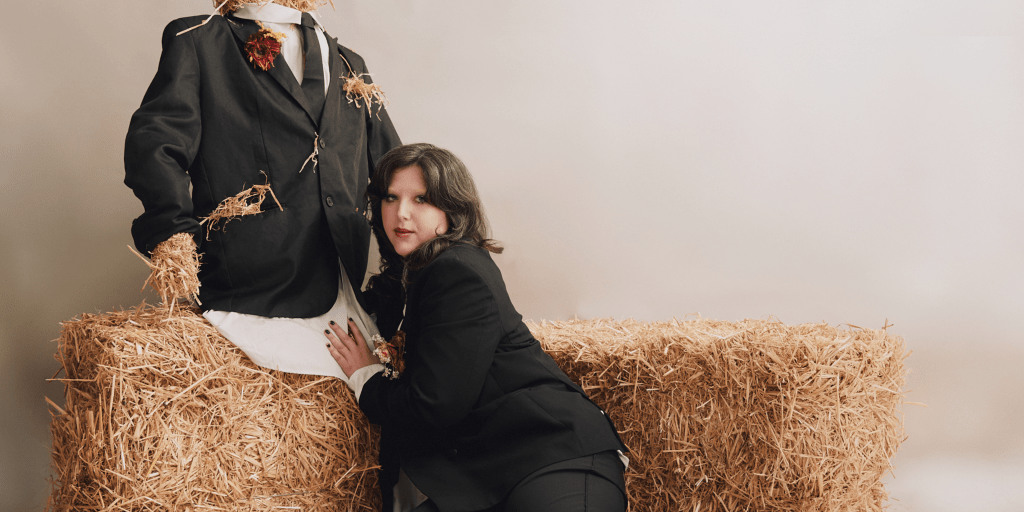

PHOTOGRAPHY Anna Lowry
CREATIVE DIRECTION & PRODUCTION Tori West
STYLING Mia Maxwell
MUA Callie Foulsham
HAIR Kornelija Cecetaite
NAILS Ellie Newman-Grainger aka Sick Nails Bro
SET DESIGN Ro Gearty
PRODUCTION ASSISTANT & SOCIALS Rachelle Cox
STYLING ASSISTANT Kyara Simone, Ines Cryer & Marcelina Wmuk
SET DESIGN ASSISTANT Bel Rowland
The first week of Spring is just coming to an end when I connect with a very serene-looking Lucy Dacus for her BRICKS cover interview. It’s early morning in LA and the general atmosphere on the video call transmits that subtly exciting sense of an upcoming rebirth. “New house, new morning routine!” chirps the songstress while sipping a cup of tea.
Raised devoutly Christian in the rural South, the singer-songwriter and producer is no stranger to enduring the growing pains, intermittent anxieties, and emotional rollercoasters that come with flourishing. She’s been composing songs since she was merely eight years old, broke through with her debut album No Burden, before gaining major acclaim with her sophomore release, Historian. It was that offering that brought us the instantly classic, nearly seven-minute breakup anthem ‘Night Shift’, followed by her third album Home Video. Shortly after, alongside former BRICKS cover star Phoebe Bridgers and Julien Baker in indie-rock trio boygenius, she helped transform a one-off collaboration into a 3x Grammy-winning force, redefining a new era for modern rock supergroups and supergroupies.
Last March, Dacus released a fourth solo record, Forever Is A Feeling – a tender hymn to her relationship with fellow bandmate Baker, and a deep dive into the vast feelings and experiences that are intrinsic in blooming love, arranged into an array of emotional gut wrenches. “What I’ve learned is what I wondered at the start – how will it feel to sing these every night? I guessed that it would make my life better to be able to sing some happy songs,” she reports. Granted, not all the songs on the album are joyous, with darker themes touching on the complications of falling out of love, sexual coercion, and scared love, tortured by the fear of losing someone and living your whole life dishonestly. Nevertheless, the release has been an uplifting experience for Dacus. “Singing these songs, I get a lift every show I get to play, and I get to see other people loving on each other, who relate to what I’m saying, and I’m so happy for them that they have found a great love in their life,” she smiles. “Life is short. I just want to be reminding myself regularly about what’s important, and the way that I feel on this record is important to me.”


Left: Candles BOMBI HOME
Although initially torn on whether to give up the privacy that comes with keeping a relationship outside of any media discourse, Baker and Dacus opted for vulnerability and made their bond public around the release of Forever Is A Feeling. “It started to feel like we were behaving differently than we would have if people weren’t watching. That felt a little suffocating, and I would prefer to live unbothered if possible,” Dacus explains. “I wanted to avoid it being a rumour or salacious, and this way depowers people’s spy tendencies. If you give the information, they can’t go hunting for it, and I just didn’t want the feeling of being hunted.” In choosing openness, the couple also leaned on the quiet solidarity that has long defined their creative partnership, supporting one another through the scrutiny that comes with visibility and navigating it as a shared experience, rather than an individual burden. “Ultimately, it’s been great. Happy to report that feeling is gone.”
For Dacus, support consists of showing up and following through. The last year has seen her extend that notion far beyond the stage and into the lives of the communities around her: performing at Zohran Mamdani’s mayoral inauguration in New York, lending her voice to Sudan and Palestine aid in Los Angeles alongside Chappell Roan, and becoming ordained to officiate 154 predominantly queer weddings while on tour.
“Maybe you have space in your house. Maybe you have trees that grow fruit, maybe you have skills that can help,” she points out, contemplating the small, tangible ways we can show up for each other, how those choices shape the kind of world we live in, and how important advocacy is in a climate of censorship, authoritarianism, and smear campaigns. “I think you really have to make peace with there not being a balanced return. Charity is not an investment. If the only return that you get is the ability to respect yourself, that should be enough.”
I think you really have to make peace with there not being a balanced return. Charity is not an investment. If the only return that you get is the ability to respect yourself, that should be enough.
Speaking of the democratic socialist mayor, Dacus tells me: “I was really honoured to be asked to sing at his inauguration, and he also came to one of my shows and spoke to people before the election,” praising Mamdani not just for his progressive stance and compelling, heartfelt dialectic, but also for his concrete focus on renters rights, the cost of living, and improving urban infrastructure. “It’s not just that he was just running on hope. He ran on a very clear cut plan of policies, and every day in the first weeks of his tenure he did one of those things,” she points out. “From going to some of these apartments that have been so woefully disregarded and under-resourced, to fixing the ramp to a bridge for New York bikers, he’s inspiring to people that ask ‘what can any of us do?’ We can also fix the ramp onto whatever bridge is near us, or whatever that symbolises.”
Between her unwavering political activism and canonically resolving what the sapphic side of the internet coined “The Masc Shortage” – thanks to the impeccable casting of iconic masc presenting and queer and trans people of all ages in the ‘Best Guess’ music video – the artist’s support for LGBTQIA+ communities has become an increasingly visible thread in her work. “You wouldn’t believe the amount of people who told me they had a gay awakening watching that video,” she laughs.


Having both grown up in rural environments with limited access to queer spaces, our conversation goes on to explore the absence of representation, how isolating this can be, and the powerful impact of finally seeing yourself reflected. “A lot of people also told me they had no queer elders in their immediate life, and seeing a happy, embodied representation of queerness later in life made them feel like they have a future, so that’s been very emotional and overall really positive,” Dacus fondly recalls.
That perspective informs her as much as it does her actions, as she continues to use her platform to create moments of visibility and belonging for others navigating similar paths. That ethos came into sharp focus when she began officiating the weddings, turning what might have been a symbolic gesture into something deeply tangible. “I always want to support my fans. They’re supporting me,” she emphasises. “Also, beyond band member and singer, I do think it’s our job as humans to support each other where we can.” For some couples, the ceremonies carried urgency among fears over ceaselessly shifting rights in the US; for others, it was a chance to celebrate a love long delayed or unsupported. “Some people don’t have supportive families, so they were never going to be able to feel that group excitement,” she adds.
Amid a few legs of tour, major talk show appearances, and star studded award ceremonies, Dacus also gave us surprise singles ‘Bus Back To Richmond’ and ‘More Than Friends’, intimately reflecting on the slow, small moments that forge immense feelings. Since then, she’s been quietly sowing the seeds of a new release. Engineered and produced by multi-instrumental artist Jay Som, and recorded with Warpaint drummer Stella Mozgawa alongside esteemed bandmates Dominic Angelella and Alan Good Parker, ‘Planting Tomatoes’ offers an uptempo but existential reflection on the cyclical nature of life and death. A thread of encouragement to cherish every life experience – despite how hopeless and unpredictable – is woven through ethereal vocal sampling and prog-rock-adjacent guitar and synth lines. The picture that the songwriter virtuously paints through the track feels cosy and lived-in, rooted in her instinct for visual storytelling. “I’ll often just remember a scene from my life, and whatever room that’s set in is where the song starts,” she explains, describing a process that unfolds like moving through physical space. “I think pretty visually and cinematically, to the point of having to accept that not every song needs to be this way.”
The song’s emotional core around the inevitability of death and finite character of relationships takes on a symbolic form in the act of gardening itself. “The other day [Julien and I] had our hands in the dirt,” she recounts. “If the plants don’t do well, I will feel like a murderer, but I need to let that go, because I think that’s part of it,” she says, half-jokingly acknowledging the lesson in relinquishing control. Growth, like life, can be inconsistent, and learning to accept that becomes part of the process. “It’s like how pets are very useful for children when they pass, because it helps parents introduce the idea of death. Maybe plants are a micro gateway to death,” she adds, framing the song as a gentle confrontation with mortality, and a reminder that fragility is inseparable from the things we choose to nurture.
If the plants don’t do well, I will feel like a murderer, but I need to let that go, because I think that’s part of it.
Dress SARAH REGENSBURGER

Dacus’ relationship with nature has shifted since being a day to day experience in Virginia to being replaced by the urban landscape of city life: “Hanover County literally has a tomato festival!” she giggles about her childhood home. “When I was a kid, my friends and I would always play in the woods, but as I got older and lived in cities, I really lost my connection to dirt and the earth and growing things,” she reflects. “That is part of why I wanted to do this song. I find every time I put out music, it puts me more in touch with what I am talking about. I did plant some basil and made a chicken wire case for it, so that the critters don’t get it. I feel like that’s always a good starter plant.”
Her love for art extends far beyond music, shaping the visual world-building that surrounds ‘Planting Tomatoes’. Drawing on a constant habit of photographing paintings in museums, she references works like Gustave Caillebotte’s Yerres, Effect of Rain, with its soft, concentric ripples, as mirroring the song’s emotional texture, alongside the visceral crimson energy of Kazu Shiraga’s Golden Wings Brushing the Clouds Incarnated from Earthly, Wide Star. “I love red in nature, it’s so distinct. You have all these natural browns, and hay colour, and the clouds are white and and then when things grow out of the ground red. It’s just this fiery, unexpected, phenomenon,” points out Dacus.
The musician’s visual instincts are rooted in a long-standing admiration for artists who challenged convention. She points to Henri de Toulouse-Lautrec and the Impressionists, whose rejection of academic norms and embrace of easily accessible materials continues to resonate with her. “At the time, it was so radical and I guess, class conscious, to make things in a way that was cheap and per their own resources. I really like that, and I’m glad the ethos to make art more accessible for people is always popping up through time,” she continues, stressing on the vital importance of accessibility to the arts for all communities.


Accordingly, Dacus’ connection to the world of fashion was also impacted by her financial background, as she recounts wearing mostly hand-me-downs growing up, and shopping at Goodwill where clothes were less than $20 per pound. “Thank goodness my grandma was stylish; I got to wear all these well made old clothes because they were hers,” she exclaims. “I would go home, cut everything up, sew it together and try to make things fit. I definitely think I looked odd to some people, but I had fun doing that.”
That innate sense of artistry evolved alongside her career, recently propelling her all the way to Paris Fashion Week, adorning the front rows of Acne Studios and Paco Rabanne alongside her partner. “Now, having to dress and be seen so much, I change every day,” she explains. “In terms of how I want to present, I’ll wake up every day either needing to look masculine, or wanting to indulge in my feminine side, so I try to keep my wardrobe flexible.” Despite fashion not being central in her artistic universe, Dacus appreciates the role it plays in her creative process and the mastery that goes into making clothes, even if it doesn’t feel as inherent to her skills. “It makes me feel like a kid, so it doesn’t maybe directly translate to music, but it kind of does because it helps me to think in a different way, and it can unlock interesting things,” she admits.

There are so many ways to become involved in the world that can make you feel like you’ve spent your time in a way you can be proud of. A lot of people feel really stuck, because we’ve been sold this trick that it’s impossible. What is possible is what you can do in a day.
Suit Jacket, Shirt & Trousers STYLIST’S OWN
Still, finding the appropriate time, setting, and access to be creative is becoming increasingly strenuous in the current political and economic landscape, especially as an active and dedicated social-political advocate. Akin to many others in the field, Dacus has found solace in small, simple acts of creative self care and has begun taking life drawing classes. “That has a defined beginning and end,” she points out. “It can be as simple as setting a time, putting pen and paper in front of you, and even if you’re not a skilled visual artist, just draw. You can hate it, but you’re still in contact with your mind,” she suggests, pondering on the concept of creativity finding its central purpose in self reflection, rather than its outcome. “What you make is beside the point sometimes. Just existing in the practice and showing yourself that you care about your own thoughts creates an opening for a good idea, whether that’s art, your life, or how you should behave in your relationships. You just need to cultivate a bond with your own mind,” she asserts.
Nonetheless, the responsibility that comes with her commitment to advocacy remains a principal focus for Dacus, as she insists on the simplicity of the actions necessary to provide community support, particularly as a touring musician. She recounts her fellow artists’ benefit shows, fundraising campaigns, and hands-on involvement in refugee care. “I also still believe in Land Back in the United States and elsewhere, and there are really specific projects to help indigenous people get their land back,” she observes. “There are so many ways to become involved in the world that can make you feel like you’ve spent your time in a way you can be proud of. A lot of people feel really stuck, because we’ve been sold this trick that it’s impossible. What is possible is what you can do in a day.”

Enjoyed this story? Help keep independent queer-led publishing alive and unlock the BRICKS Learner Platform, full of resources for emerging and aspiring creatives sent to you every week via newsletter. Start your 30-day free trial now.
The post Lucy Dacus on tending to what matters most appeared first on BRICKS Magazine.