Meet Dr. Charis Chambers, The Period Doctor Behind Clue App
The board-certified OBGYN, the internet calls the Period Doctor, is also the Chief Medical Officer of Clue App, a debut author, and the woman quietly rewriting what it looks like when medicine actually serves us. Somewhere in a clinic, a woman just received a prescription she does not fully understand. She nodded in the exam...
 Black News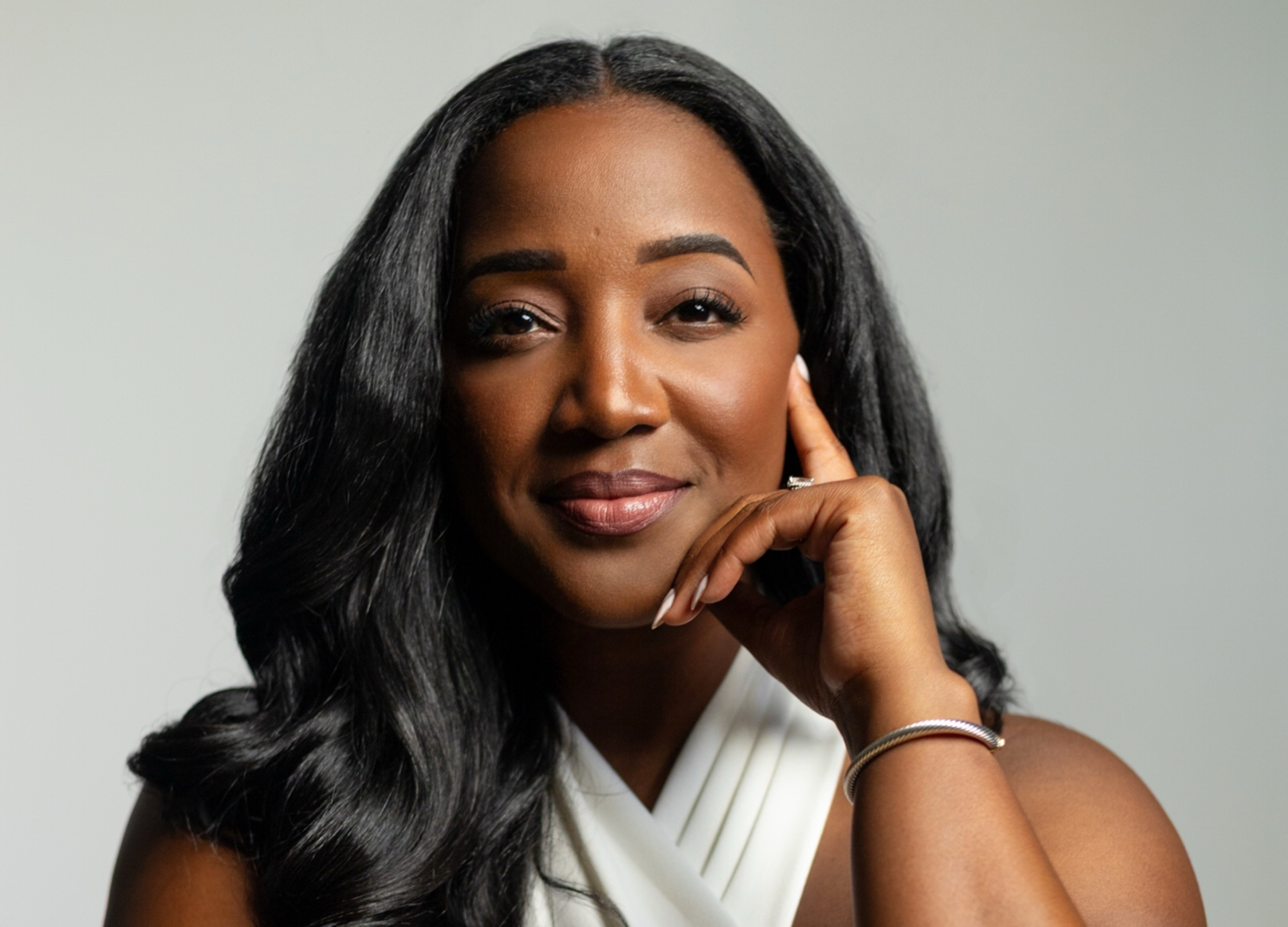
The board-certified OBGYN, the internet calls the Period Doctor, is also the Chief Medical Officer of Clue App, a debut author, and the woman quietly rewriting what it looks like when medicine actually serves us.

Somewhere in a clinic, a woman just received a prescription she does not fully understand. She nodded in the exam room because that felt safer than asking. She will go home, read the label once, and quietly second-guess herself for the next three days. Dr. Charis Chambers has seen that woman thousands of times. She recognized her by the way she held the paper. And every time, she stayed.
Ten minutes past the scheduled end of the appointment. Fifteen. Long enough to get flagged. Long enough to get written up. Long enough to actually explain what was happening in that woman’s body and why it mattered — which, if you ask Dr. Chambers, is the only definition of a completed visit that makes any sense. The system disagreed. The system can stay mad.
That particular stubbornness — the kind that chooses the patient over the process every single time — is the through line in everything Dr. Chambers has built. It is why the internet started calling her the Period Doctor. It is why Clue, the Berlin-based period tracking app used by over 100 million people globally, wanted her in the Chief Medical Officer seat. It is why her debut book exists. And it is why, sitting across from her in this BACON Magazine exclusive, our editor nearly missed a question because she was too busy thinking about how badly she wished Dr. Chambers had been her doctor ten years ago.
She Was Tired, Grieving, and Still Decided to Build Something
July 2019. Dr. Chambers was finishing up her first year of fellowship at Baylor College of Medicine, deep in a subspecialty she had chosen with intention — Pediatric and Adolescent Gynecology. She had already moved through four years of medical school and four years of residency. She had one year left. And she was running on empty in the specific way that grief and ambition combined will empty a person out.
Her mother had passed two years before. She needed something that felt like it mattered right now, not in the future, not eventually — in the moment, with real people, in real time. She started paying attention to what her patients kept saying to her after she stayed those extra minutes.
“When I spoke with my patients one-on-one and answered their questions, especially educating them around processes of menstrual health, they’d be like, why doesn’t anyone else tell me this? Why doesn’t anyone else explain it like you do?”
It was not just patients. Her Spelman College sisters — women who were sharp, accomplished, and running their own lives at full speed — were texting her to ask about missed birth control pills and emergency contraception. Not because they were careless. Because nobody had ever sat them down and actually explained their own reproductive health to them. The information that Dr. Chambers considered basic had never reached them. She decided that was a problem she could do something about.
So she started showing up online, explaining the things that clinic visits left out. And the internet, recognizing something it had been missing, gave her a name: the Period Doctor. She did not choose it. She earned it.
She also leaned into it for reasons that went beyond the nickname. The name forced a particular conversation to happen — one about periods specifically, not about pregnancy, not about motherhood, not about the version of women’s health that is most comfortable in a patriarchal framework. Dr. Chambers was deliberate about that distinction. A woman’s body is worth understanding when she is simply living in it. Not only when she is preparing to bring someone else into the world.
The second reason was inclusion. The name the Period Doctor does not presume gender. It presumes a body. If you have a period, or if you are capable of having one, the door is open.
“I wanted people to have to say period. Because I’m childish. And I think we will improve the normalization of periods.”
Spelman Made Her Sharp. Medicine Made Her Stay.
Dr. Chambers grew up across several cities, the kind of upbringing that either teaches you to find your footing fast or leaves you unmoored. She found her footing. By the time she landed in Phenix City, Alabama for high school, she was already running things — science club president, salutatorian, homecoming queen, captain of a nationally ranked cheer squad. Not one of those things. All of them, simultaneously.
She took that same energy to Spelman College in Atlanta, where she graduated Magna Cum Laude in 2010 with a Biology degree and became a member of Alpha Kappa Alpha Sorority, Inc. Medical school followed at the University of Alabama at Birmingham, then residency at Greenville Memorial Hospital, where she was inducted into the Alpha Omega Alpha medical honor society, then the fellowship at Baylor. Her father and brother are both OBGYNs. She did not walk into medicine because it was familiar. She walked in and found the specific corner of it where her gifts made the most sense.
The accolades followed in time: UAB’s Distinguished Young Alumni Award in 2024, the Women’s Health Educator Blossom Award that same year, the Atlanta Business Chronicle’s Rising Stars list in 2025, and a resolution passed in her honor by the Georgia State House. The credentials are real. But they are not what makes a patient look at her and say — why doesn’t anyone else explain it like you do.
The Book Is Everything She Could Not Fit Into a Visit
There is a version of Dr. Chambers that exists in every fifteen-minute appointment she was never allowed to extend. The version that had more to say. That wanted to go further back, address the myths, trace where the shame came from, and hand the patient something they could hold onto after they left. That version wrote a book.

The Period and Puberty Parenting Revolution: It’s Time to Own the Conversation, Empower Your Child, and Rewrite the Rules of Parenting Kids Through Puberty is her debut, and the title says exactly what it means. She opens it with her own story — her first period, what her mother gave her in that moment, and what she wishes had existed then. Not because her mother failed her. Her mother was extraordinary. The information just was not there.
“It’s everything I wish I could give every patient I’ve ever seen. It’s everything I wish my mom even had for me. I could not have had a better mother. I could have had a better period introduction.”
From her own story, the book moves outward — into the cultural and political landscape that shapes how young people receive information about their bodies, into the myths that religion and tradition have kept alive for generations, into the fear and avoidance that parents carry into these conversations with their kids. And then it offers a way through. A practical framework that does not require a medical degree, does not require perfection, and does not require anyone to pretend they have it all figured out. It only requires the willingness to show up.
The book is for any adult in a young person’s life, not only mothers and daughters. And the freedom it offers, Dr. Chambers believes, moves in both directions. Remove the shame from this conversation for a child, and you end up removing something from the adult in the room too.
“I’m optimistic enough to believe that if parents can get this book in their hands and change the perspectives around periods and puberty, this can be a liberation movement. Not just for the child. For the parent before them as well.”
Why She Said Yes to Clue Without Hesitation
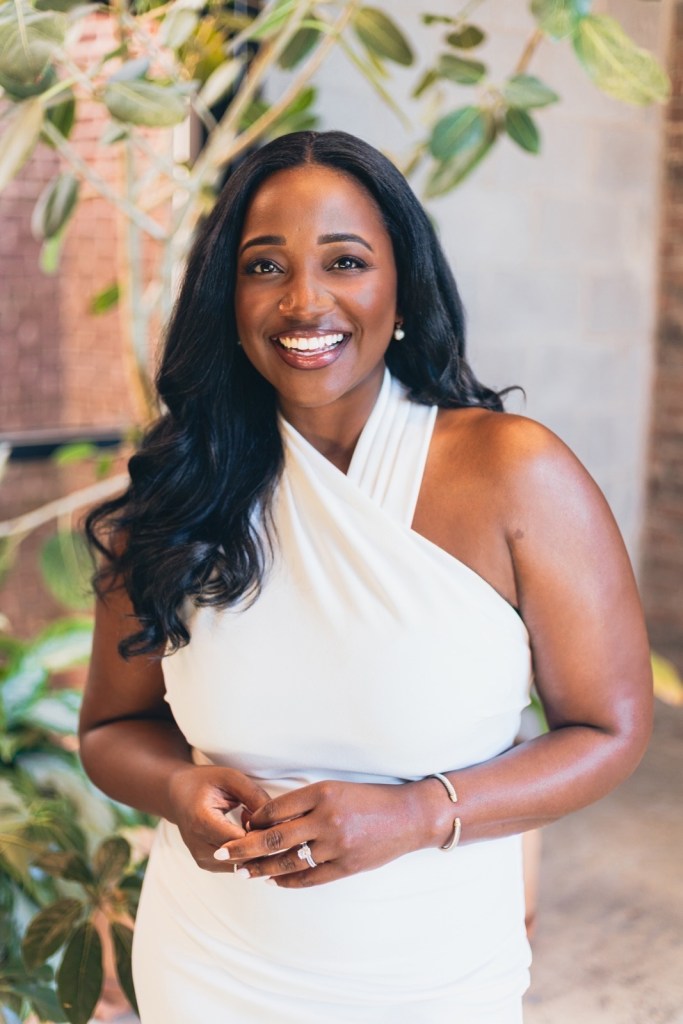
When Clue reached out, Dr. Chambers already knew the app. She had known it since residency, when the American College of Obstetricians and Gynecologists held it up as an example of something the digital health space was not doing enough of — building tools for adolescents that did not assume adult motivations. Most period tracking apps, even those marketed to younger users, were designed with a destination in mind: conception, fertility, or a partner. Clue was built to do something simpler and more radical. It was built to help a person understand their own cycle as an act of self-knowledge, full stop.
“I want people to understand their bodies when they’re just having periods and navigating life. Because more of our time is just having periods, not having babies. And I think people are valuable from that point.”
For the woman reading this right now, there is a specific reason the Clue conversation matters beyond period tracking. Medical research has a representation problem that Black women have been living inside of for generations. The distrust is not paranoia — it is memory. It is the reason a grandmother tells you to be careful with doctors, and she is not wrong for saying it. Clue’s opt-in data model allows users to contribute de-identified cycle data to academic research institutions, including Stanford, in plain language they can actually understand, and with a consent process they control. That means the gaps in menstrual health research — gaps that have persisted partly because Black women were not represented in the data — can begin to close. Our bodies, finally, are in the dataset. On our terms.
“People of color, Black people, are not well represented in many research studies because we don’t trust them. What I love about Clue is that it gives a better opportunity for a true, diverse population that looks like us to be studied.”
Clue is headquartered in Berlin, which places it outside the reach of U.S. subpoenas. Its data privacy standards were already exceptional before reproductive health data became a legal exposure point for women in certain states. That it has not had to scramble to meet the moment says something about the company’s values. Dr. Chambers does not miss details like that.
In her own practice, her favorite moment in any appointment is still the same one it has always been — a patient who pulls out their phone and shows her their cycle data. Any app. Just the evidence that a woman has been paying attention to her own body.
“When they do that during my visits, I get so happy. Because I’m like, look at you. You know your body. And now I can take better care of you.”
Ministry Is Not a Word She Uses Lightly
Ask Dr. Chambers how she sustains all of it — the practice, the platform, the book, the CMO role, a baby at home who was 17 months old at the time of this interview — and she will tell you about a quote she found while writing her medical school personal statement. She cannot remember who said it. She told us that, honestly, without any attempt to dress it up. The quote asks a person not to seek out what the world needs, but to ask what makes them feel alive. Because the world needs people who are alive.
Pediatric and Adolescent Gynecology is what makes Dr. Chambers feel alive. She is an introvert by her own accounting — someone who needs silence to restore herself, who does not find energy in constant social engagement. In another field, another specialty, the relentless output of her life might have cost her something by now. Instead, she found the work that fills her back up. She would stay late reading about it even if nobody was asking her to. She calls this ministry, and she is not speaking loosely.
“I truly believe this is my life’s work. It’s like ministry. It is a ministry over my life to use my time and talents and skills and credentials for the betterment of society.”
Sustainability also lives in what she has chosen to put down. She is not performing the strong Black woman. She has a partner who shows up fully. She has a village. She says no to most of what comes across her desk, not from scarcity but from abundance — her life is exactly as full as she wants it to be, and she guards that with intention. Six out of seven days away from home is not easy. She is not pretending it is. But she is also not pretending the work does not matter enough to show up for.
“Saying no with a grateful heart and a full spirit — I know this is important, I value this, I simply cannot do this — that has protected me during this season.”
An Opportunity, Not a Failure
At the end of our conversation, we told Dr. Chambers the truth — that speaking with her had surfaced how much we did not know about our own bodies, and that somehow, for the first time, realizing that did not feel like something to be ashamed of. It felt like somewhere to start.
She knew exactly what to do with that.
“That’s the hard thing — to invite people to make a change instead of critiquing them into change. I’ve never connected with people who criticize me to be better. I want to be inspired. And so I want to inspire people to be better, too. I don’t want them to feel like this is your failure. I want them to feel like this is your opportunity. And you can do it.”
That is the thing about Dr. Chambers that you carry with you after the conversation ends. She is not positioned above anyone. She is not handing down information from a place of authority that reminds you of the distance between her credentials and your experience. She is sitting next to you, explaining what your body does, why it matters, and why you were always worth that explanation. The system did not give it to you. She decided that was the system’s problem to own, not yours.
You have time. You have access now. And you have a doctor in your corner who stayed past the write-ups to make sure of it.
Download the Clue app at helloclue.com. Pre-order The Period and Puberty Parenting Revolution wherever books are sold. Follow Dr. Charis Chambers at @theperioddoctor on Instagram and TikTok.