NSSF Investment in public infrastructure: Urban water is good business too
For public infrastructure managers, the remarks by President Museveni encouraging the National Social Security Fund (NSSF) to invest in public infrastructure such as roads, instead of focusing heavily on government bonds, were welcome news. The swift positive response from the NSSF administration was equally encouraging. Uganda faces a significant infrastructure financing gap as it works […] The post NSSF Investment in public infrastructure: Urban water is good business too appeared first on The Observer.
 Black News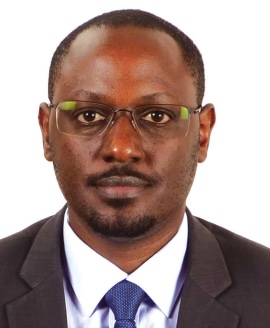


For public infrastructure managers, the remarks by President Museveni encouraging the National Social Security Fund (NSSF) to invest in public infrastructure such as roads, instead of focusing heavily on government bonds, were welcome news.
The swift positive response from the NSSF administration was equally encouraging. Uganda faces a significant infrastructure financing gap as it works to improve the lives of its citizens.
With traditional financing options shrinking in the aftermath of Covid-19 and other global economic shocks, alternative funding sources are urgently needed to support the country’s ambitious development goals.
Investment in road infrastructure would certainly be a major undertaking, especially considering the relative success of the toll system on the Entebbe Expressway. Similar toll arrangements are increasingly common across East Africa and can support debt-financed infrastructure projects.
However, delays affecting projects such as the Busega – Mpigi Expressway raise legitimate concerns for potential investors. One of the biggest challenges remains acquiring land and securing the right of way along transport corridors, a process that often takes considerable time to resolve.
Such delays could affect NSSF’s appetite for large-scale road investments. As government works to address those challenges, there is another public infrastructure sector that may offer faster implementation and more predictable returns: urban water infrastructure.

Currently, about 75 per cent of Uganda’s urban population has access to safe water, based on the standard measure of living within 200 metres of a water source. However, when measured by actual household water connections, less than half of the urban population is served.
Demand for water infrastructure continues to outpace available resources, placing increasing pressure on both the Ministry of Water and Environment and the National Water and Sewerage Corporation (NWSC).
Unlike road toll systems, payment for water services is already widely accepted and established. Urban residents are generally both willing and able to pay for safe water services, making repayment risks relatively low.
The scale of investment required remains enormous. Uganda needs an estimated Shs 7 trillion annually to achieve universal urban water access by 2030. Current funding stands at only about Shs 2 trillion per year, leaving an annual financing gap of roughly Shs 5 trillion.
With an asset base exceeding Shs 20 trillion, NSSF is well-positioned to make a significant contribution toward closing this gap, particularly in urban water infrastructure.
Importantly, this is not an argument for grant financing using workers’ savings. Urban water investments can generate meaningful financial returns. NWSC’s revenue performance has steadily improved over recent years, averaging about Shs 500 billion annually.
The corporation has also remained profitable, recording an average gross profit margin of approximately 23 per cent over the last five years. Despite operating a substantial asset base estimated at around Shs 4.4 trillion, NWSC maintains a relatively low gearing ratio of about 4 per cent, meaning the corporation has borrowed only modestly relative to its assets.
By comparison, some water utilities in Europe and the United Kingdom operate with gearing ratios of up to 60 per cent. While excessive borrowing in some European markets has created management challenges, NWSC still appears to have considerable room for carefully managed debt financing.
Currently, NWSC operates in 283 towns, serving roughly 21 million people. In addition, the ministry of Water and Environment supports water operations in another 580 smaller towns, although with significantly lower financial capacity than NWSC.
The market is expected to grow even further as Uganda’s urbanisation rate continues to exceed 5 per cent annually, according to the Uganda Bureau of Statistics. The benefits of investing in urban water infrastructure extend beyond financial returns alone.
Reliable water access improves public health, supports industrial growth, boosts tourism and strengthens economic activities linked to programmes such as the Parish Development Model.
Better water infrastructure can, therefore, generate both direct financial value and wider social and economic benefits for the country. As NSSF continues studying opportunities in road infrastructure, urban water supply presents a potentially attractive alternative.
The sector combines relatively stable demand, established payment systems and strong long-term economic value. Urban water infrastructure, the article argues, is not only socially important — it is good business too.
The author is an assistant commissioner, urban water supply and sewerage services department, ministry of Water and Environment
The post NSSF Investment in public infrastructure: Urban water is good business too appeared first on The Observer.