Opinion |Overhauling higher education to fix SA’s graduate job crisis
Workforce readiness is the most meaningful measure of the higher education system’s effectiveness
 Black News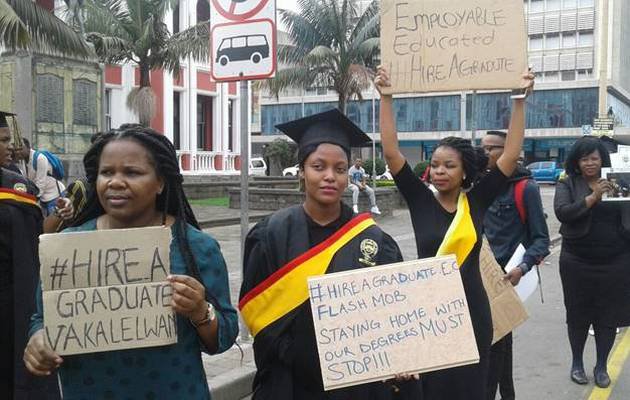

By Ebrahim Noor Mahomed
South Africa’s persistently high graduate unemployment rate underscores the urgent need to reconfigure the higher education system to produce work-ready graduates.
Currently, more than half of the country’s workforce is either undereducated (27%) or overeducated (26%) for their roles.
Combined with sluggish GDP growth and limited high-skill employment opportunities, this trend continues to constrain graduate absorption and diminish the value of higher education.
While the higher education sector continues to grapple with inequitable access and unsustainable funding, a parallel challenge lies in ensuring that expanded access translates into meaningful employability. Increasing enrolments or securing additional funding in isolation can only go so far before the underlying problem re-emerges. The long-term sustainability of the education sector depends on its ability to equip graduates with skills and competencies that are relevant to the labour market.
The fragility of the education-to-work pipeline highlights the need to reconceptualise higher education as a system that produces work-ready citizens.
Although higher education reduces the likelihood of unemployment, this benefit must be assessed in the context of workplace readiness and the practical application of skills.
Persistent graduate unemployment can, in part, be traced to weaknesses in the basic education system. A key concern is the low matric pass threshold, which allows learners to obtain a National Senior Certificate with 40% in a home language and only 30% in three other subjects. This level of achievement is often insufficient for university admission and does not adequately prepare students for success in Technical and Vocational Education and Training (TVET) or Community Education and Training (CET) pathways. With nearly half of young people not in education, employment, or training, a matric qualification alone rarely translates into sustainable employment.
Compounding this challenge is a structural misalignment between higher education outputs and labour market needs, exacerbated by rapid technological change.
Discussions at the Future of Education Summit 2025 reinforced concerns that current education models are not evolving quickly enough to keep pace with technological advancements. This mismatch manifests differently across public and private institutions, widening skills gaps and contributing to growing frustration among graduates who struggle to secure employment.
A major concern is the employability gap, particularly the lack of essential workplace competencies such as communication, problem-solving, critical thinking, and adaptability. This challenge poses a significant risk to South Africa’s economic transition, especially in high-demand STEM fields such as information and communication technology (ICT), engineering, and renewable energy. While many graduates possess technical qualifications, they often lack digital fluency and the ability to apply knowledge effectively in real-world contexts.
One of the most effective mechanisms for bridging the gap between academic preparation and workplace readiness is Work-Integrated Learning (WIL). Programmes that include structured internships, cooperative education, apprenticeships, and clinical placements can significantly improve graduate employment outcomes. However, WIL should not be viewed as a supplementary enhancement but as a structural necessity for strengthening institutional relevance and credibility.
Employers increasingly expect graduates to possess practical work experience, digital skills, and adaptability—capabilities that are not yet consistently embedded across curricula.
Access to quality WIL opportunities also remains uneven. Well-resourced public universities are generally better positioned to secure partnerships with industry and government, while historically disadvantaged institutions and many TVET colleges often lack the networks and capacity required to provide sufficient placements.
Private higher education institutions have frequently succeeded in building industry partnerships, but these are often concentrated in fields such as business and information technology, limiting scalability.
Beyond institution-led initiatives, South Africa’s Youth Employment Service (YES) demonstrates how structured work placements can operate at scale as a complementary pathway to workplace experience and skills development.
In response to weak labour market absorption, many higher education institutions are also exploring alternative pathways to employment through entrepreneurship education. Initiatives such as Entrepreneurship Development in Higher Education, supported by the Department of Higher Education and Training (DHET), seek to equip students with the skills to create and sustain enterprises rather than rely solely on traditional employment opportunities.
There is considerable merit in transforming curricula to address employability gaps and skills mismatches. This requires rethinking the content, delivery, and purpose of academic programmes to produce graduates who are not only job-ready but also critical thinkers, problem-solvers, and innovators. It involves addressing foundational questions about knowledge production and decolonisation, harnessing emerging technologies through Education 4.0, and embedding real-world skills, sectoral alignment, and entrepreneurship into tertiary education programmes.
Ultimately, workforce readiness is the most meaningful measure of the higher education system’s effectiveness. Without a decisive shift towards employability, the sector risks producing graduates who remain unemployed, undermining social stability and weakening its role as a catalyst for inclusive economic growth. However, employability reforms alone will not be sufficient. Unless learning standards improve and academic progression is more closely aligned with demonstrated competence, South Africa will continue to face the challenge of graduates who hold qualifications but remain ill-equipped for the demands of a rapidly changing economy.
Ebrahim Noor Mahomed is an Audit Director at BDO South Africa.