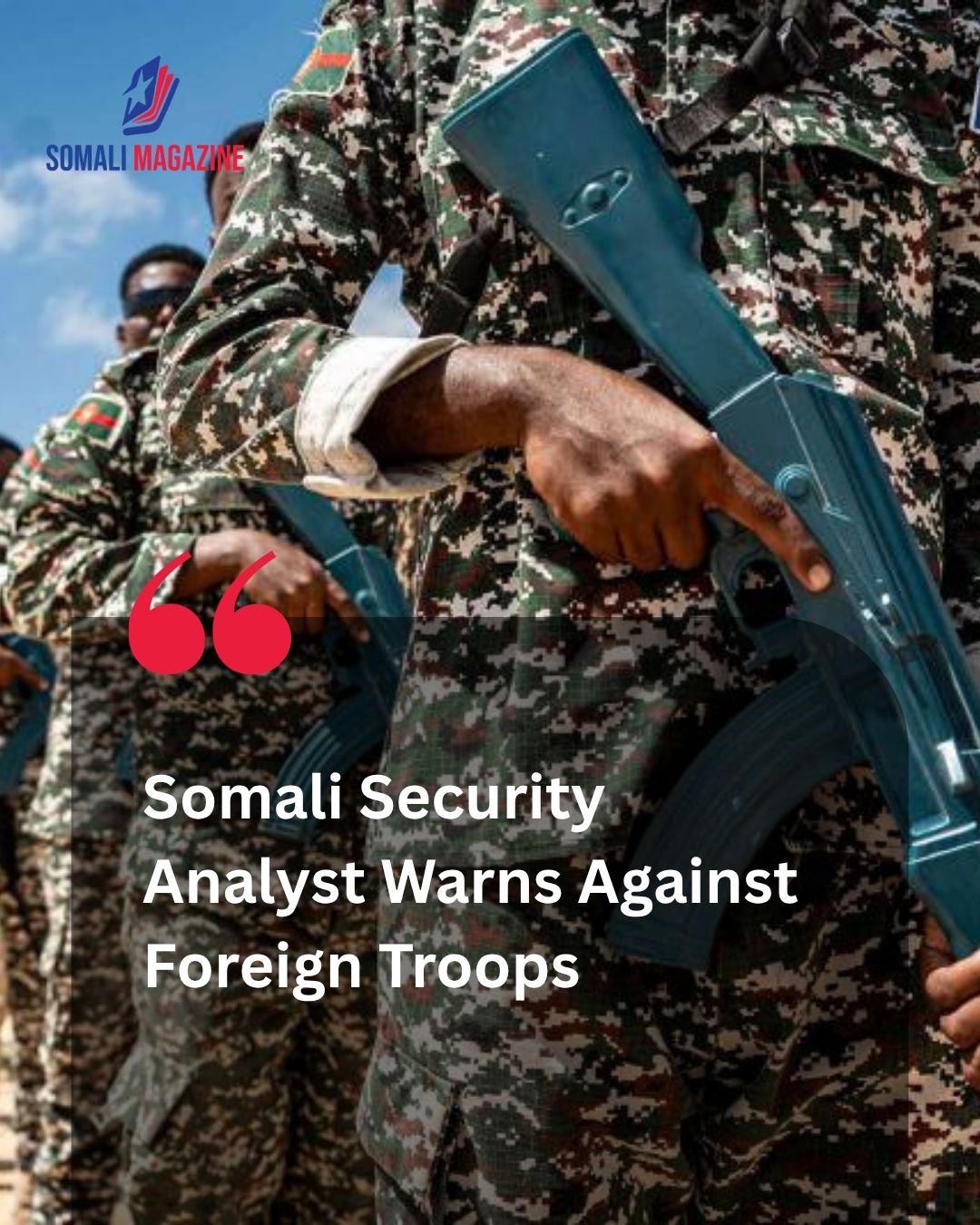
A former Somali security adviser warns against reliance on foreign troops, stating that the nation’s long-term stability hinges on its capacity to secure its borders and handle internal threats independently. Hussein Moalim, who previously served as the National Security Adviser, expressed concern that decades of external military interventions have inadvertently delayed necessary internal structural changes. Speaking at a security seminar, Moalim noted that while international assistance was vital during critical periods of collapse, continuing to look outward for essential policing and defense needs will permanently inhibit the growth of standard domestic institutions. He emphasized that successive administrations have missed key timelines to build highly structured, self-sufficient security forces, leaving the current state architecture highly vulnerable to unexpected changes in global funding.
The policy critique arrives at a highly sensitive moment as a sweeping regional security framework undergoes deep funding shifts. Earlier this month, the United States notified international stakeholders that it intends to wind down its funding support for the United Nations logistical framework that underpins the African Union Support and Stabilization Mission in Somalia (AUSSOM) starting next year. AUSSOM, which currently deploys nearly 12,000 personnel to protect vital government installations and push back against al-Shabaab insurgencies, relies heavily on this external financial backing for its daily transport, medical, and supply logistics. With the operational end-date of the traditional mission looming in December, federal officials have reportedly scrambled to secure fallback, bilateral troop agreements with individual neighboring countries to prevent a sudden domestic security vacuum.
However, military experts echo Moalim’s concern that shifting from an African Union banner to decentralized, bilateral defense packs does not solve the underlying issue of state dependency. Critics argue that externally financed security arrangements often prioritize the strategic geopolitical agendas of foreign donors over local stabilization requirements. To achieve true sovereignty, the administration must focus its resources on developing its core domestic military capability—specifically ensuring that standard national army divisions are trained and properly supplied to hold territory liberated from insurgent groups. Without a clear transition from externally guaranteed security to a nationally sustained model, everyday citizens risk facing prolonged instability, leaving the country mired in a cycle of exhausting territorial gains and sudden losses.


 Black News