Social media posts protected by copyright, High court rules
The Commercial Division of the High court has ruled that original content published on social media is protected by copyright, in a decision expected to shape how journalists and media organisations use online content. In a landmark judgment delivered on July 27, Justice Dr Ginamia Melody Ngwatu found Monitor Publications Limited and its affiliated broadcaster, […] The post Social media posts protected by copyright, High court rules appeared first on The Observer Media Ltd.
 Black News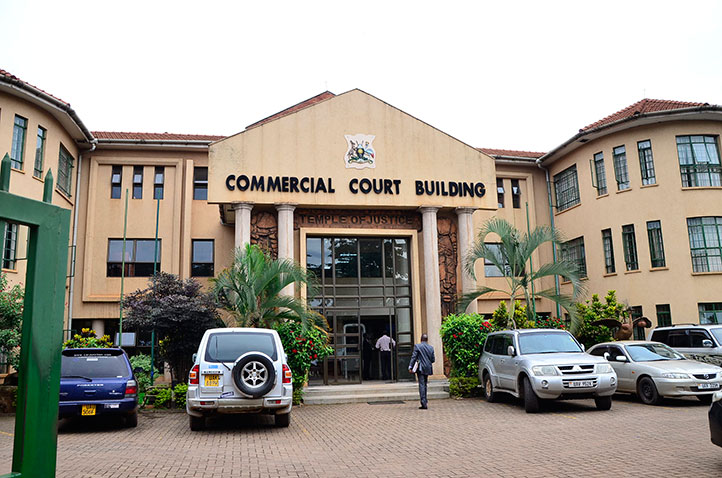

The Commercial Division of the High court has ruled that original content published on social media is protected by copyright, in a decision expected to shape how journalists and media organisations use online content.
In a landmark judgment delivered on July 27, Justice Dr Ginamia Melody Ngwatu found Monitor Publications Limited and its affiliated broadcaster, NTV Uganda, liable for infringing the intellectual property rights of lawyer and digital content creator Silver Kayondo by reproducing, altering and inaccurately attributing his social media posts.
The court held that Kayondo had proved that his post on X, formerly Twitter, qualified for copyright protection and that the defendants infringed his rights by reproducing, modifying and falsely attributing parts of his work in a news article.
Kayondo had sued Monitor Publications Limited, Africa Broadcasting Uganda Limited, trading as NTV Uganda, the managing editor of Monitor Publications, and journalist Deogratious Wamala.
He alleged copyright infringement, false attribution, misrepresentation, negligence, defamation and unlawful processing of his personal data after his August 2023 social media post about the World Bank and Uganda was reproduced in a September 2023 news article without his consent.
The defendants denied liability, arguing that Kayondo’s statements were merely ideas rather than copyrightable works. They also contended that their publication amounted to fair use because it addressed a matter of public interest, acknowledged Kayondo as the source and concerned a current economic and political issue.
However, Justice Ngwatu rejected that argument, holding that once ideas are expressed in a material form, including through posts on social media platforms such as X, they become eligible for copyright protection.
The judge found that the defendants had access to Kayondo’s work, copied it and inaccurately reproduced parts of it. The court noted that changing the phrase, “Lenders push values of their shareholders” to “Lenders push value for their shareholders,” and attributing additional statements to Kayondo that he never made materially altered the meaning of his work and exposed his professional reputation to harm.
Justice Ngwatu further held that although the Copyright and Neighbouring Rights Act permits fair use of protected works for reporting current events, that defence does not extend to inaccurate quotations or distortions that prejudice an author’s reputation.
The court also found that the publication amounted to false attribution and misrepresentation because it credited Kayondo with words he neither wrote nor published.
After comparing Kayondo’s original X post with the published article, the judge resolved the issue in his favour. The judgment also emphasised journalists’ obligation under the Press and Journalist Act to ensure accuracy, noting that even seemingly minor grammatical changes can substantially alter meaning and unfairly affect an author’s reputation.
Kayondo had sought declarations affirming his ownership of the copyright in his social media content, permanent injunctions restraining further infringement, damages totalling Shs 250 million, a published apology and other reliefs.
The ruling is expected to have far-reaching implications for journalists, media organisations and digital content creators by affirming that original social media posts can attract copyright protection and that reproducing them inaccurately may expose publishers to legal liability.
The post Social media posts protected by copyright, High court rules appeared first on The Observer Media Ltd.