The Black Church Can’t Fight HIV Without Confronting Its Past
HIV remains a serious public health crisis, with Black people accounting for about 40% of people living with HIV despite representing just 12% of the U.S. population. Stigma and societal norms continue to derail vital conversations around the epidemic — a public health crisis that has disproportionately impacted Black communities for more than 40 years. […] The post The Black Church Can’t Fight HIV Without Confronting Its Past appeared first on Word In Black.
 Black News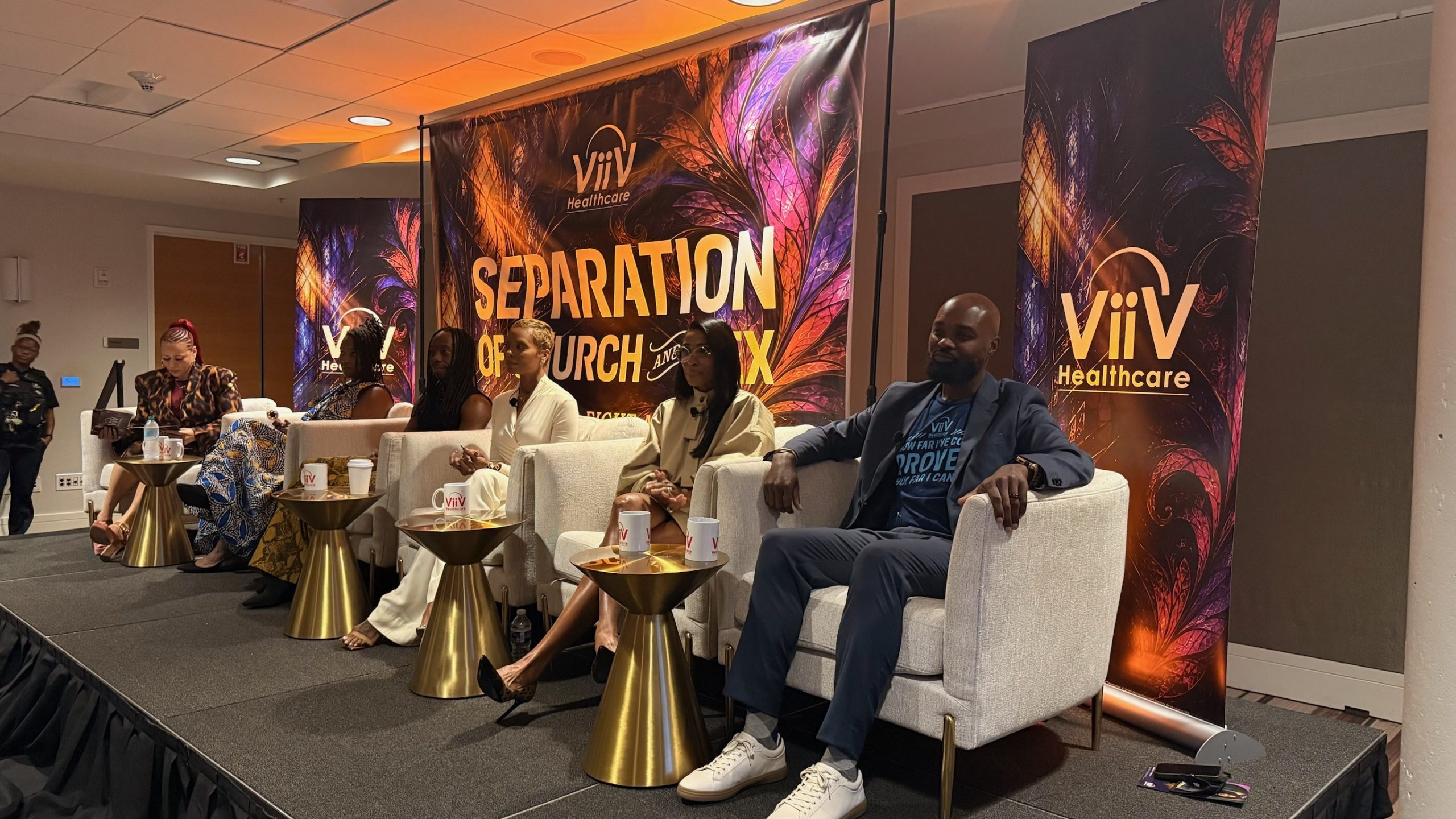

HIV remains a serious public health crisis, with Black people accounting for about 40% of people living with HIV despite representing just 12% of the U.S. population. Stigma and societal norms continue to derail vital conversations around the epidemic — a public health crisis that has disproportionately impacted Black communities for more than 40 years.
But confronting sexually transmitted infections is still a touchy topic — and even more so within Black faith communities. The relationship between faith communities and HIV advocates has evolved dramatically, marking some progress during the four decades of the epidemic. What began as fear, misunderstanding and, at times, outright rejection has transformed into a movement of compassion, healing and advocacy within many faith communities.
RELATED: Centering Black Women and Girls in the Fight Against HIV/AIDS
Pioneering faith-based organizations such as The Balm in Gilead Inc., of Richmond, Virginia, were founded to provide education and advocacy tools for faith- and community-based organizations working to prevent disease and improve health outcomes among those they serve. Today, thousands of congregations across the United States serve as vital links in the HIV care continuum, providing everything from testing and counseling to housing and spiritual support for people living with HIV.
That legacy of advocacy took center stage recently when experts, advocates and supporters gathered at the National Association of Black Journalists Convention for a panel discussion titled “Separation of Church & Sex: Faith and the Fight Against HIV.” The panel was presented by ViiV Healthcare, the only pharmaceutical company 100% dedicated to HIV.
Pulitzer Prize-winning author Nikole Hannah-Jones moderated the panel, opening the discussion with a call to break the silence that has long surrounded the epidemic.
The Cost of Silence
“Silence has consequences. We know this as journalists. Silence fuels stigmas that can delay prevention and care and leaves too many people feeling isolated and unsupported from the resources and communities that can help them thrive,” Jones said while introducing the panel.
Joining her on stage were model, actress and TV personality Eva Marcille; board certified OB-GYN and “Married to Medicine” star Dr. Jackie Walters; and Randevyn Piérre, head of U.S. external affairs at ViiV Healthcare.
Walters discussed how to work toward eliminating disparities in care and ensuring that everyone — especially those in underserved communities — has access to prevention, testing and treatment resources.
“We’ve got one goal: We want to keep everyone safe and healthy. Between the doctor’s office and the church, we have the same goal, just different classrooms.
Dr. Jackie walters, OB-GYN, star of “married to medicine”
“I think if we can make people feel comfortable and not judged, they’ll start talking more to their physicians. So, we release the fears, we release the dread and doom that we put on this stigma around HIV and we can be there for safety and health,” she said.
“We’ve got one goal: We want to keep everyone safe and healthy. Between the doctor’s office and the church, we have the same goal, just different classrooms. Everybody needs to know their status, especially their HIV status, and we talk about a lot in the office,” Walters said.
‘Why Are We Not Doing Our Part?’
For Marcille, the moment reflects a long-overdue opening in the conversation — one she has pushed on her own platform for years.
“I’ve understood since the days of Eazy-E what this epidemic is and what we can do. So why are we not doing our part?” she said, referring to the late rapper with N.W.A. who died of AIDS in 1995 at age 30. “That’s why I use my platform and my advocacy to educate,” Marcille said. “That is why I am here today.”
Ciarra “Ci Ci” Brown, director of programs at The Well Project and an HIV community advocate, pushed the conversation further, arguing that faith and science were never meant to be at odds.
“There is a space where medical advancement, science and treatment can and should exist with the faith community. There’s no reason why those things should be separated,” Brown said.
As a Black woman from rural Georgia living with HIV, Brown said she experienced stigma and rejection when dealing both with the medical profession and with the church.
“I don’t trust either one of those entities,” she said. “They have caused a lot of hurt.” The church “saw me as unclean and unsafe, and all of my behaviors were something to be demonized.”
She said both the church and the medical profession need to “keep lifting” the standard. She lauded the panel and the discussion for using affirming language in discussing HIV. “I haven’t heard [the word] ‘infected,’” Brown said. “You said ‘acquired.’ That means so much.”
Confronting Stigma
Piérre traced pain surrounding the disease to the earliest days of the AIDS epidemic, when entire communities were left to grieve largely in silence.
“We saw an entire generation of black folks, particularly black gay folks in the early ’80s, completely just die off and leave a gap in the soul of our community that was unspoken.” The pain, he said, is something “that we’re still working through and still dealing with.”
“While scientific advancements, including long-acting injectable prevention and treatment options, have transformed what is possible in HIV, addressing stigma remains critical to ensuring people feel empowered to seek information around prevention and care,” Piérre said.
Faith leaders and organizations can play a critical role in advancing personal and community health by normalizing conversations about HIV prevention and treatment, Pierre said. “When faith leaders foster open, compassionate dialogue and partner with trusted healthcare and community organizations, they can help replace fear and misinformation with understanding, encouraging people to seek testing and prevention services and support individuals in staying connected to care.”
The Rev. Don Abram, founder and CEO of Toward Pride, echoed that sentiment, telling the audience that spiritual well-being cannot be separated from physical and mental health. Faith spaces must make room for the whole person, he said, including candid discussions about sex and theology.
“You can’t preach death-dealing theology from the pulpit while attempting to engage in life-saving and life-affirming ministry in the public square,” Abram said.
‘Judgment on Queer Folk’
Panelists agreed that acknowledging the intersectionality of the issue is crucial to confronting the HIV crisis. HIV treatment and prevention initially was centered around gay men because they were disproportionately impacted, Brown said. However, she said it’s important to acknowledge that theology and the church played a role in marginalizing gay men and Black women “because it framed the virus and this ongoing public health crisis as judgment on queer folk.”
RELATED: Living Long With HIV Is Possible. Living Well Is Harder
But that homophobia hurts straight people, too, Brown continued, noting that LGBTQ+ people and Black cis women – who she called the most marginalized groups in the Black church – currently are bearing the brunt of the HIV epidemic.
“Black women, and LGBTQ+ folks-we are fighting the same enemy — that’s homophobia and transphobia and misogynoir,” Brown said. “And if we don’t tackle that, we’re going to continue to see this epidemic rage.”
The post The Black Church Can’t Fight HIV Without Confronting Its Past appeared first on Word In Black.