THE GREAT MIGRATION 2.0 – An Exodus of Top Black Student-Athletes to HBCUs
*The original Great Migration (1910-1970) was one of the most consequential movements in American history. Between approximately 1910 and 1970, millions of African Americans fled the racial violence, voter suppression, economic exploitation, lynching, segregation, and legalized humiliation of the American South in search of opportunity, dignity, safety, and self-determination in cities like Chicago, Detroit, Philadelphia, […] The post THE GREAT MIGRATION 2.0 – An Exodus of Top Black Student-Athletes to HBCUs appeared first on EURweb | Black News, Culture, Entertainment & More.
 Black News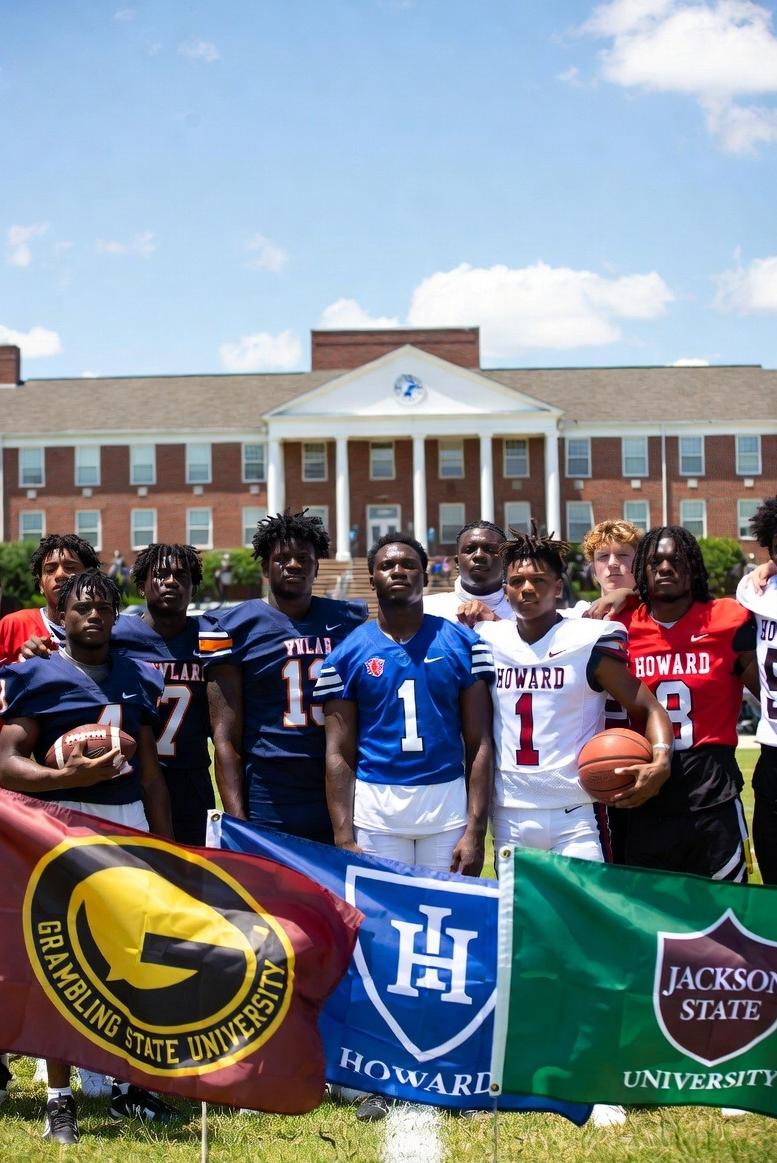
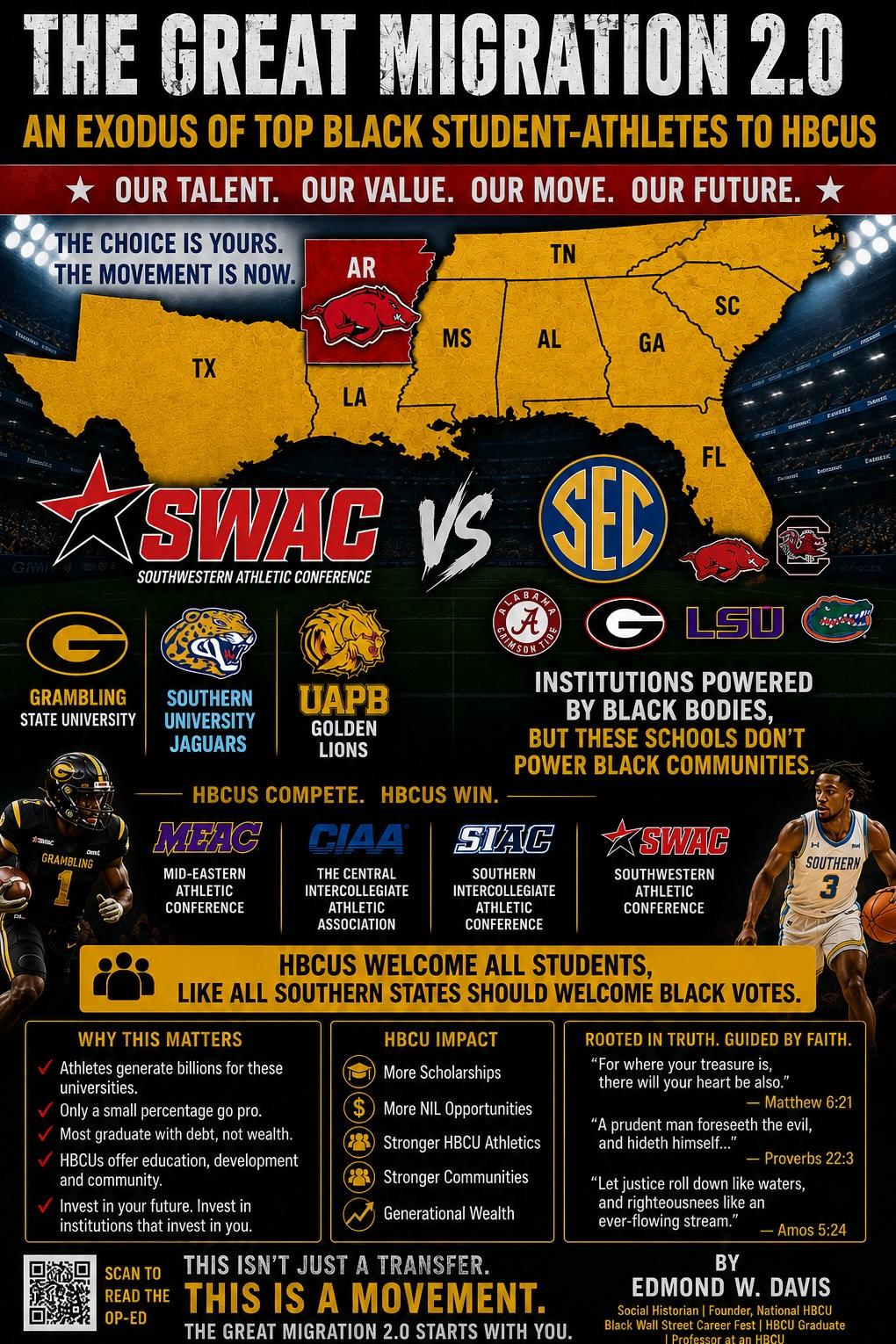
*The original Great Migration (1910-1970) was one of the most consequential movements in American history. Between approximately 1910 and 1970, millions of African Americans fled the racial violence, voter suppression, economic exploitation, lynching, segregation, and legalized humiliation of the American South in search of opportunity, dignity, safety, and self-determination in cities like Chicago, Detroit, Philadelphia, Cleveland, New York, Milwaukee, Denver, Los Angeles, and beyond.
This was not merely a movement from one location to another. It was a strategic response to oppression, racism, hate, and bigotry. It was survival. It was African Americans making a calculated decision to seek better lives, greater opportunities, and environments where their labor, humanity, and aspirations had a greater chance of being respected. Millions of African Americans began to realize that Chicago wasn’t just racist; it was racist in a concrete jungle.
Now, in the 21st century, a new migration question deserves serious discussion:
Should elite Black student-athletes reconsider their participation in predominantly white athletic power structures across the American South and instead strategically reinvest their extraordinary talent into Historically Black Colleges and Universities?
This is not rooted in fear. It is rooted in strategy.
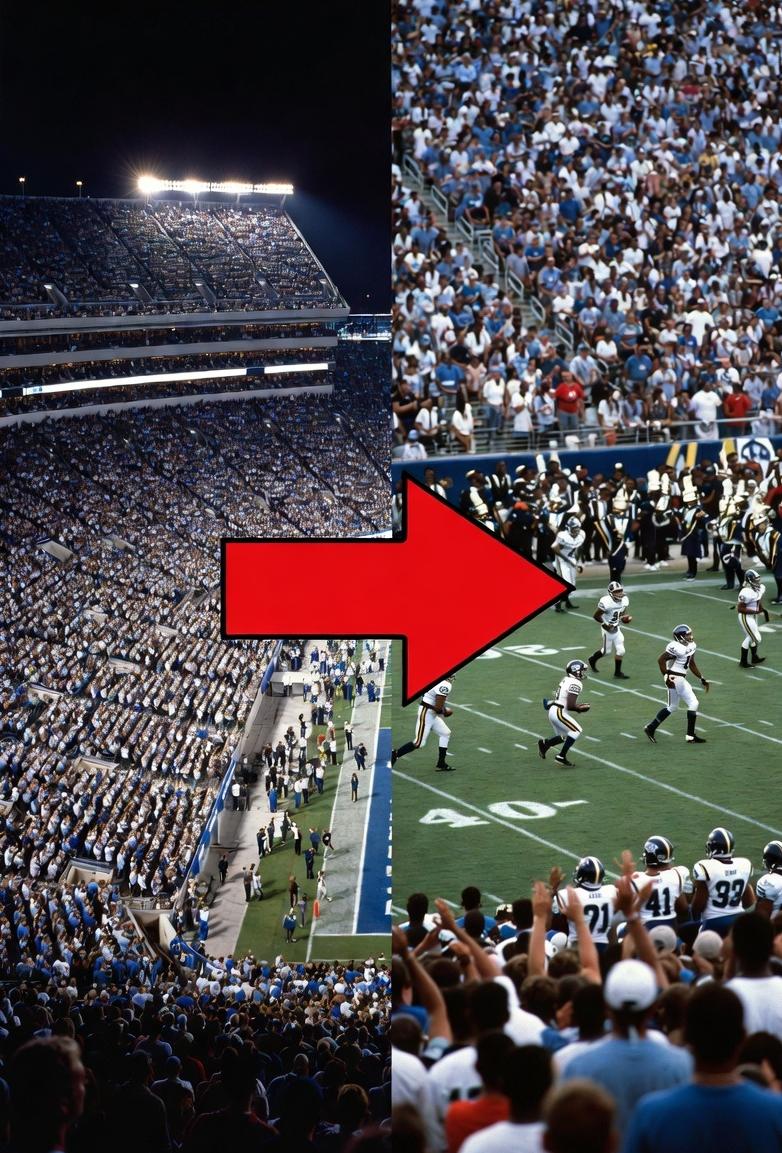
For decades, Black athletic excellence has powered some of the wealthiest collegiate sports enterprises in America. Football and men’s basketball—particularly in the SEC and other Power Four conferences—have become multibillion-dollar ecosystems significantly fueled by Black talent.
The Southeastern Conference (SEC) alone has become a sports empire built on massive television contracts, conference revenue sharing, corporate sponsorships, playoff payouts, luxury boxes, donor contributions, merchandising, licensing, and national brand expansion. It’s become a billion-dollar-plus sports enterprise.
Universities such as Alabama, Georgia, LSU, Arkansas, Tennessee, Florida, Texas, Ole Miss, and others have built athletic prestige and economic dominance through programs where Black athletes are often central contributors.
Take the University of Alabama, for example. Its football dynasty under Nick Saban did not simply produce championships. It generated enormous institutional wealth, elevated the university’s national visibility, increased applications, boosted tourism, strengthened donor enthusiasm, and reinforced conference dominance.
But here is the uncomfortable truth that every Black family should carefully consider:
Very few college athletes ever turn professional.
For every Black athlete who reaches the NFL, NBA, MLB, or earns Olympic sponsorship success, thousands do not.
That raises a fair and important question:
If your son or daughter is helping generate wealth, prestige, media attention, and institutional capital, where should that labor and talent be invested?
Historically, elite Black athletes were recruited into predominantly white institutions because those schools offered elite facilities, national exposure, professional development pipelines, powerful alumni networks, and, increasingly, NIL opportunities, a more recent phenomenon. For generations these PWIs have profited off of the physical and intellectual prowess of Black athletes. This is called ‘The New Plantation Model.’
That reality still matters. But new realities matter too. The transfer portal changed college sports. NIL changed college sports. Athlete agency changed college sports. And political climates matter. Campus culture matters. Representation matters. Institutional values matter.
In states where public debates over voting rights, representation, curriculum, educational equity, and inclusion remain intense, Black families may reasonably ask whether those realities should be part of the recruiting conversation. That is not anti-white. That is strategic thinking.
Imagine what happens if even a meaningful fraction of elite Black football players, basketball stars, sprinters, baseball prospects, and Olympic-caliber athletes intentionally choose HBCUs.
Imagine the impact at:
Grambling State University, Howard University, Florida A&M University, Jackson State University, North Carolina A&T State University, Alabama A&M University, Southern University, Tennessee State University, Prairie View A&M University, Texas Southern University, University of Arkansas at Pine Bluff, Morgan State University, Norfolk State University, Hampton University, and other HBCUs, MSIs, and HSIs.
This would not merely change recruiting. It would reshape institutional economics. According to The Century Foundation, HBCUs have historically operated under chronic underfunding, infrastructure disparities, state appropriation inequities, and exclusion from generational philanthropic wealth pipelines. Yet despite these challenges, HBCUs have consistently produced extraordinary leaders in every sector of American life. Doctors, judges, military officers, scientists, educators, civil rights leaders, entrepreneurs, artists, political leaders, and cultural icons—that legacy matters.
Importantly, HBCUs were not created from exclusionary hostility. They were created as a response to exclusion elsewhere. Their history is rooted in educational access, resilience, and opportunity. And this conversation is not only for Black students, Latino students, Asian American students, Native American students, women, and international students. All deserve to examine where institutional culture aligns with their goals and values. The larger issue here is leverage.
If Black athletes are central to the economic business model of college athletics, what happens when talent moves? That question is not theoretical. The nation got a glimpse when Coach Deion Sanders redirected national recruiting attention toward Jackson State. Media attention changed. Recruiting conversations changed. Corporate interest changed. Because talent moves markets. Now imagine if dozens—or even hundreds—of elite Black athletes intentionally chose HBCUs. Television deals would shift. Attendance would rise. Corporate sponsorships would grow. Media coverage would expand. Merchandising would increase. Institutional influence would rise. Perhaps, for the first time in generations, the communities historically producing so much athletic excellence would more directly benefit from that excellence. This is not about telling athletes to reject opportunities. It is about redefining opportunity. Because if opportunity disproportionately benefits institutions while only a small percentage of athletes achieve professional careers, families should ask deeper questions.
Yes, NIL matters. Yes, facilities matter. Yes, coaching pipelines matter. But so does belonging. So does cultural affirmation. So does historical awareness. So does educational alignment. So does community.
The original Great Migration was not simply about escaping oppression. It was about strategically pursuing possibilities. Great Migration 2.0 asks whether that same strategic thinking belongs in modern college athletics.

Scripture offers timeless wisdom here:
“For where your treasure is, there will your heart be also.” — Matthew 6:21
If Black athletic talent continues enriching institutions disconnected from Black community advancement, perhaps families should ask where that treasure truly belongs.
“A prudent man foreseeth the evil, and hideth himself: but the simple pass on, and are punished.” — Proverbs 22:3
Discernment matters. Strategic thinking matters.
And:
“Let justice roll down like waters, and righteousness like an ever-flowing stream.” — Amos 5:24
Justice is not passive. It requires intentional choices. This is not a call for division. It is a call for reflection. A call for agency. A call for strategy. Because the original Great Migration was never simply about leaving. It was about ownership of one’s future. Perhaps Great Migration 2.0 asks Black college athletes that same question today.

ABOUT THE AUTHOR:
Edmond W. Davis is an American social historian, international speaker, and Amazon #1 bestselling author. He is a global authority on the Tuskegee Airmen and serves as the founder and executive director of the National HBCU Black Wall Street Career Fest. A native of Philadelphia, PA, and current resident of Little Rock, AR, Davis is committed to cultural empowerment and educational equity through storytelling and civic engagement. Davis is a grand marshal at the 38th Annual African American History Month Celebration Parade.
(If You Like/Appreciate This EURweb Story, Please SHARE it!)
MORE NEWS ON EURWEB.COM: Director Kevin Shaw and Players of Jackie Robinson West Look Back on Controversial 2014 Championship | EUR Exclusive
We Publish Breaking News 24/7. Don’t Miss Out! Sign up for our Free daily newsletter HERE.
The post THE GREAT MIGRATION 2.0 – An Exodus of Top Black Student-Athletes to HBCUs appeared first on EURweb | Black News, Culture, Entertainment & More.