The Infrastructure Behind Africa’s Energy Shift
With more than 20 million people served across 12 countries, Ignite Power is building one of Africa’s largest distributed energy platforms, supported by its UAE base and close collaboration with global institutions such as the World Bank to accelerate the continent’s evolving energy transition. On a clear night in rural Mozambique, a single solar-powered light […] The post The Infrastructure Behind Africa’s Energy Shift appeared first on Time Africa.
 Black News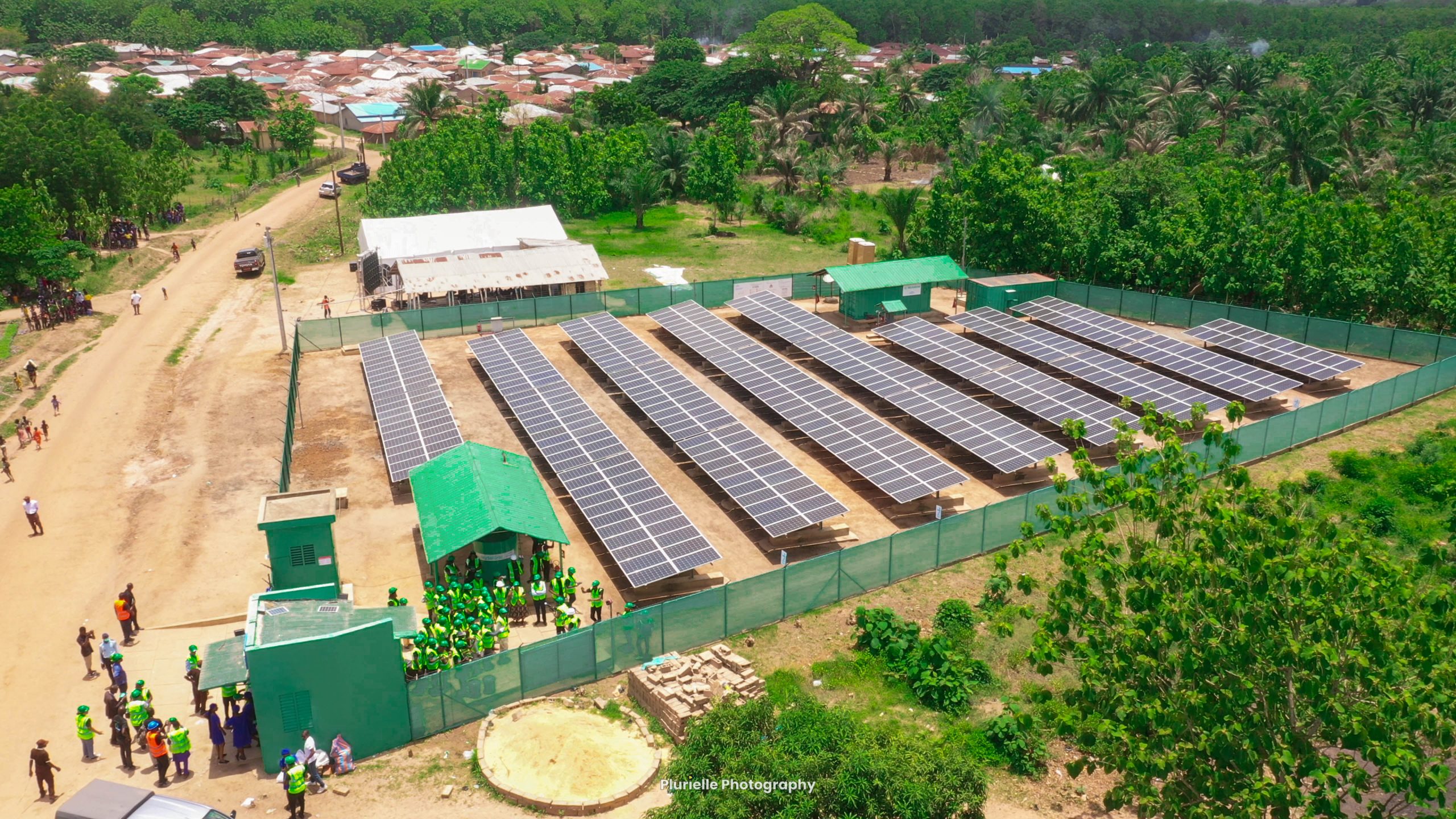
With more than 20 million people served across 12 countries, Ignite Power is building one of Africa’s largest distributed energy platforms, supported by its UAE base and close collaboration with global institutions such as the World Bank to accelerate the continent’s evolving energy transition.
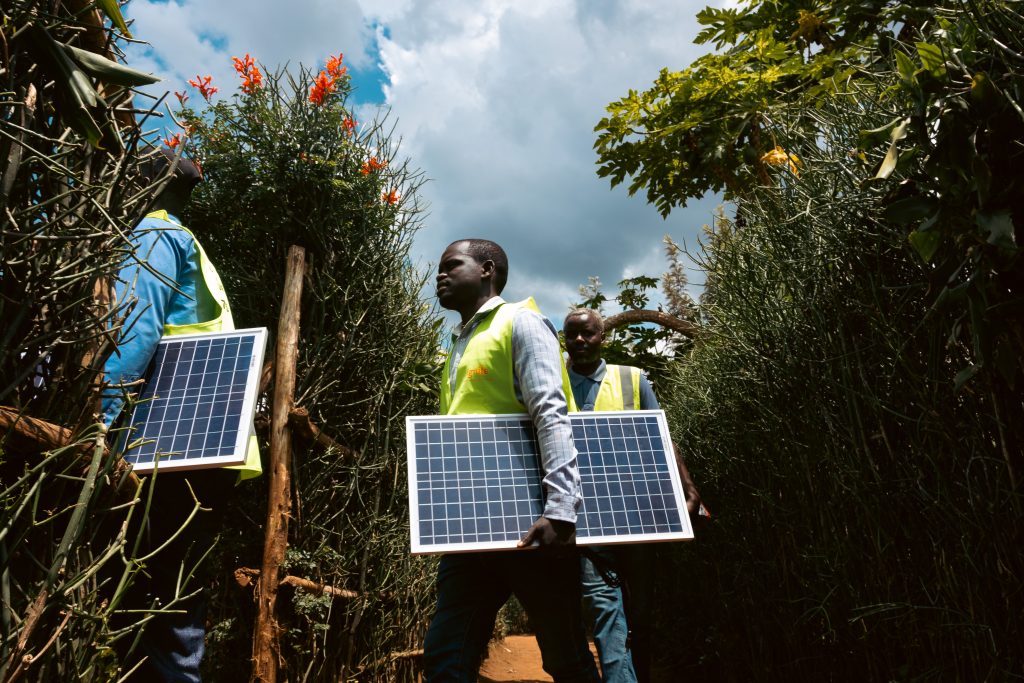
On a clear night in rural Mozambique, a single solar-powered light bulb had a meaningful impact on a family’s daily life — not because it let their children study, or kept kerosene fumes out of the home. It changed their life because it let their cows sleep outside.
For years, the family had kept their livestock inside at night to protect them from thieves. When a standalone, three-light solar home system was installed, and a bulb was placed in the yard, the perceived threat decreased, allowing the cows to stay outside and the family to rest more comfortably. They got their home back.
It’s a story Yariv Cohen, CEO and co-founder of Ignite Power, often shares. “We thought we were selling light,” he says. “They were buying back their home.”
For the family, the decision was not about receiving help — it was about making a choice. A modest, pay-as-you-go system replaced the cost and uncertainty they had lived with for years. What they gained was not just light, but a better allocation of their own resources — a clear exchange of value, on their terms.
A Crisis Hiding in Plain Sight
Roughly 600 million people in Africa still lack access to electricity. Another 800 million rely on traditional biomass for cooking and heating. And yet the continent sits atop nearly 60% of the world’s prime solar sites. The resources have always been there. What has often been missing is the execution capacity to deploy them.
That is the gap Ignite Power was built to close.
Founded in 2014 by Cohen and co-founder Angela Homsi following a visit to Rwanda, Ignite began with a clear guiding idea: the technology to solve Africa’s energy problem already existed. The barrier was never product invention — it was model optimization, including distribution, financing, and the ability to scale sustainably.
Cohen had spent years as President of Camco Clean Energy, working at the intersection of climate finance and African energy markets, while Homsi brought deep expertise in sustainable investment from firms including Generation Investment Management. Together, they identified what was truly blocking progress — not the absence of solutions, but the lack of systems to deliver them at scale.
“We didn’t start Ignite to sell solar products,” Cohen says. “We started it to build the distributed utility Africa never had. Solar home systems were the wedge — a way to develop collections, credit scoring, last-mile logistics, and integration discipline. That’s the stack.”
The Platform the Sector Never Had
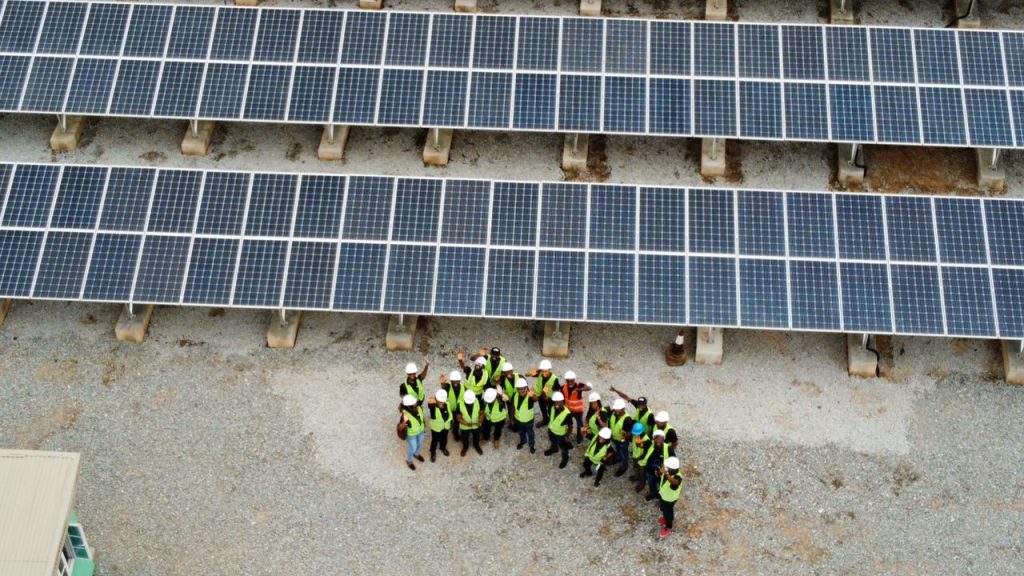
Today, Ignite operates across 12 countries and, according to the company, serves more than 20 million people. “Twenty million people reached sounds like a marketing number until you do the math,” says Cohen. That figure is comparable to the population of the Netherlands, connected by a company that remains relatively low-profile globally.
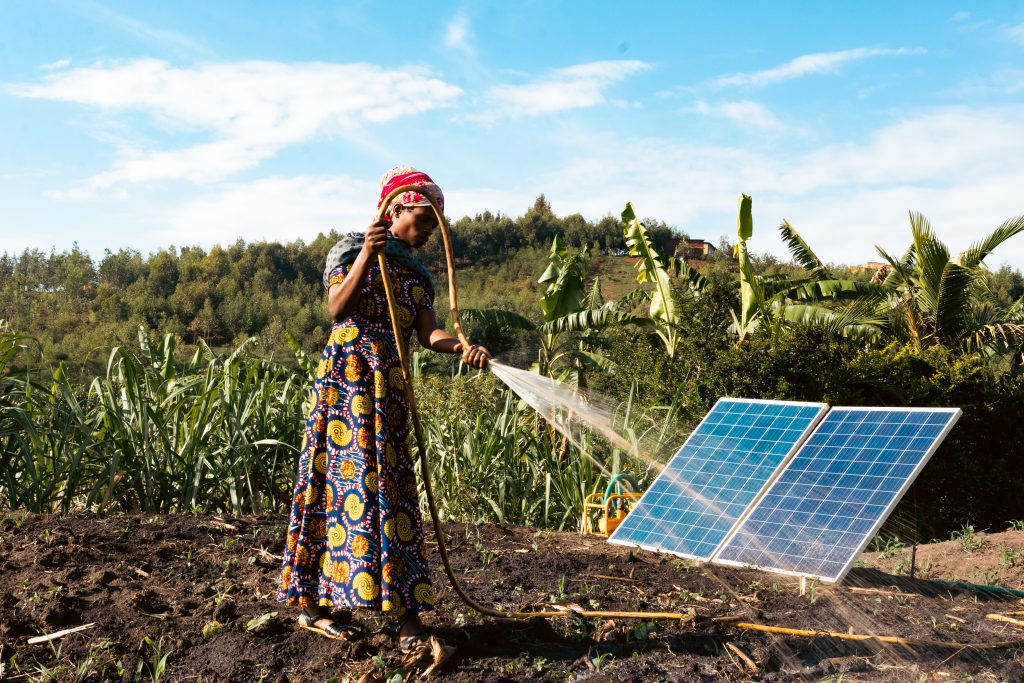
Ignite operates an integrated platform across multiple segments of the sector: solar home systems for households, mini-grids for villages, commercial and industrial solar for businesses and institutions, and productive-use applications like solar pumps for agriculture.
One customer database. One mobile money processor integration. One logistics backbone. And a unified technology suite that brings it all together, managing, tracking, and optimizing everything from customer journeys to asset performance in real time. According to Ignite, with over 650 points of sale and thousands of field agents on the ground, this level of integration helps enable the platform to scale while maintaining control and efficiency across markets.
Four acquisitions in 24 months, including the landmark acquisition of ENGIE Energy Access, which brought Fenix, Mobisol, and PowerCorner under one roof, positioned Ignite at the center of a broader consolidation wave across the sector. What had long been a fragmented landscape of dozens of sub-scale players, each doing meaningful work but unable to attract or efficiently deploy institutional capital, has rapidly shifted.“The sector was structurally constrained. Too many sub-scale players, not enough capacity to absorb capital,” says Cohen. “Consolidation was not optional. It was the missing piece.”
Today, that consolidation is largely already underway, gradually reshaping the sector’s ability to scale.
What helps enable the model to scale at speed is not just hardware, but the underlying technology. Ignite operates first and foremost as a technology company that deploys energy infrastructure, not the other way around. A proprietary software stack governs the entire lifecycle, from customer acquisition and onboarding to remote asset monitoring, mobile money collections, predictive credit modeling, and supply chain optimization.
Each interaction feeds back into the system, creating a continuously improving data layer across markets. “In markets where information is scarce, the data layer is the asset. Every payment, every fault log, every credit decision compounds. Says Cohen. “That is what capital efficiency looks like in distributed infrastructure, and it is what makes this an institutional asset class.”
The Execution Gap
The global narrative around Africa’s energy transition has rarely been more optimistic. The World Bank and African Development Bank’s Mission 300 initiative has committed to connecting 300 million Africans to electricity by 2030. Twenty-nine African countries have now launched National Energy Compacts, setting binding reform targets.
Cohen is clear-eyed about the distance between ambition and delivery. “Africa’s energy transition doesn’t have a financing problem,” he says. “It has an execution problem. And until the sector admits that, the gap between commitment and delivery will keep widening.” His argument is structural: scaled platforms are the missing infrastructure.
What Light Actually Changes
Ask Ignite’s field teams what happens to a community after electrification, and the answer is never just about light. Common outcomes reported include children studying at night, reduced travel to charge phones, the emergence of small businesses, and improved capabilities at rural clinics, such as refrigeration for vaccines. Appliance uptake often follows — the signal that energy has moved from subsistence to productivity.
The climate picture is equally significant. “The real impact is what that energy replaces,” Cohen says. “When you move a household from kerosene to clean electricity, you’re not just turning on a light.”
This can contribute to changes in health conditions, household economics, and long-term opportunities. Cohen also believes that reducing reliance on kerosene and diesel can have associated health and environmental benefits, including improved indoor air quality and lower emissions.
Aggregated across 20 million people in 12 countries, according to the company, that displacement represents a significant distributed decarbonization effort — a point that is not always reflected in global climate discussions.
By 2030, Ignite aims to serve 100 million people across more than 20 countries, expanding into clean cooking, water, financial services, and new geographies in South and Southeast Asia.
“In five years, the question won’t be whether off-grid systems can scale — that debate is over,” says Cohen. “The question will be how fast distributed utilities replace centralized ones, and how much capital wakes up to the fact that it’s the cheaper, faster way to build infrastructure.”
For the family in Mozambique, the improvement came in the form of a single solar bulb. For the continent, it may arrive in the form of a company that was building the missing infrastructure while the world was still debating the problem.
Ignite Power EA is headquartered in Abu Dhabi and operates across 12 countries in sub-Saharan Africa.
The post The Infrastructure Behind Africa’s Energy Shift appeared first on Time Africa.