Malcolm X at 101: What Would He Say About America in 2026?
*If Malcolm X were alive in 2026, he would likely be less shocked by America’s contradictions than many Americans are. Why? Because Malcolm spent his life warning us. Born May 19, 1925, Malcolm X evolved from a street survivor into one of the most globally sophisticated political thinkers of the 20th century. According to the […] The post Malcolm X at 101: What Would He Say About America in 2026? appeared first on EURweb | Black News, Culture, Entertainment & More.
 Black News
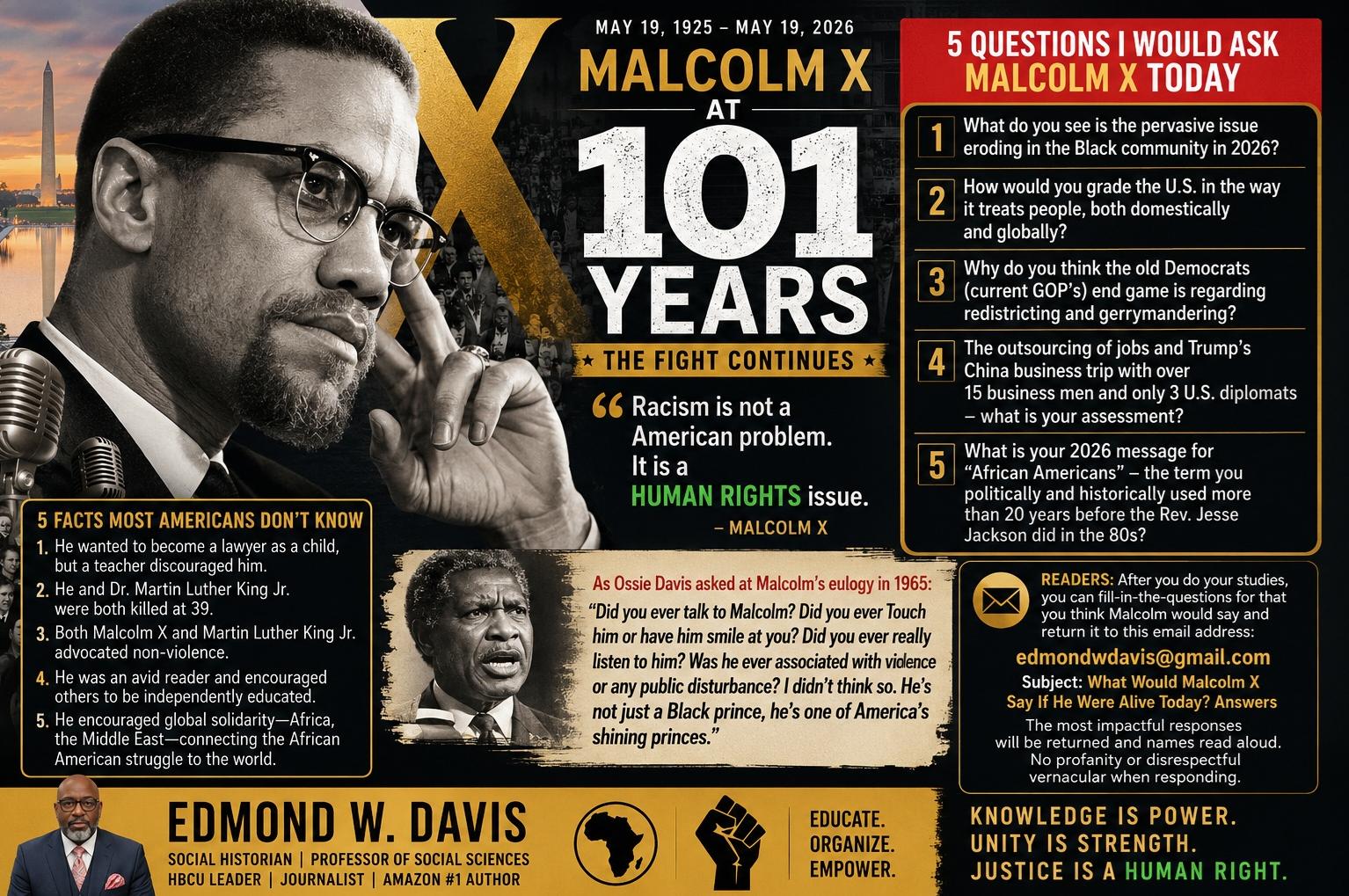
*If Malcolm X were alive in 2026, he would likely be less shocked by America’s contradictions than many Americans are.
Why?
Because Malcolm spent his life warning us.
Born May 19, 1925, Malcolm X evolved from a street survivor into one of the most globally sophisticated political thinkers of the 20th century. According to the National Archives and the Malcolm X Project at Columbia University, Malcolm increasingly reframed Black oppression not as a narrow American legal issue but as part of a broader global human rights struggle.
That distinction matters.
Because if Malcolm were here today, he would likely see familiar patterns dressed in modern clothing. He would see an America still wrestling with racial inequity while proclaiming itself the world’s democratic lighthouse. He would see aggressive redistricting battles disproportionately affecting Black political representation. He would likely question why economic nationalism is preached while jobs continue to disappear overseas. He would likely ask why billionaires, political insiders, and corporate interests often seem to shape public outcomes faster than ordinary citizens.
As Ecclesiastes 4:1 says:
“I saw the tears of the oppressed—and they had no comforter; power was on the side of their oppressors.”
Malcolm understood power.
He would likely challenge Black America internally as much as he challenged white power structures externally. His first question might not be about Washington.
It might be about us.
Are we educating ourselves?
Are we building businesses?
Are we politically organized?
Are we emotionally disciplined?
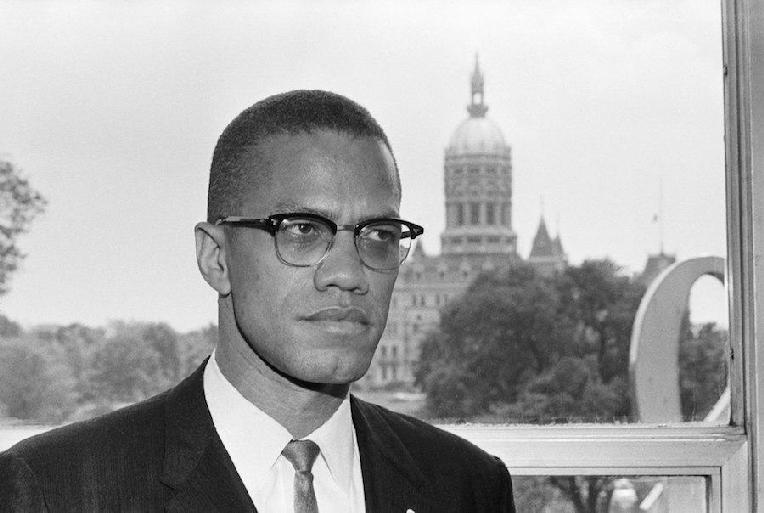
Malcolm was an obsessive reader. Prison transformed him partly because books transformed him. Today, in the algorithm era, he might warn us about digital dependency, misinformation, emotional manipulation, and political tribalism masquerading as activism. He might say:
“You have more information than any generation in history—and less clarity.”
Globally, Malcolm would almost certainly scrutinize American foreign policy.
He traveled extensively through Africa and the Middle East, understanding Black liberation as connected to anti-colonial struggles worldwide.
If America condemns authoritarianism abroad, he might ask whether domestic democratic practices consistently reflect those same principles.
He would likely question labor outsourcing.
As factories closed across America over decades, working-class communities—Black, white, Latino, urban, and rural—absorbed the consequences. According to the Economic Policy Institute, U.S.-China trade dynamics contributed to significant manufacturing job losses over multiple decades.
Malcolm would likely ask:
Who benefited?
Who paid the price?
And who controls the narrative?
Galatians 5:1 reminds us:
“It is for freedom that Christ has set us free. Stand firm, then, and do not let yourselves be burdened again by a yoke of slavery.”
That scripture speaks spiritually. But Malcolm would likely see political implications too. Freedom without economic power is fragile. Freedom without ownership is vulnerable. Freedom without organized community infrastructure is easily manipulated. On redistricting, Malcolm would likely be blunt. Political mapmaking is not merely technical governance. It is power engineering. When representation is diluted, voices are weakened. Malcolm believed political awareness required structural literacy.
Not slogans. Not emotional reactions. Understanding systems. Understanding leverage. Understanding who benefits. Black America itself would not escape Malcolm’s scrutiny. He would likely challenge performative activism. Celebrity politics. Empty symbolism. Hyper-consumption without institution building. He might ask why so much cultural influence produces so little collective economic power. He might challenge churches. Schools. Media personalities. Political operatives. Even Black elites.
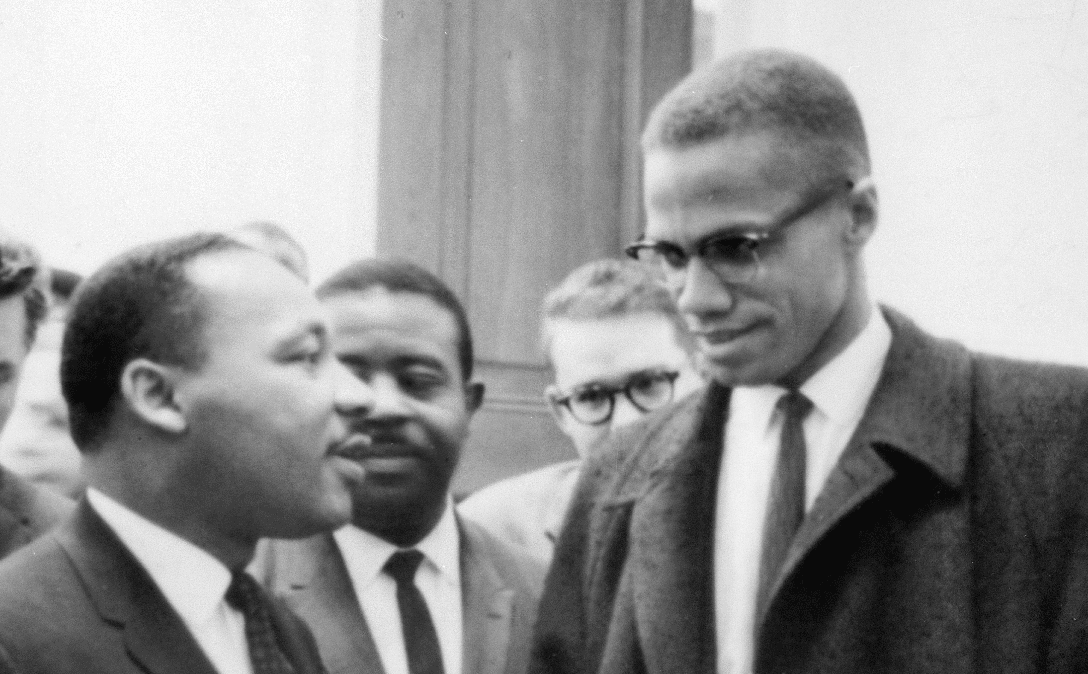
Because Malcolm’s critique was rarely comfortable. That is precisely why he remains relevant. And yet Malcolm evolved. This matters deeply. Too many reduce Malcolm to frozen anger. But late Malcolm was more internationally nuanced, spiritually reflective, and strategically sophisticated. He was not abandoning justice. He was broadening his framework. That version of Malcolm might call for coalition-building without surrendering truth. He might advocate disciplined global Black economic partnerships. He might encourage young African Americans to study geopolitics, economics, technology, diplomacy, and ownership—not just outrage.
And he would likely challenge America’s selective morality.
How does a nation champion liberty while tolerating glaring inequities?
How does democracy remain healthy when citizens distrust institutions?
How do communities survive when economic extraction outpaces reinvestment?
These are Malcolm’s questions. Not because Malcolm hated America. But because Malcolm demanded honesty from America. As Ossie Davis said in 1965:
“Did you ever really listen to him?”
That question still matters. Because Malcolm X at 101 would probably not ask America for comfort. He would ask for courage. He would ask Black America for discipline.
He would ask leaders for honesty. He would ask institutions for accountability.
And he would remind us that human dignity is never something to beg for. It is something to organize, defend, and build.
Happy 101st birthday, Malcolm X. The conversation continues.
Sources:
National Archives (Malcolm X historical records)
Economic Policy Institute (U.S.-China manufacturing employment analysis)
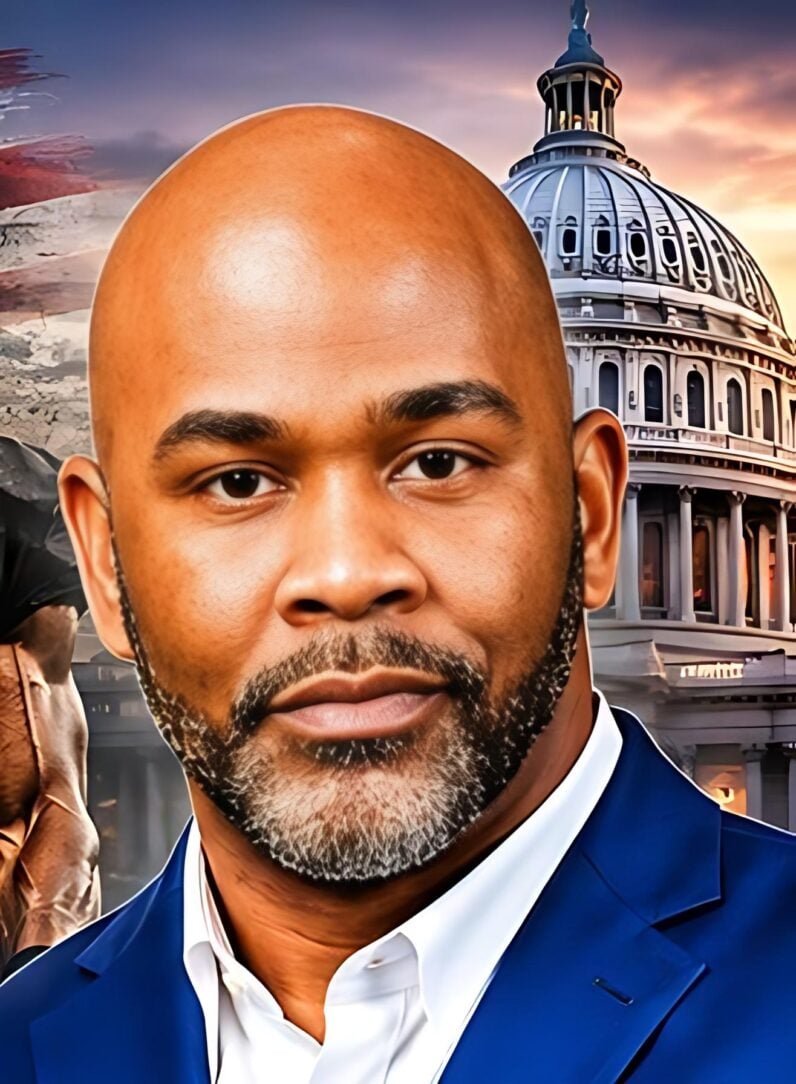
ABOUT THE AUTHOR:
Edmond W. Davis is an American social historian, international speaker, and Amazon #1 bestselling author. He is a global authority on the Tuskegee Airmen and serves as the founder and executive director of the National HBCU Black Wall Street Career Fest. A native of Philadelphia, PA, and current resident of Little Rock, AR, Davis is committed to cultural empowerment and educational equity through storytelling and civic engagement. Davis is a grand marshal at the 38th Annual African American History Month Celebration Parade.
(If You Like/Appreciate This EURweb Story, Please SHARE it!)
MORE NEWS ON EURWEB.COM: Mark Fuhrman, LAPD Detective from O.J. Simpson Trial, Dies at 74
We Publish Breaking News 24/7. Don’t Miss Out! Sign up for our Free daily newsletter HERE.
The post Malcolm X at 101: What Would He Say About America in 2026? appeared first on EURweb | Black News, Culture, Entertainment & More.