The world's second-largest cocoa producer warns output could fall 16%, raising fears of higher chocolate prices
Ghana, the world's second-largest cocoa producer, expects its cocoa production to fall by at least 16% in the 2026/2027 season, raising concerns over global cocoa supplies and the potential for higher chocolate prices.
 Black News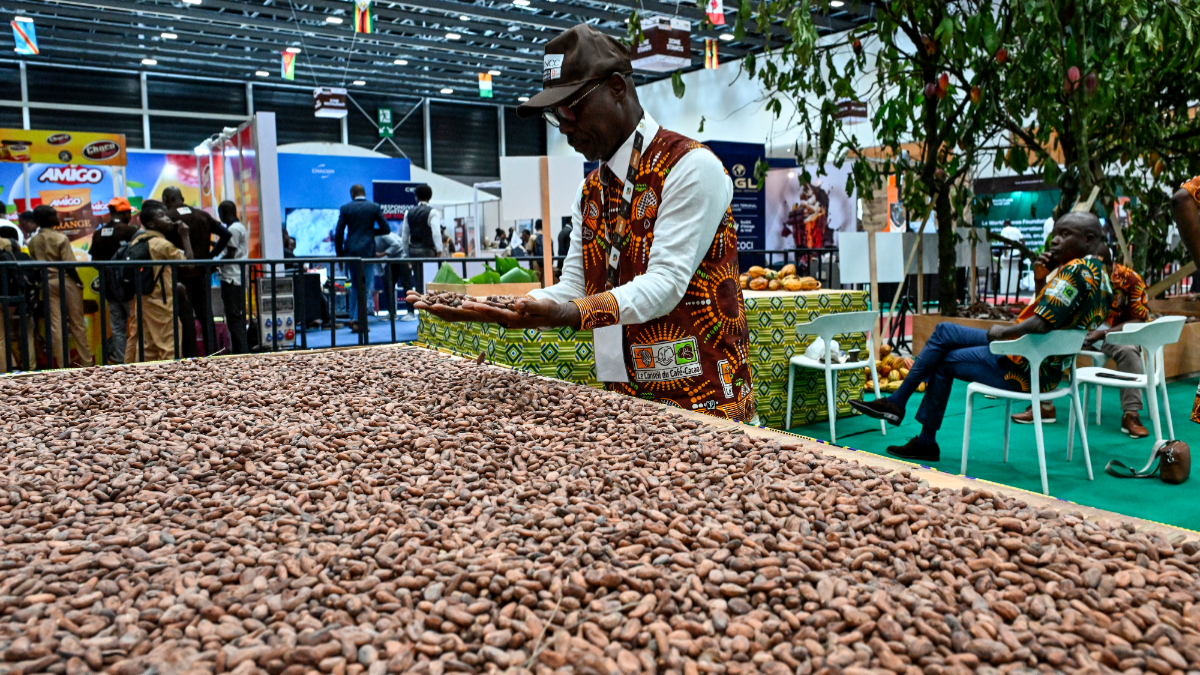

![A man checks cocoa beans at an exhibition stand during the National Cocoa and Chocolate Day at the Abidjan exhibition centre in Abidjan on September 30, 2024. [Photo by SIA KAMBOU/AFP via Getty Images]](https://ocdn.eu/pulscms/MDA_/4d37b23a00bbc2ec7722fadc70a5aebb.jpg)
Ghana, the world's second-largest cocoa producer, expects its cocoa production to fall by at least 16% in the 2026/2027 season, raising concerns over global cocoa supplies and the potential for higher chocolate prices.
- Ghana expects its cocoa production to drop by at least 16% in the 2026/27 season, raising concerns over global chocolate prices.
- The decline is attributed to El Niño weather conditions, excessive rainfall, disease, aging farms, and illegal mining.
- Swollen shoot disease and loss of farmland to illegal gold mining have particularly affected Ghana's main cocoa regions.
- COCOBOD is addressing the crisis by rehabilitating farms, increasing pesticide use, and reintroducing free fertiliser.
The forecast was released by the Ghana Cocoa Board (COCOBOD), the state agency responsible for regulating the country's cocoa industry, supporting farmers and marketing cocoa exports.
Weather, disease and illegal mining weigh on cocoa output
According to Reuters, COCOBOD said the projected decline reflects "the likelihood of El Niño conditions, excessive rain in May and June this year, and the physiological bearing pattern of the cocoa tree, which tends to alternate between higher- and lower-yield years."
The output reduction is particularly acute in Ghana's Western and Western North regions, which historically account for more than half of national production, due to three compounding threats.
Widespread Cocoa Swollen Shoot Virus Disease continues to eradicate productive trees, while a large share of plantations has aged past peak yield capacity.
Reuters noted that unregulated small-scale gold mining, known locally as galamsey, is another factor responsible for the projected decrease, as it degrades vital farmland and displaces established cocoa groves.
DON'T MISS THIS: Africa’s two largest cocoa producers tighten grip on global cocoa trade with unified pricing plan to curb smuggling and stabilise supply
COCOBOD said it is responding by rehabilitating diseased farms, expanding insecticide and fungicide spraying, and reintroducing a nationwide free fertiliser distribution programme for the 2026/2027 crop year.
![A farmer sifts through cocoa beans at a farm in the village of Offoumpo, near Agboville, on April 7, 2024. [Photo by Issouf SANOGO / AFP) (Photo by ISSOUF SANOGO/AFP via Getty Images]](https://ocdn.eu/pulscms/MDA_/6c2d0a18f3265caedbe6c2b08a1bba7f.jpg)
A few days ago, Business Insider Africa reported that the African Development Bank (AfDB) warned that a powerful El Niño could wipe out $20 billion in economic output, shrink GDP and trigger migration across Africa.
DON'T MISS THIS: Africa's growth outlook faces fresh climate threat as AfDB warns powerful El Niño could wipe out $20bn, shrink GDP and trigger migration
COCOBOD's latest report adds weight to those warnings, citing the likelihood of El Niño as one of the factors behind the projected decline in Ghana's cocoa production.
West African producers seek stronger cocoa market
The latest outlook comes as West Africa's major cocoa-producing countries step up efforts to strengthen the sector.
Earlier this year, cocoa regulators from Cameroon, Côte d'Ivoire, Ghana and Nigeria met in Abuja to discuss closer cooperation on pricing, production and value addition.
DON'T MISS THIS: World’s fourth-largest cocoa producer bans raw exports to the West
Nigeria has also announced plans to discourage the export of raw cocoa beans in favour of local processing, a move aimed at increasing earnings from finished cocoa products such as cocoa butter, powder and chocolate.