There Was No “Liberation” Of Afghanistan
KABUL, Afghanistan – On the morning of Nov. 13, 2001, Abdul Maruf Ahmadi was a teenager standing on a street in Kabul, watching men shave off their beards. The Taliban had slipped out of the capital overnight after they were overthrown by the invading Americans and their Afghan allies. By dawn, the fighters of the so-called…
 Black News
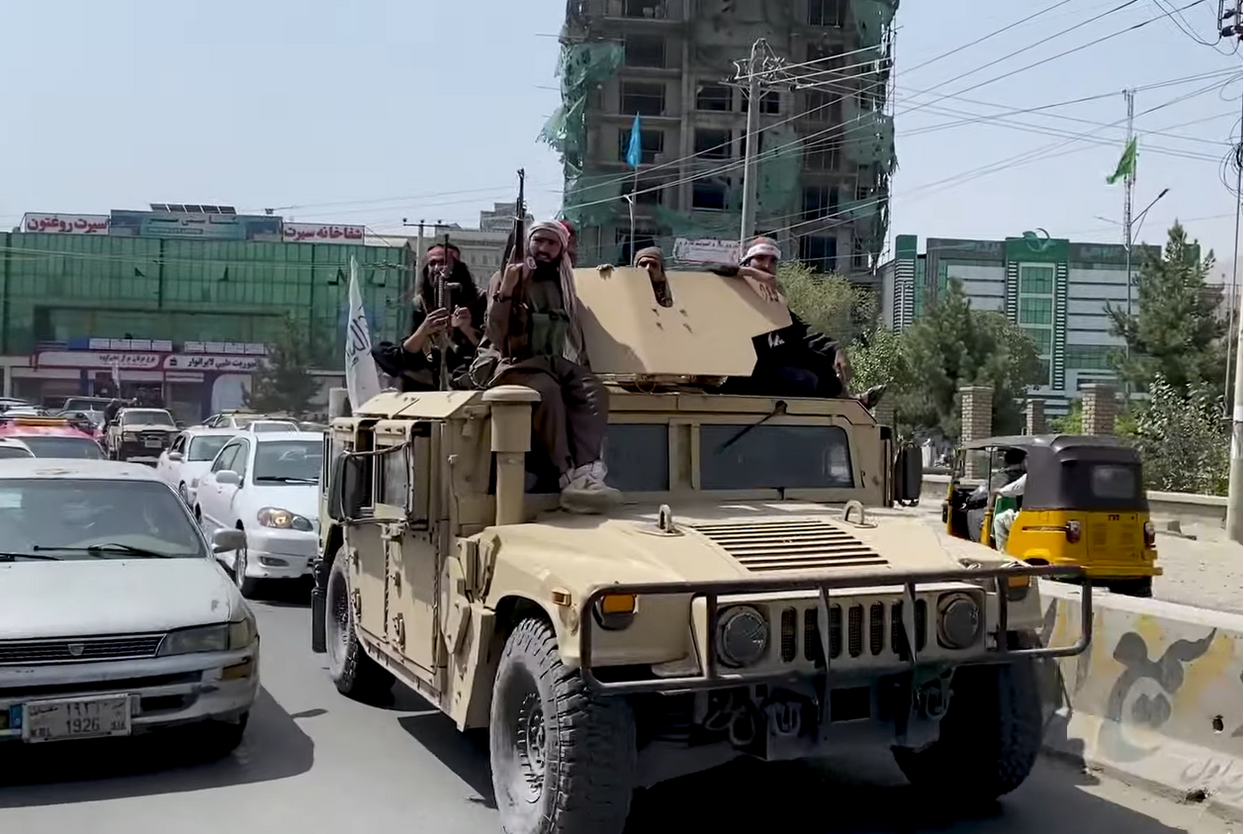
KABUL, Afghanistan – On the morning of Nov. 13, 2001, Abdul Maruf Ahmadi was a teenager standing on a street in Kabul, watching men shave off their beards. The Taliban had slipped out of the capital overnight after they were overthrown by the invading Americans and their Afghan allies. By dawn, the fighters of the so-called Northern Alliance were rolling in on pickup trucks, and music, banned for five years, was playing again from shopfronts. People cheered. Women who had been confined to their homes stepped outside and threw away their burqas.
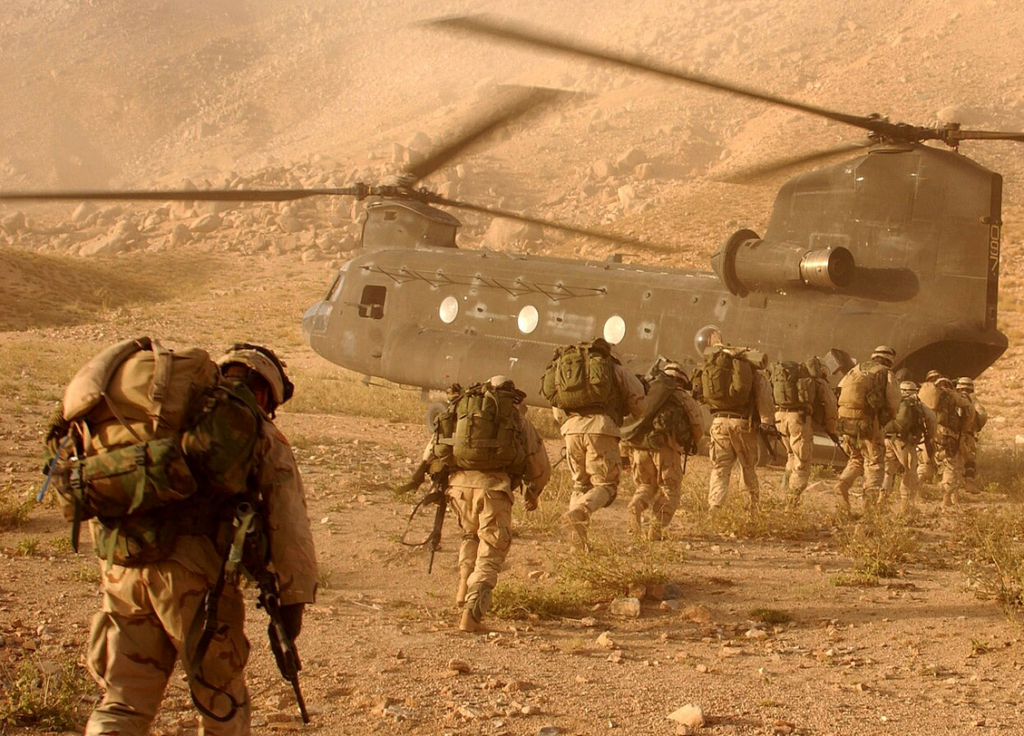
“For many people, it was a relief. They have had enough of the repressions,” Ahmadi told me when I met him in Kabul this autumn. He is in his early 40s now, and he does not romanticize the Taliban, then or now. But he remembers how quickly the joy curdled.
Within days, Kabul and the rest of the country became a hunting ground. American aircraft dropped leaflets promising “wealth and power beyond your dreams” to anyone who handed over Taliban or al-Qaeda fighters. Men who had been nobody the week before picked up rifles and became bounty hunters. Anyone could be a “suspect”: a former Taliban conscript, a rival in a land dispute, a stranger with the wrong accent or the wrong beard. “Suddenly, everyone who spoke Pashto [the dominant language within the Taliban] became suspicious, also men who wore beards and turbans,” Ahmadi, a Tajik and native of Kabul, said.
A 2006 study by Seton Hall University’s law school of the Pentagon’s own records on Guantánamo detainees found that only a small fraction had been captured by U.S. forces. The large majority had been handed over by Pakistani authorities or the Northern Alliance, at a time when the US was paying bounties. In the north, forces loyal to the warlord Abdul Rashid Dostum packed surrendered Taliban prisoners into sealed shipping containers. Hundreds, perhaps thousands, suffocated or were shot on the way to Sheberghan prison, and were buried in the desert at Dasht-e-Leili.
This is the part of the story the anniversary leaves out. The fall of Kabul was sold as a liberation, and for many Kabulis that morning it felt like one. But Washington and its NATO allies did not hand Afghanistan to the people, to ordinary Afghans. It handed it back to the warlords whose civil war made the rise of the Taliban possible in the first place, and then spent two decades and well over $100 billion to keep them in power. What followed was a grim “War on Terror” that filled the dungeons of Bagram with the tortured and the innocent, an allegedly democratic state hollowed out by plunder, and a Taliban insurgency fed by both. Now the Taliban are back and the warlords are in exile, and many Afghans fear the same cycle of conquest and revenge is about to happen once more.
The Men Who Came Back
The Northern Alliance was not a liberation movement. It was a coalition of the very commanders whose war for Kabul in the early 1990s had destroyed much of the city and killed tens of thousands of its residents. Between 1992 and 1996, mujahideen factions shelled Kabul’s neighborhoods into rubble, looted them, and committed massacres such as the mass killing of the Hazara minority in Afshar in 1993. Rape, kidnapping, and checkpoint extortion were happening every day, and a whole generation of Afghan children grew up with all of it. Every one of my family members who lived in Kabul during that dark era witnessed these crimes. “The streets were full of corpses. My mother told me to close my eyes, but I could smell the rotten flesh and hear the flies above the dead bodies,” one relative once told me in much detail.
Human Rights Watch would later document these crimes in a report titled, fittingly, “Blood-Stained Hands.”
That chaos is what made the Taliban possible in the first place. When a band of religious students from Kandahar promised order in 1994, many exhausted Afghans welcomed them, not out of love for their ideology but out of hatred for the warlords. Abdul Maruf Ahmadi’s generation grew up on those stories. “Death was everywhere. People were murdered for nothing. Lootings took place in every house. Nobody can forget this time,” he said.
In 2001, Washington brought those same men back to power. It needed fighters on the ground, and the warlords had them. Mohammad Qasim Fahim became defense minister and later vice president. Dostum would become vice president too. Ismail Khan, Atta Mohammad Noor, Abdul Rasul Sayyaf and many others secured ministries, governorships and seats in parliament. Their militias were folded into the police and army, often unchanged except for the uniforms.
A 20-Year Robbery
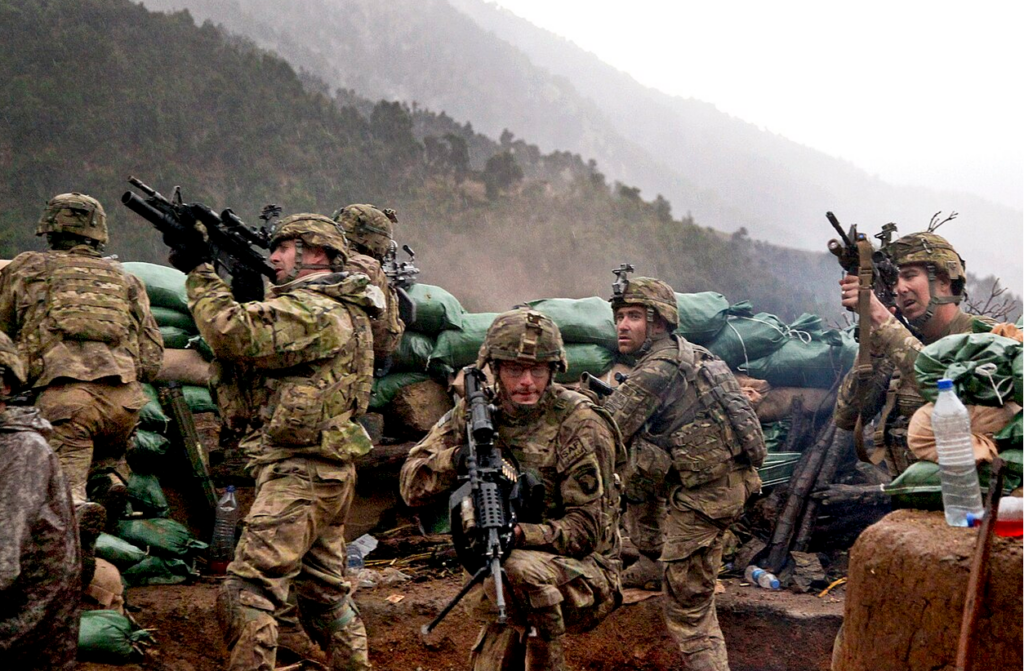
What followed was not state-building. It was, in Ahmadi’s words, “a robbery that lasted for 20 years.”
The United States alone spent about $145 billion on Afghan reconstruction. A great deal of it flowed through the hands of men whose legitimacy came from their guns, not from voters. In 2016, the U.S. government’s own watchdog, the Special Inspector General for Afghanistan Reconstruction (SIGAR), concluded that Washington had, in the words of Foreign Policy, “helped grow corruption by injecting tens of billions of dollars into the local economy with poor oversight.” It blamed “a willingness to partner with abusive and corrupt power brokers.” Many warlords, it noted, “were brought into government, where they continued their abuses, maintained private militias, and had links to narcotics, smuggling, and criminal networks.”
You could see where the money went in the villas of Sherpur, the Kabul neighborhood built on land seized from the state, with their mirrored glass and pseudo-Greek columns. You could see it in Dubai’s property market, and in the collapse of Kabul Bank in 2010, when close to a billion dollars vanished in insider loans to the politically connected, including relatives of then President Hamid Karzai and of his Vice President Fahim.
In Kabul, people still repeat a line they attribute to Hamid Karzai, the president Washington installed after the beginning of the so-called “Global War on Terror”: “Take what you want, but at least invest the money in Afghanistan.”
Those very words captured the governing ethic of the era. Elections were rigged, courts and parliament seats were for sale, and ministries were divided as spoils. The language of democracy, human rights and women’s empowerment was everywhere in the donor reports – just to acquire more money. On the ground, it often sat on top of a patronage system run by warlords, drug kingpins, and other questionable figures.
Ordinary Afghans saw this every day. They saw a police chief who had been a militia commander and sexually harassed men, women, and children, a judge who considered bribes as part of his salary, or night raids and bombings on the wrong house. Each of these was a recruitment pitch for the Taliban, who sold themselves, again, as the alternative to a predatory order. By the 2010s, the insurgency had grown back in the space the warlord state had left empty.
The Enemies We Created
Mufti Abdul Ahad Hakimi knows the other side of the story. He was held in Bagram, the American air base north of Kabul that became one of the most notorious detention sites of the “War on Terror.” In December 2002, a young taxi driver named Dilawar was beaten to death there by U.S. soldiers. Most of his interrogators reportedly believed he was innocent. Many other nameless men followed.
Hakimi describes being tortured, physically and psychologically. “They wanted to break me day and night,” he told me. What struck him most was the ideological demand that came with the beatings. His interrogators, Americans and their Afghan allies, wanted him to accept their system: democracy, Western values, the new order. “They said: accept our system, or we will continue torturing you,” Hakimi recalled. He refused.
Then he said something many might not expect. The cruelest of his captors, he said, were not the Americans. They were the Afghans: “It made me very sad to witness how my fellow Afghans treated me,” Hakimi said. But many of the men had fought the Taliban. Their relatives had been killed by them, or they simply remembered how they were treated by the Taliban’s regime in the 1990s, and brought that hatred into the cells.
It would be easy to read his testimony as Taliban propaganda, and it is shaped by the side he chose. But it describes a mechanism that every Afghan faction has lived through. Each side’s crimes become the other side’s grievances, and each victory becomes a license for revenge.
The Fall, and the Fall After That
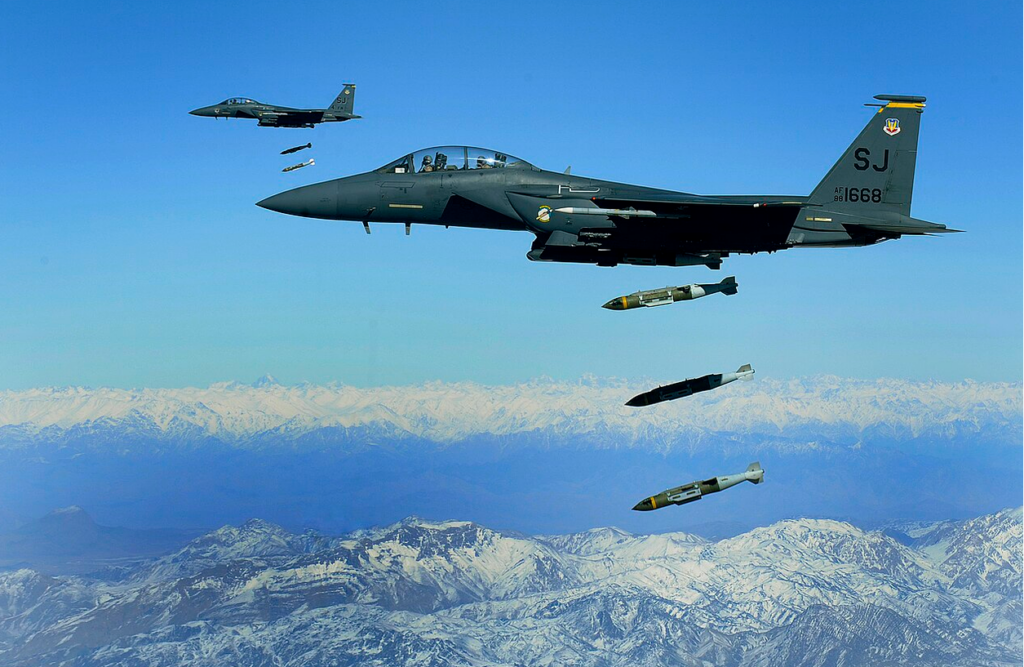
In August 2021, the order built in November 2001 collapsed in days. Ashraf Ghani, the U.S.-installed president of the Afghan republic, fled. So did many of the strongmen who had grown rich on two decades of war, to villas in Dubai and Istanbul, to Tashkent and Dushanbe. They left behind an army that had never been paid properly, and a population that did not fight for them because they were tired of war and corruption.
Ahmadi is not nostalgic. “They left, those bastards, and we don’t care about them. But we, the people, are still here,” he said. He is no happier under the Taliban. Women and girls are shut out of secondary schools, universities, and most jobs. Arbitrary detentions are common, and the economy is strangled.
What worries him is what comes next. Thousands of former soldiers of the republic’s army remain inside Afghanistan or in exile in Iran, Pakistan, and Tajikistan. Many are young, poor, and humiliated, and some have taken up arms again. Small armed groups, such as the National Resistance Front and the Afghanistan Freedom Front, claim sporadic attacks on Taliban positions. Notably, some of the newer fighters are trying to distance themselves from the warlords who led the old regime. They are the leftovers of an army, not of a political class, and for many of them fighting is the only work they know.
The Taliban, of all people, should recognize this pattern. Their own return began exactly this way: with a defeated movement, a humiliated rank and file, a predatory government in Kabul, and a population that came to see the insurgents as the lesser evil. “The day will come when they fall again, and people will take revenge,” Ahmadi said. He is not the only one. Although the Taliban disarmed large parts of the country after their return, many people dug their arms deep into the ground – until they need them again one day.
The anniversary of Nov. 13, 2001 will not be marked in Kabul. The Taliban have no reason to celebrate their own rout, and the men who marched in that morning are scattered abroad, issuing statements from exile.
But the date deserves remembering, because it shows how Afghanistan’s wars reproduce themselves. In 1992, the mujahideen took Kabul and turned on each other. In 1996, the Taliban took Kabul, and the vanquished went to the hills. In 2001, the vanquished came back with American air power and settled their scores. In 2021, the Taliban returned. Each time, the victors treated power as a prize, and the defeated as people to be punished, sold, or erased.
Abdul Maruf Ahmadi has lived through three of those turns. Abdul Ahad Hakimi has suffered through at least one of them from inside a cell. Neither of them believes the cycle is over.
Twenty-five years ago, Washington promised Afghans that the fall of Kabul would be the beginning of something new. It turned out to be one more turn of a very old wheel.
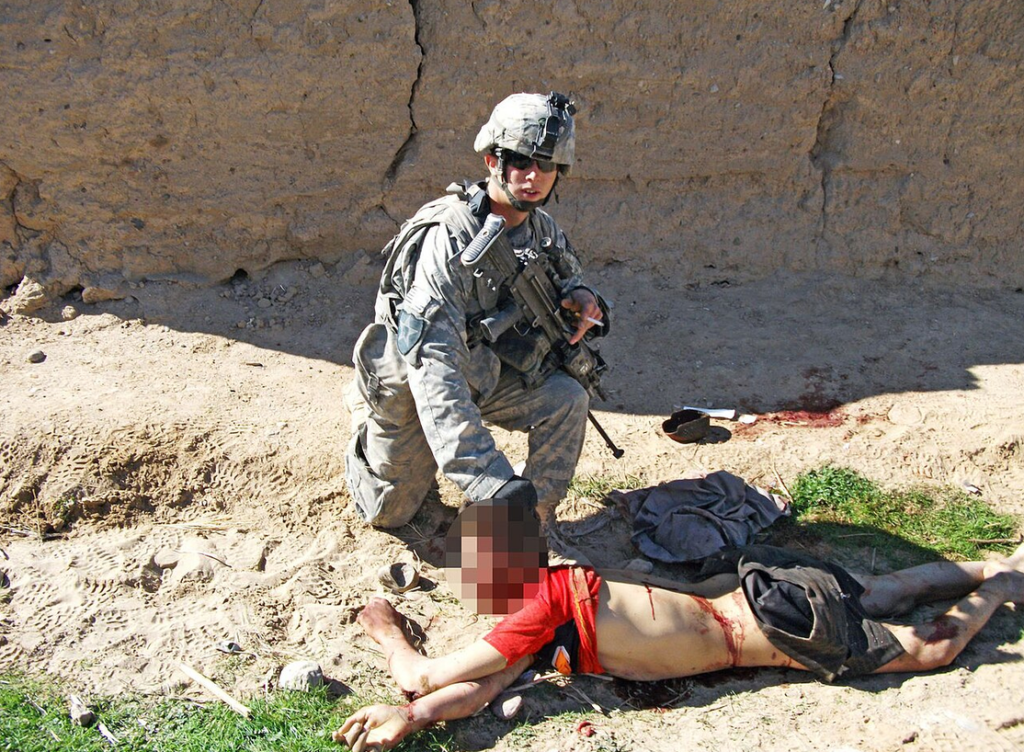
Emran Feroz is an Austrian-Afghan journalist and bestselling book author. He is covering the War on Terror, especially in Afghanistan, for more than a decade. His work has been published with Foreign Policy, The New York Times, Der Spiegel and various other media outlets around the world.