Top 20 Black Arts moments in the history of Blackness
What are the 20 greatest Black Arts moments ever? We have the answer right here.
 Black News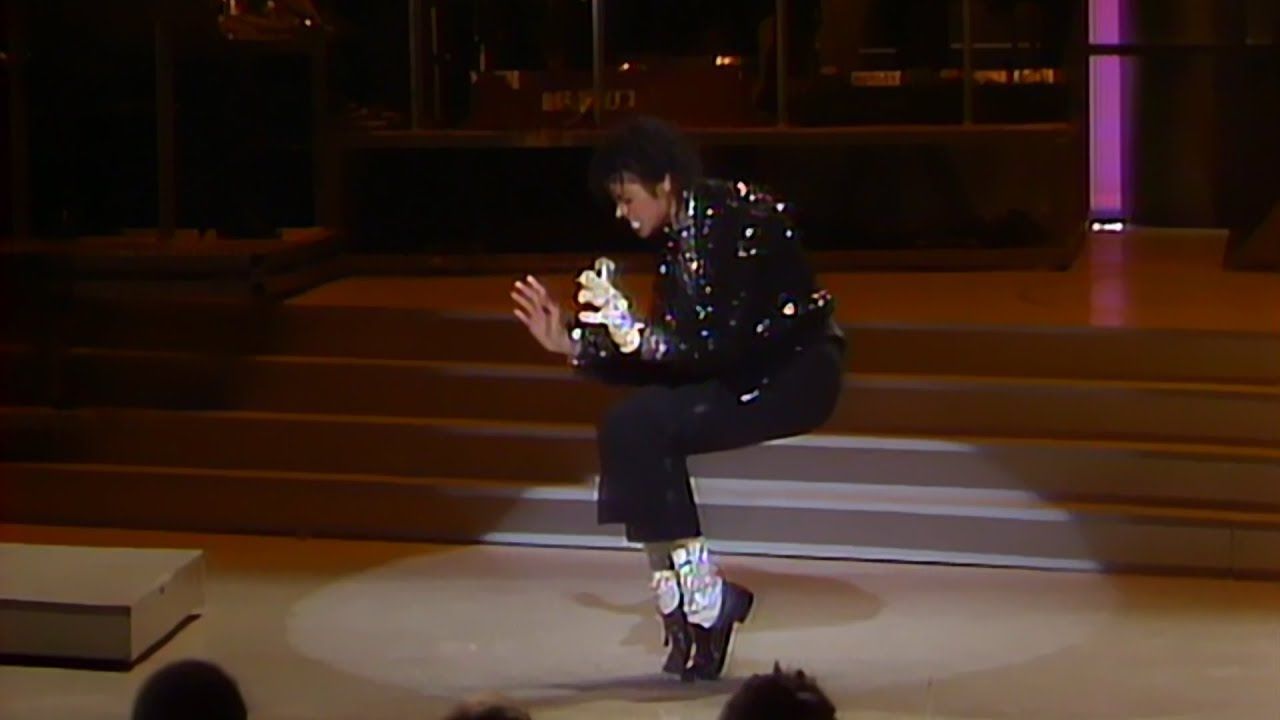


Putting together a “Top” list of Black arts moments is an impossible task… so, of course, I’m taking it on. And I dare anyone to dispute the entries. And FYI spots 20 through 2 are absolutely up for debate in terms of positioning. In fact, I’m not even gonna attempt to list them in any certain order. But the #1 spot is a no-brainer that’s not moving or being replaced… ever!
Invention of Jazz/Bee-Bop/Ragtime
The music that initiated what we now call jazz was a seminal moment in human history. Jazz is both revolutionary and spiritual, cosmic and grounded, ancient and futuristic all at the same time.
Invention of Hip-Hop

Though we celebrated hip-hop’s 50th anniversary last year, it arguably has roots that reach back further in time – and beyond American soil. But that’s a debate and discussion for the music historians. However, there’s no debate about how this artistic form went from society’s problem child to galactic force. And yes… we did that.
Invention of Rock & Roll
The big hub-bub about Queen Bey not being “allowed” in the country music space is so typical of colonizers who steal everything not nailed down, then claim it as their own. If you’re in the Defender space, you already know there’s no country music without our musical genius. And the same can mos def be said for rock & roll. In fact, Yasiin Bey (the artist formerly known as Mos Def) literally has a song titled “Rock n Roll” where he breaks down the genre’s Black origins. And it just makes too much sense that that song is on his album/CD named “Black on Both Sides.”
In fact, the “Mighty Mos” literally said:
I am, yes I am, the descendant (yes, yes)
Of those folks whose backs got broke
Who fell down inside the gun smoke
(Black people) chains on their ankles and feet
I am descendants of the builders of your streets
(Black people) tenders to your cotton money
I am Hip Hop
(It’s heavy metal for the Black people)
I am Rock and Roll (Rock and Roll, rock ‘n’ roll)
Been here forever
They just ain’t let you know (ha)
I said, Elvis Presley ain’t got no soul (huh)
Chuck Berry is Rock and Roll (damn right)
You may dig on the Rolling Stones
But they ain’t come up with that style on they own (uh-uh)
Elvis Presley ain’t got no soul (hell nah)
Little Richard is Rock and Roll (damn right)
You may dig on the Rolling Stones
But they ain’t come up with that shit on they own (nah-ah)
INSERT YOUTUBE: https://www.youtube.com/watch?v=b8epyQ5MnFY
The Spike Lee Run

There is arguably not a more impactful 10-year run of movies made by a director in the history of movie-making than what Spike Lee did between the mid ‘80s and the mid ‘90s. The movies he made during that stretch include “She’s Gotta Have It” (1986), “School Daze” (1988), “Do the Right Thing” (1989), “Mo Better Blues” (1990), “Jungle Fever” (1991), “Malcolm X” (1992), Crooklyn (1994), Clockers (1995), Get on the Bus (1996). Depending on who you ask, at least six of those are absolute classics. Name another “legendary” director who can match that level of quality production over a decade. You can’t do it. Spike deserves his props… and the Best Picture Oscar for “Do the Right Thing” that was stolen by “Driving Miss Daisy.” Yes, that actually happened.
Sidney Poitier’s “In the Heat of the Night” Slap
You can make the argument that this motion picture slap was the greatest “for the culture” moment in movie history. Released in 1967, as the Civil Rights Movement was transitioning into the Black Power Movement, “In the Heat of the Night” is about Poitier’s character (Detective Virgil Tibbs), a cop from Philadelphia finds himself in the deep, deep south helping out a local racist sheriff in a racist town solve a racist murder case. When this Black man (Tibbs) had the audacity to question the most powerful white man in the county about the case, Tibbs got slapped. And with zero hesitation, he full-palm slapped dude back. And you best believe those 1967 Black movie-goers went crazy, and Mr. Tibbs/Poitier became a legend.
Carmen Jones
In addition to the cast of “Carmen Jones” overflowing with countless Black entertainers who went on to become living legends, the movie matched two mega-stars: Dorothy Dandridge and Harry Belafonte. This movie was 1954’s version of a “Black Panther” for the culture moment.
Black Panther

You already know.
The Minneapolis Sound
Motown, Stax Records, and Cadillac Records all had their iconic impacts on the Black universe. But y’all better put some respect on the Minneapolis Sound. Hell, Prince alone is enough to more than justify this entry’s place on the list. I mean… Prince! But Minneapolis didn’t stop there. Vanity 6, Sheila E., Alexander O’Neal, Cherrelle, The Family, Madhouse, Andre Simone, Brownmark, Wendy & Lisa, Apollonia 6, Ta Mara & the Seen, Mazarati, all did their thing. And I haven’t even mentioned the greatest band in the history of ever… the one band that made Prince nervous… THE TIME. As a group, they were an unforgettable force. Individually, they made even more history. Jesse Johnson has had an insane career. But Jimmy Jam and Terry Lewis, Lord have mercy, may very well go down in history as the greatest producing duo in history, working with nearly every artist and group known to humanity; further expanding the impact of the Minneapolis Sound.
Boyz in the Hood
Great movies are great because they have multiple great, unforgettable scenes. This one had several, including the one where… well, you know. RIP Ricky.
Mahogany… Classic Billy D
Like 1954’s “Carmen Jones,” Mahogany (1975) paired legends Diana Ross and Billy D. Williams. Not only was it a great movie, but it gave us two of the most memorable scenes in Black cinema history. First, when Ross (Mahogany) blew up as an international model and kicked her man Brian (Billy D) to the curb, and he delivered this line: “Let me tell you something, and don’t you ever forget it: success is nothing without someone you love to share it with.” The second… well, just check out the movie’s finale.
The Jacksons Reunite for Motown Reunion
On May 16, 1983 all of Blackworld was glued to the TV to watch the reunion of the Jackson during the 25th anniversary of Motown. Even without the internet, that moment literally went viral. And it wasn’t just the Jackson performing together. After that, Michael broke out and did his own thing, debuting the Moonwalk for all the world to see. It wasn’t until the invention of them “innernets” that we learned a brotherman named Bill Bailey did it first at the Apollo Theatre in 1955. Still, that 1983 Jacksons moment was one for the ages.
Roots
I’m not sure if any TV miniseries before or sense has ever had the impact “Roots” (1977) had on the culture. The names Kunta Kinte and Toby became new and permanent members of Blackworld’s lexicon.
Harlem Nights… Sunshine

When that detective met Sunshine and called his wife, telling her he “ain’t never coming home no more,” Black Arts history was made, and the legend of Sunshine was born.
Thriller Video
Though I contend Michael Jackson’s “Remember the Time” video was a bigger deal, especially since it unapologetically showed the ancient Egyptians as they were historically – Black – his “Thriller” video literally changed the game.
Harlem Renaissance (New Negro Movement)
Katherine Dunham, Lorraine Hansberry, Zora Neale Hurston, Langston Hughes, Claude McKay (If We Must Die), Richard Wright, Louis Armstrong, Duke Ellington, Carter G. Woodson, James Weldon Johnson, Marcus Garvey. These are just a few of the folk who changed the world via the New Negro Movement (Harlem Renaissance); a movement that sought to redefine Blackness for ourselves and the world.
Love Jones/Spoken Word

Has any one movie ever birthed an entire movement like “Love Jones” did? I think not. That movie had er’body and “they” mama thinking they could spit bars. And there were a gazllion places to do it. Spoken word spots popped up everywhere after Darius Lovehall and Nina Mosley did their thing.
The Toni Morrison Experience
“Sula,” “The Bluest Eye,” “Beloved,” “Song of Solomon,” etc. Nuff said.
Movement Music

From “Strange Fruit” to “Say It Loud, I’m Black and I’m Proud” to “Fight the Power” (the one by the Isley Brothers and the one by Public Enemy), movement music is a transgenerational Black Arts moment that’s still in progress.
Phenomenal Maya
How many times has this poem been re-recited by folk in Blackworld? Whatever number you gave, multiply that by 30 gazillion and 25, and you’ll still come up short.
Black Women
By far, the most impressive artwork ever on this earth was, is, and forever will be Black women. And let me be more specific before I get in trouble – my wifey.