Uganda shifts to early action amid growing climatic challenges
Amid the growing challenges of climate change, Uganda has taken a significant step towards strengthening its disaster preparedness and climate resilience. With the launch of a multi-hazard integrated early warning system and a national anticipatory action road map, the country aims at shifting the country from reactive responses to proactive risk management. The new framework, […] The post Uganda shifts to early action amid growing climatic challenges appeared first on The Observer Media Ltd.
 Black News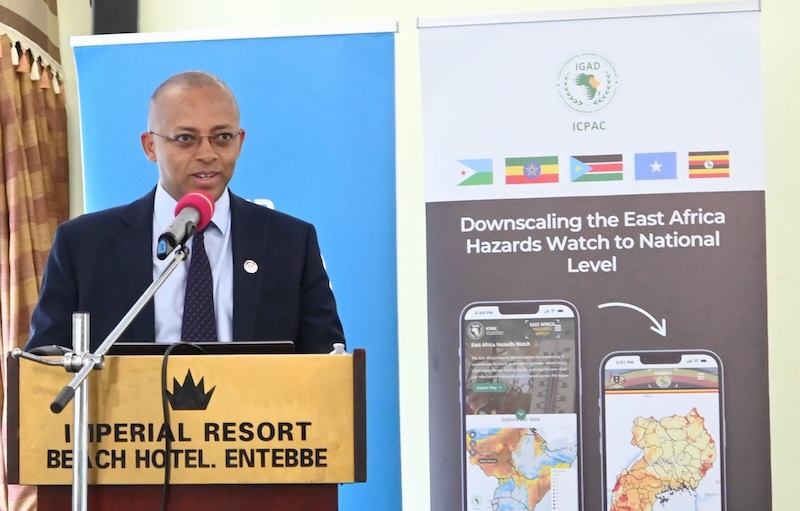

Amid the growing challenges of climate change, Uganda has taken a significant step towards strengthening its disaster preparedness and climate resilience.
With the launch of a multi-hazard integrated early warning system and a national anticipatory action road map, the country aims at shifting the country from reactive responses to proactive risk management.
The new framework, unveiled by the Office of the Prime Minister together with partners including the United Nations World Food Programme (WFP), the Food and Agriculture Organisation (FAO) and the Intergovernmental Authority on Development (IGAD), seeks to ensure that early warnings translate into timely action to protect lives and livelihoods.
Marcus Prior, the Deputy Country Director, UN World Food Programme, Uganda said the roadmap builds on years of investment in strengthening Uganda’s early warning and anticipatory action systems.
“Since 2021, comprehensive disaster risk management initiatives have reached more than 1.6 million families with timely and actionable early warning information, while over 400,000 households have directly benefited from anticipatory interventions,” Prior said.
She noted that key milestones include the establishment of four sub-national multi-hazard early warning systems in Karamoja, Teso, Mt Elgon and Rwenzori, as well as two regional early warning centres that are enhancing local capacity to monitor hazards, analyse risks and disseminate alerts.
“These investments are helping bridge the gap between national focus and community-level action,” he added.
Prior said WFP and its partners have also supported government institutions, including the Office of the Prime Minister, the Ministry of Water and Environment and the Ministry of Agriculture, to strengthen hydrometeorological monitoring, weather forecasting and early warning dissemination systems.
The initiative has also expanded preparedness to include hazard-specific anticipatory action plans such as the tick and tick-borne disease response in Karamoja, reflecting a broader approach that links climate risks with livestock health and food security.
Uganda is currently facing heightened climate risks, with ongoing drought in parts of the country and forecasts indicating above-normal rainfall and strong winds later in the year, raising the likelihood of floods, landslides and displacement.
The post Uganda shifts to early action amid growing climatic challenges appeared first on The Observer Media Ltd.