Uganda’s ILT20 Campaign: The Batting has fired, but Fielding and Discipline threaten three-peat
Uganda have reached the business end of their ILT20 Continental Cup campaign with three victories from four matches, but the results tell only part of the story. The defending champions have shown enough batting power and bowling depth to remain firmly in the hunt for a third consecutive title. Yet beneath the wins is a […] The post Uganda’s ILT20 Campaign: The Batting has fired, but Fielding and Discipline threaten three-peat appeared first on Kawowo Sports.
 Black News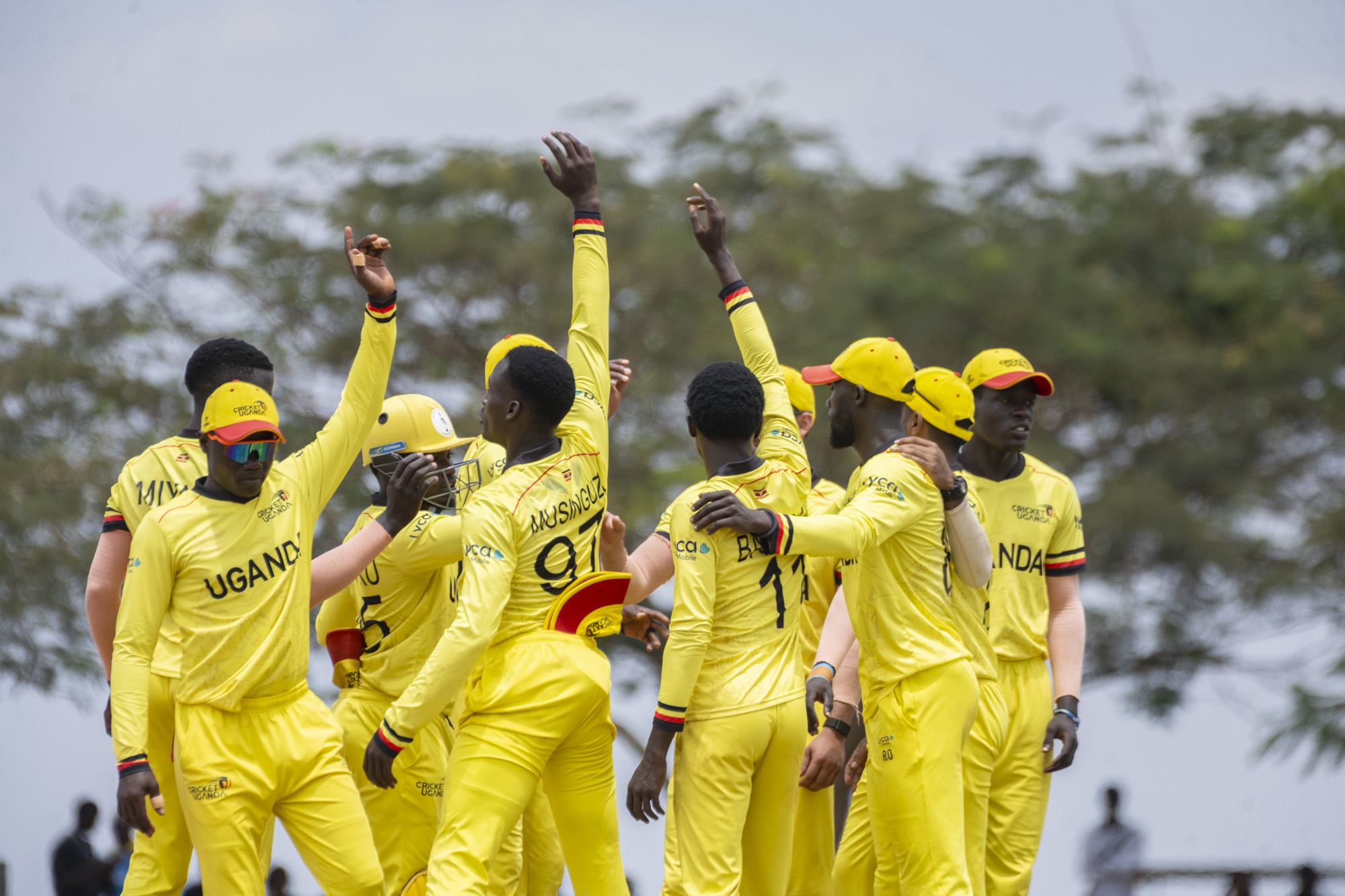

Uganda have reached the business end of their ILT20 Continental Cup campaign with three victories from four matches, but the results tell only part of the story.
The defending champions have shown enough batting power and bowling depth to remain firmly in the hunt for a third consecutive title. Yet beneath the wins is a warning that cannot be ignored: Uganda’s fielding and overall bowling discipline have leaked too many runs, as the defeat to Kenya exposed how quickly an otherwise strong performance can unravel.
With Sierra Leone, Botswana, Rwanda and Kenya awaiting them again this week, Uganda still control their title destiny. But if the two-time champions are to complete another successful defence, they must turn their promising individual performances into a more complete team display.
If there has been one consistently influential Ugandan batter across the four matches, it is Gerald Olipa. Olipa has accumulated 205 runs, comfortably the highest Uganda total in the four games. His campaign has included scores of 53 against Kenya, 83 against Sierra Leone, 24 against Botswana and 45 against Rwanda.

His most impressive innings came against Sierra Leone, where he smashed 83 from just 34 balls, including nine sixes, at a remarkable strike rate of 244.12. Against Rwanda he added another 45, while his 53 against Kenya demonstrated that his value has not been restricted to matches Uganda won.
Olipa has provided Uganda with exactly what a T20 middle-order player needs: acceleration and the ability to change the tempo of an innings quickly.
The challenge now is converting those starts into match-defining contributions in the remaining fixtures.
Musemeza has also produced an important campaign, collecting 134 runs from the four matches. His tournament-defining innings came against Sierra Leone, where he made 89 from 57 balls, striking eight fours and five sixes. That innings anchored Uganda’s massive 250/3 total and provided the platform for the eventual 114-run victory.
He also contributed 30 against Kenya and 15 against Botswana, although he fell for a duck against Rwanda. Musemeza’snumbers underline an important point for Uganda: when he and Olipa fire together, Uganda’s batting has enough power to overwhelm opponents.
The management will therefore want to preserve that combination rather than relying excessively on one individual.
Obuya’s four scores — 7, 37, 51 and 25 — give him 120 runs for the campaign. His 51 from 28 balls against Botswana was particularly important, coming at a strike rate of 182.14 and helping Uganda chase down 102 in only 9.3 overs.
His 37 against Sierra Leone also came at a rapid 185 strike rate.The concern is consistency. Obuya has demonstrated that he can provide explosive starts, but Uganda will need him to make those contributions more regularly as the competition reaches its decisive phase.

Captain Riazat Ali Shah has made 112 runs across the four matches: 45 against Kenya, 32 against Sierra Leone, six against Botswana and 29 against Rwanda.
His most spectacular contribution came against Sierra Leone, where he arrived late and smashed 32 from only eight balls, including four sixes at a staggering strike rate of 400.
But Riazat’s value extends beyond batting. He has also bowled when required and has contributed in the field, including a catch against Botswana and another against Sierra Leone.
For Uganda, however, the captain’s biggest responsibility now is to bring together the different parts of the side. The individual performances are there; the consistency of the collective performance is what needs attention.
Mirza Anas Baig’s campaign has been uneven, with scores of 2, 0, 2 and then a superb 66 from 36 balls against Rwanda. That innings, containing five fours and five sixes, was a reminder of his ability to produce a substantial contribution when given the opportunity.
The problem for Uganda is that the contribution has arrived only once in four games. With four important fixtures ahead, Uganda needs greater consistency from the top and middle order. The batting has enough depth, but too many players cannot afford to wait until the final matches to find their best form.

Kenneth Waiswa has scored 38 runs across the four matches, including an aggressive 37 from 20 balls against Kenya. His bowling, however, has been more prominent. He has taken two wickets and produced an excellent spell against Sierra Leone, returning 2/20 from four overs.
Against Rwanda, however, he conceded 35 runs from four overs and bowled seven wides. That is an area Uganda simply cannot afford to overlook.
At this level, a bowler can have the right variations and still damage his team’s chances if discipline disappears. Uganda’s remaining matches will require tighter execution, particularly against Kenya.
Juma Miyagi’s six wickets make him one of Uganda’s leading wicket-takers across the four matches.
He has taken wickets in every game: 1/37 against Kenya, 2/18 against Sierra Leone, 2/9 against Botswana and 1/24 against Rwanda.

The Botswana spell was particularly outstanding, conceding just nine runs in four overs while taking two wickets. His overall figures show the balance in his performances: wickets have consistently come alongside economical spells, with the Botswana and Sierra Leone matches standing out.
Miyagi should therefore remain a central part of Uganda’s plans. His ability to strike early and control the scoring rate gives the captain an important weapon.
Joseph Baguma has also taken six wickets in the four matches. His best figures came against Botswana, where he claimed 3/14, followed by another 3/20 against Rwanda.
That gives Uganda a strong bowling foundation at a time when their attack needs to become more clinical.

Baguma’s consistency is particularly encouraging because he has been able to produce wickets without conceding heavily. His role in the remaining fixtures should be clearly defined, especially in the phases where Uganda need wickets rather than simply containment.
Matthew Musinguzi has taken five wickets across the four games. His most impressive performance came against Rwanda, where he returned 3/23 from four overs and also contributed 23 runs in Uganda’s innings. He took another wicket against Kenya and one against Botswana.
His campaign demonstrates the value of having a bowler capable of contributing across phases. However, like the rest of the attack, he must improve his discipline around extras and avoid allowing pressure to escape through loose deliveries.
Cosmas Kyewuta’s has taken three wickets in the four matches, but his biggest contribution came with the bat against Rwanda.He smashed 18 from only four balls, including three sixes, giving Uganda’s innings a late surge. With the ball, his 3/20 against Rwanda was equally important.

He therefore gives Uganda another all-round option, although the team must ensure that his role remains clearly defined depending on match situations.
The biggest concern: Uganda are giving away too much
For all the positives, this is perhaps the clearest weakness in Uganda’s campaign. Across the four matches, Uganda conceded 50 extras: 11 against Kenya, 12 against Sierra Leone, five against Botswana and a troubling 22 against Rwanda.
The 22 extras against Rwanda included nine wides, one no-ball, 10 byes and two leg-byes. The wides alone add up to 29 across the four matches. That is too much leakage for a side trying to win a championship.
The problem should not simply be labelled as bowling. It is a broader issue of fielding standards, execution and discipline. Runs that should not be conceded are effectively giving opponents a head start.
Against Kenya, Uganda’s 189/6 should have given them a competitive platform. Instead, Kenya raced to 193/2 in only 16.4 overs.
Uganda’s bowlers conceded 11 extras, while Waiswa went for 42 from two overs and Kyewuta conceded 34 from three. Kenya’s chase was ultimately driven by Dhiren Gondaria’s 94 from 47 balls and Rakep Patel’s unbeaten 56 from 35, but Uganda’s inability to contain the innings made the task considerably easier.
The fielding and discipline must therefore become a priority rather than an afterthought. The Kenya defeat should be viewed as a useful warning rather than an isolated result.
Uganda have already demonstrated that they can dominate opponents. They beat Sierra Leone by 114 runs, Botswana by five wickets and Rwanda by 64 runs. But Kenya exposed the gap between being good enough to win comfortably and being good enough to win the championship.
The next meeting with Kenya provides an opportunity to correct that. Uganda cannot expect to outscore Kenya every time. They must be able to squeeze runs, create pressure and force mistakes.
Uganda’s remaining fixtures provide four opportunities to sharpen the team before the title is decided:
- Tuesday – Sierra Leone
- Wednesday – Botswana
- Thursday – Rwanda
- Friday – Kenya
The first three matches should be used not only to collect victories but also to establish the discipline and combinations Uganda will need against Kenya.

The coaching and management team should place significant emphasis on fielding sessions between matches. The objective should be simple: reduce unnecessary runs.
Catches must be completed, ground fielding must be sharper, and communication between fielders must improve. More importantly, the team needs to eliminate the mental lapses that allow pressure to disappear.
If Uganda can turn 50 extras over four matches into a much smaller number in the remaining fixtures, the impact could be enormous.
Early wickets change T20 matches. Uganda’s strongest bowling performances have generally come when the attack has combined wickets with economy.
The top order has produced several explosive performances, but Uganda should avoid becoming dependent on Olipa, Musemeza or one individual.
Obuya, Baig and Shah have all shown match-winning potential. The remaining games should be about getting the entire batting unit into rhythm.
The ideal scenario heading into the Kenya match is a top and middle order where several players are coming off meaningful contributions rather than one or two carrying the innings.
With four matches in five days, management must be smart with player workloads. The Sierra Leone, Botswana and Rwanda games offer an opportunity to keep key players fresh while still maintaining winning combinations.
Rotation, where practical, should not weaken the team’s competitive edge but should ensure that Uganda reach Friday’s Kenya fixture with their main performers physically and mentally ready.

The final fixture against Kenya should be approached as the most important tactical test of the remaining schedule. The target should be to deny Kenya the freedom enjoyed by Gondaria and Rakep Patel, while forcing their batting to work harder for every run. Uganda’s own batting must then be prepared for a more disciplined Kenyan attack.
Uganda’s biggest task over the remaining four matches is to remove the unnecessary runs, sharpen the fielding, tighten bowling discipline and make their strong batting and bowling units work together.
If Uganda clean up the fielding, reduce the extras and reproduce their best batting and bowling performances consistently, the three-peat remains very much within reach.
The post Uganda’s ILT20 Campaign: The Batting has fired, but Fielding and Discipline threaten three-peat appeared first on Kawowo Sports.