Violence prevention advocates talk strategies to engage Black youth amid nationwide ‘teen takeovers’
For decades, the Honorable Minister Louis Farrakhan, National Representative of the Most Honorable Elijah Muhammad, has served as a watchman on the wall, warning the Black community of the U.S. government’s targeting of Black youth. “The government of the United States of America is planning an assault on the Black community, specifically aimed at our […] The post Violence prevention advocates talk strategies to engage Black youth amid nationwide ‘teen takeovers’ appeared first on Final Call News.
 Black News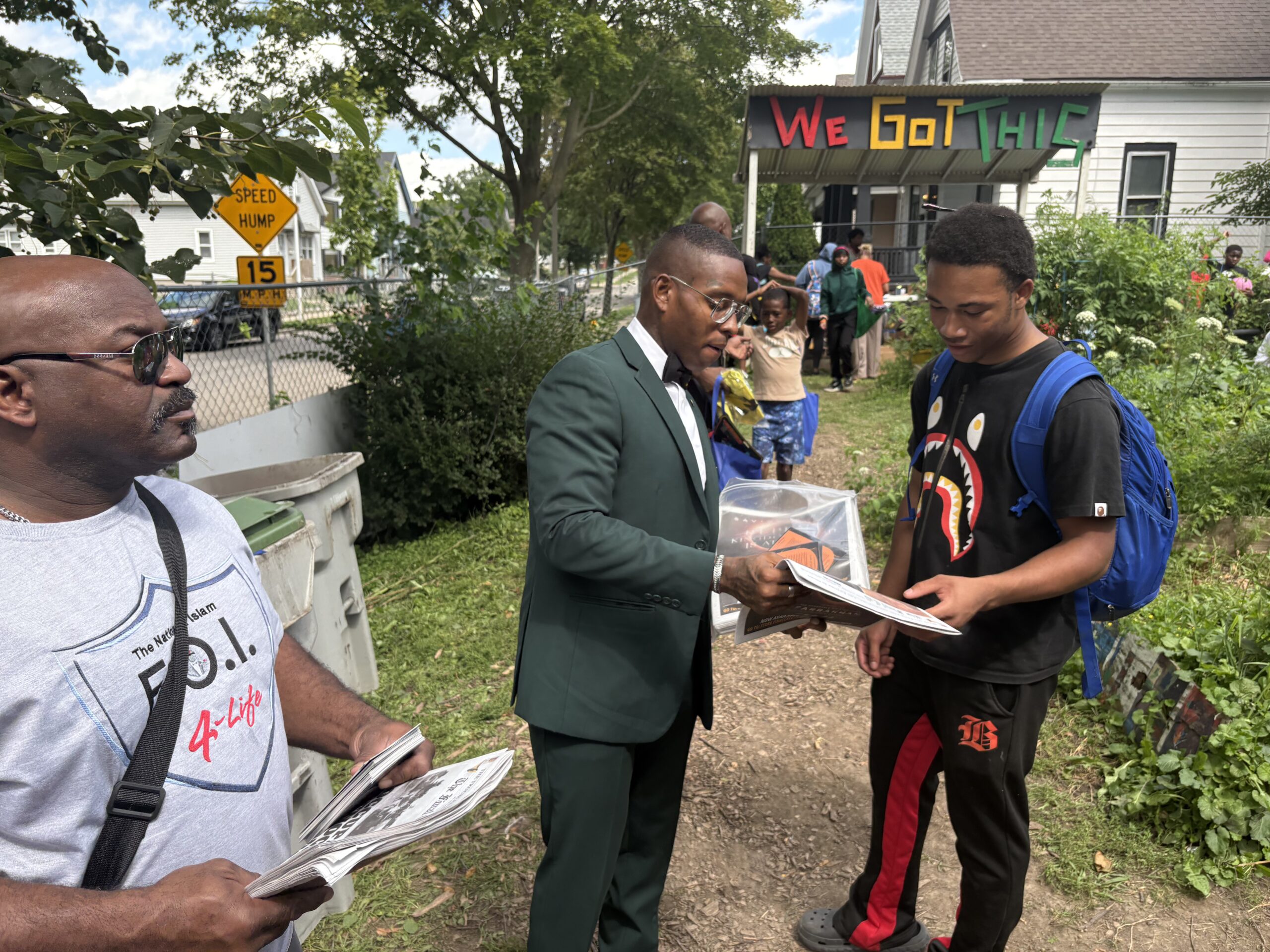


For decades, the Honorable Minister Louis Farrakhan, National Representative of the Most Honorable Elijah Muhammad, has served as a watchman on the wall, warning the Black community of the U.S. government’s targeting of Black youth.
“The government of the United States of America is planning an assault on the Black community, specifically aimed at our youth.
And the conspiracy is so deep and so diabolical that many of you will not even believe that at this very moment that I am talking to you, your lives hang in the balance.
Whether you are living in Chicago, Detroit, Boston, Washington, D.C., Los Angeles, or any city in America,” Minister Farrakhan cautioned in a message titled, “Revealing the Conspiracy: Youth, Gangs, Violence and Drugs,” delivered on June 25, 1989, to a youth audience.
“Black youth, particularly Black young men, are at risk today, and unknowingly, brothers, you are playing into the hands of your enemy, and he is using you to set up your destruction and using the fear and the pain of your mothers to call for your destruction,” Minister Farrakhan added.
In the mid-1990s, Black youth were labeled “superpredators” and were depicted as menaces to American society. Today’s Black youth have become the face of a new nationwide trend: “teen takeovers,”
In which large groups of teenagers gather in public spaces such as malls, often organized and promoted on social media. Local media outlets across the country are depicting these events as “turning violent and disruptive,”
Ometimes leading to police intervention and arrests, and elected officials have been trying to find ways to stop the gatherings, including issuing curfews and appealing to parents.
David Muhammad, Student Fruit of Islam (F.O.I.) Captain of the Nation of Islam’s Mosque No. 3 in Milwaukee, works with several of the community’s youth-serving organizations. He described the teen takeovers as an unnatural social contagion.
“This is not a new phenomenon to see young people gathered in mass. … What is unique and different about the teen takeover in the last two weeks to a month is that it seems to be some type of viral (social media) phenomenon that is not organic to the community,” he said to The Final Call. “That kind of viral sensation happening seemed to just kind of come out of nowhere.”
He sees what is happening as a pretext for a “militarized crackdown by law enforcement.”
Teen takeovers have been happening in major cities such as Atlanta, Miami, Chicago, Milwaukee, Washington, D.C., and New York City. They have also spread internationally to several cities in the United Kingdom, including London, Birmingham and Greater Manchester.
“What we’re seeing is just a symptom of what young people are not getting. Young people are looking to have places and spaces where they can be,” Anthony Smith, executive director of Cities United, an organization based in Louisville, Kentucky, aimed at reducing community violence and its impact on young Black men and boys, said to The Final Call.
“It’s just a symptom of lack of support, lack of resources, lack of spaces, and young people are making their own,” he added. “Is it right? No, it’s not right. Does it cause harm? Yes, it causes harm. But again, we’ve got to look at the systems that have created this environment for this to even be a thing.”
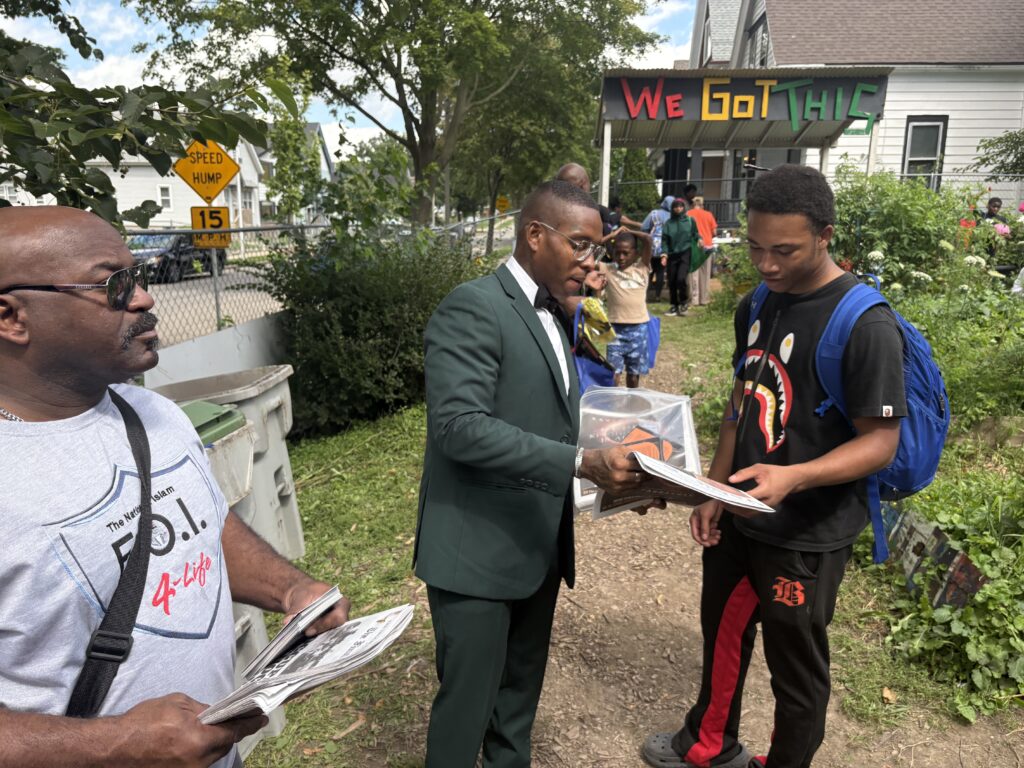
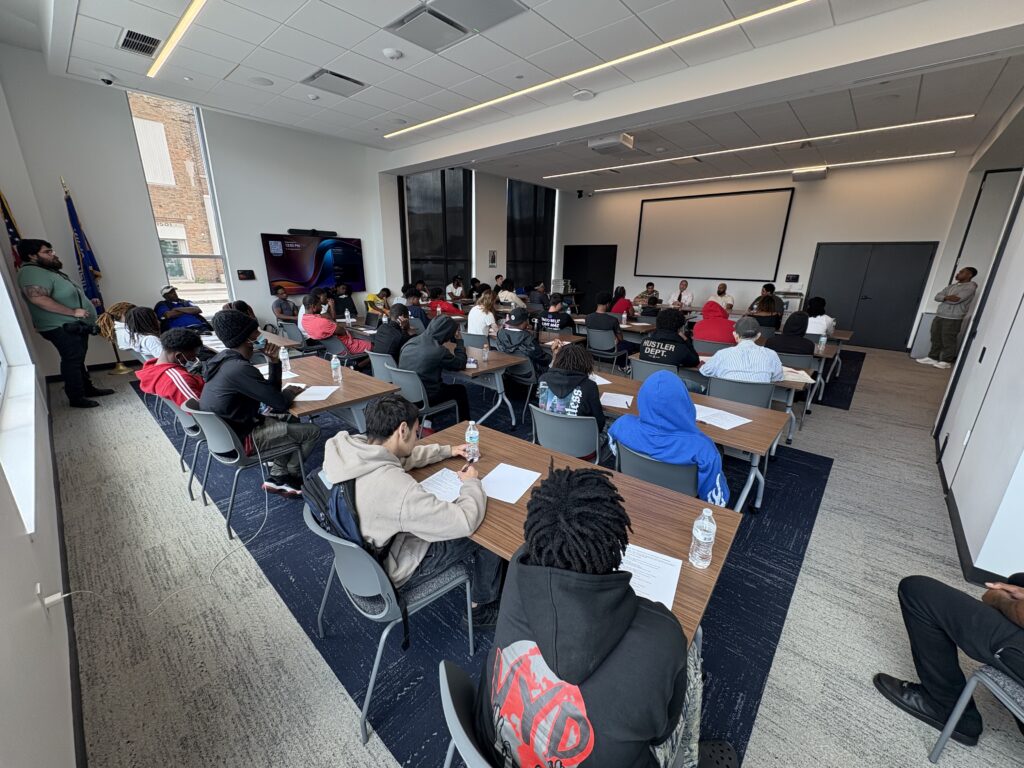
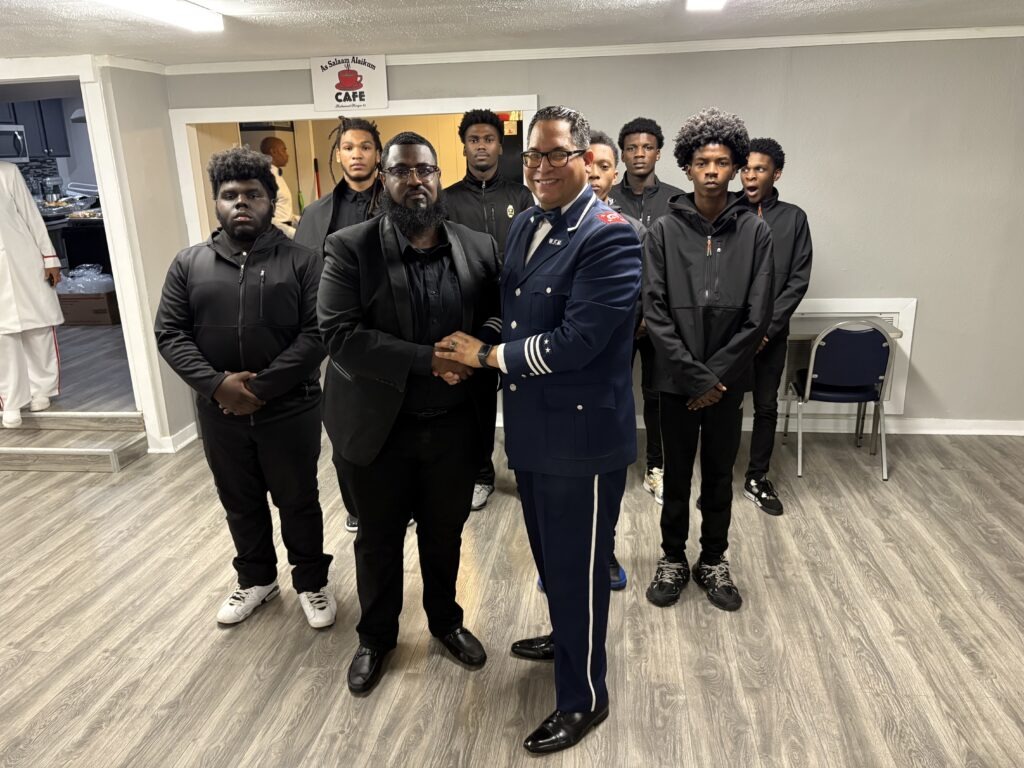
Photos courtesy of David Muhammad.
Addressing the root problems
In the Milwaukee metropolitan area, police responded to three back-to-back teen takeovers at two malls and one park. During one incident, police arrested more than a dozen people.
For David Muhammad, the violence that arises during these events is rooted in the need for youth to be validated and affirmed.
“What we saw in Milwaukee was definitely an outcry of young people,” he said. “Many of these situations happen in spaces that to a previous generation would have been the destination: a mall, a community center, a park.
But when those institutions either place policies to keep those young people excluded or have curfews, or when they do not cater to their needs or to their own personal development or to the needs of the community.
Then the power of our young people can be directed in a way that can look and be destructive, but it is the result of a failure to connect, to affirm and to provide for this present generation.”
Nickolas X is a member of the Nation of Islam. He is a confronting mass incarceration coordinator with Milwaukee Turners, a social justice organization promoting civic engagement.
He referred to the communities where Black people live as “hyper ghettos,” a term coined by sociologists. He defined hyper ghettoes as areas marked by economic exclusion, institutional and political abandonment.
And social isolation that result in more violence, competition for limited resources, and the formation of groups, cliques, and gangs for protection.
He linked today’s behavior by young people to those same exclusion and abandonment issues.
“You add on top of that waging war by ZIP code. Food and water in these areas are poisoned. Then you add weaponization of marijuana, the crack cocaine holocaust, and then you start to see what we saw in Milwaukee at the Bayshore Mall,” he said to The Final Call, referencing the teen takeover event where police arrested at least 13 people.
What youth are saying
Organizers with Cities United are wrapping up a tour addressing youth violence. From April 2025 to April 2026, they visited more than 20 cities and spoke to about 300 young people aged 18-24. At each stop.
They spent roughly 12 hours with youth most impacted by community violence, including youth who have been victims of gun violence, witnesses and perpetrators. They gave each young person a $500 stipend for their time.
Mr. Smith said young people have been saying they need more opportunities and more trusted adults.
“What they’re asking us for is to give them tools and resources to support themselves, while also tools and resources where they can support the generation behind them. … These are 18- to 24-year-olds, and they’re saying that they don’t want the next generation to make the same mistakes they made,” he said.
He highlighted several successful initiatives already in practice. One in Buffalo, New York, gives young men aged 12-24 an opportunity to meet policymakers, make policy recommendations and have an input on the city budget.
A youth space in Knoxville, Tennessee, created in partnership with young people, offers a safe place to hang out, fun activities like rock climbing and a skating rink and workforce experiences. In Milwaukee, youths designed an agenda and led a gathering attended by more than 200 people.
“We’re seeing that across the country, once you give young people a seat at the table, you get to better solutions and better ideas, but we got to start there by giving them a seat at the table, paying them for their time, but also listening to their input and putting them into action so that they can see their voice makes a difference,” Mr. Smith said.
In two recent podcast episodes, Nickolas X spoke with both community advocates in Milwaukee and young Black men. He said both groups pointed to the need to restore the family unit. More specifically, the young Black men heavily critiqued the school system.
“They basically just said it was a complete failure and it’s not doing them any justice. They’re saying that the curriculum is useless,” Nickolas X said.
“Outside of reading, writing and math, they don’t see the point of any of the other stuff that they’re trying to teach. They want to learn more practical stuff that they can apply, like finances and taxes. They want to learn trades.”
He mentioned that many of them live in extreme poverty and are seeking practical education to help with their everyday lives.
Engaging parents
Local elected officials across the country are calling on parents to know where their children are.
“Check in with your children,” Chicago Mayor Brandon Johnson said in a social media post on April 3, adding that the “teen trends” the city had been tracking are “unsafe and can turn deadly.”
Following a weekend of shootings in Atlanta that left one Black teen girl dead and another injured, Mayor Andre Dickens addressed strategies to ensure youth are safe. Though the incidents were not connected to the teen takeovers, which have also taken place in the city, Mayor Dickens appealed to parents.
“I want you to know where your child is. You know where they’re going, where they could potentially go, have a cell phone tracker. Don’t allow them to just go Uber anywhere and you aren’t paying any attention,” he said.
“Don’t drop off a child directly right up against curfew, because they are going to be a curfew violator moments later. These are precautions we are asking you to take in Metro Atlanta.”
He also announced that the Atlanta Police Department would be increasing patrols and would bring charges against parents and caregivers of minors who violate curfew.
“Speaking directly to parents: We don’t want to parent for you. It’s your job to parent. And if you break curfew, your kid and you will be in trouble,” he said.
Community violence interventionists agree that parents should be brought into the conversation.
Mr. Smith believes that to support young people, their families must be supported. For cities and for mayors, the conversation should be mom and dad, grandmother, whoever is raising this kid, how do we support you so that we can make sure that your child has better outcomes?
This is not around bashing parents and making parents feel bad, because a lot of these parents are doing the best that they can with what they got,” he said.
David Muhammad described the present generation of young people as a “rejected generation” in need of guidance and argued against elders in the community turning to social media to call for more police and other heavy-handed approaches.
“Unfortunately, too many leaders will condemn their young people, condemn the youth of the community. They will not go into spaces where they can advocate for resources for the community, to activate spaces for them, to work with them.
To include young people’s voices in those spaces and to give them alternatives to the cycle of death and poverty that is in our community,” David Muhammad said. “We have to get busy and make a new reality for them and with them.”
A fearless generation
The Honorable Minister Louis Farrakhan has described the present generation of Black youth as a generation of fulfillment.
“Our fearless Black youth are ready to move for liberation,” he said in a message on Black youth delivered on Sept. 30, 1992, in Chicago. “The fearlessness of youth, the anger of youth, is being turned into a self-destructive modality.
It isn’t that Black people want to kill one another, but business is being removed from the Black community and we, as the elders, have not supplied or created jobs for our own young people. Since we have failed in our duty and government is failing in its duty and jobs are being removed, the young people have no place to go.”
He added that the spirit to organize is in the youth, but argued that they just need the right idea to become protectors of the community.
“Our youth have the basic quality to say to any mountain, ‘be removed,’ and they are willing to go over the mountain, under the mountain, through the mountain, around the mountain or remove the mountain,” Minister Farrakhan said.
“That is what creates the terrible fear in government—that the right man, coming with the right message, connecting with that kind of spirit in the youth, liberation will never have to be a dream anymore. We don’t ever have to sing ‘We Shall Overcome’ with young people today with God’s idea at the root of their brain. We will have already overcome.”
The post Violence prevention advocates talk strategies to engage Black youth amid nationwide ‘teen takeovers’ appeared first on Final Call News.