Virginity Is a Social Construct. So, Why Does It Carry So Much Weight?
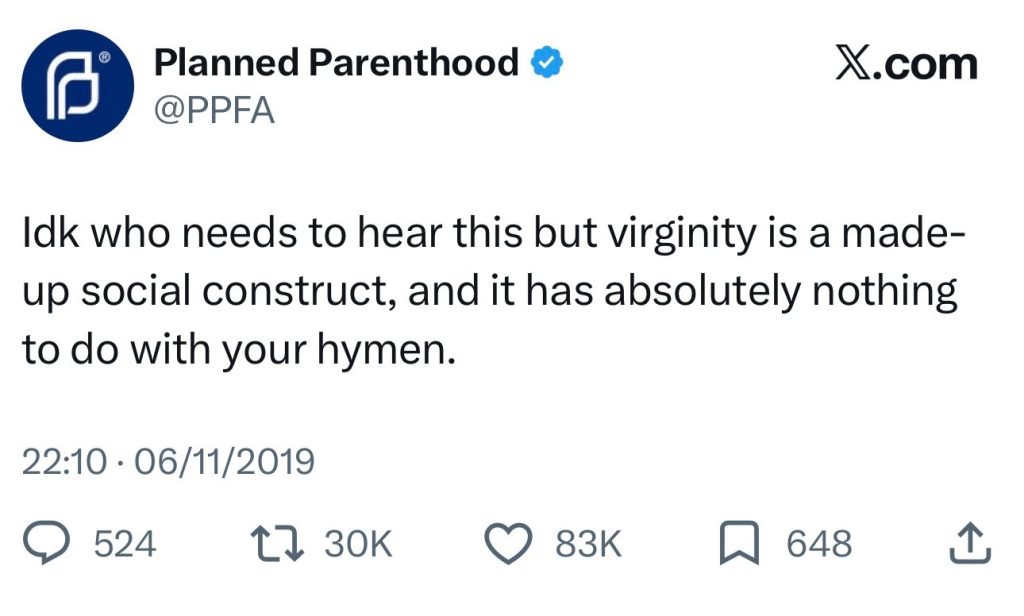
The idea that having sex makes someone go from a “virgin” to a “non-virgin” is a social distinction we have created and attached meaning to.
 Black News
There is an unusual amount of power society has attached to something that cannot be seen, measured or medically verified.
Virginity can influence how a woman is perceived. Whether she is considered “pure” or respectable, and, in some communities, even whether she is considered “worthy” of marriage. We are taught to protect it, save it, and, in some frankly weird cases, prove that we still have it. All of this rests on the assumption that virginity is a physical condition that exists in the body. Well, news flash, folks, it isn’t.
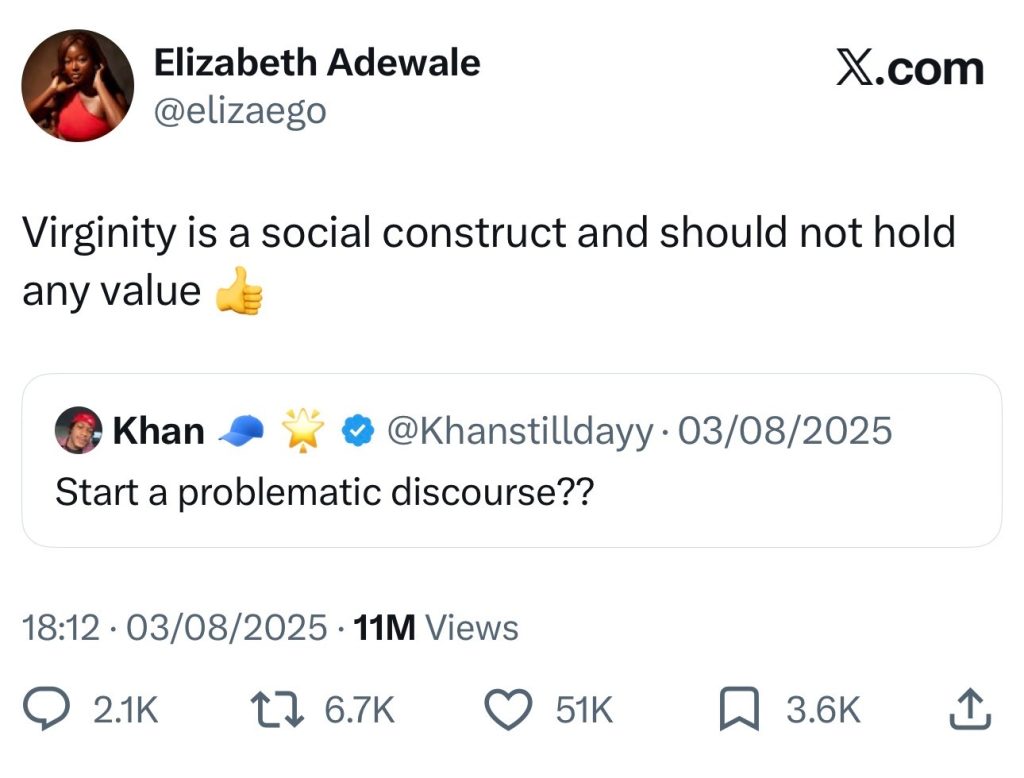
Virginity is a social construct. Sex is a biological act, but the idea that having sex makes someone go from a “virgin” to a “non-virgin” is a social distinction we have somehow created and attached meaning to. There is no universal agreement on what counts as losing virginity, either. In many contexts, it is defined as vaginal intercourse, while others include different forms of sexual activity. The boundaries exist only because we have collectively decided they do.
Research on virginity testing makes this even clearer. Studies have found that the hymen cannot reliably reveal whether someone has had sex, despite how often it has been treated as proof of virginity. A systematic review of research on virginity testing also found that examining the hymen cannot accurately or reliably establish whether someone has previously had vaginal intercourse.
Yet the belief that a woman’s body can reveal her sexual history continues to shape how virginity is understood. The idea that an intact hymen proves virginity, or that bleeding after a woman’s first sexual experience confirms it, has no stable medical basis. These beliefs have survived not because the body provides actual evidence for them, but because we have continued to love the idea of linking cultural and moral significance to the idea of female virginity.
Next Read: 4 Nigerian Women Talk About Taking Virginity Tests
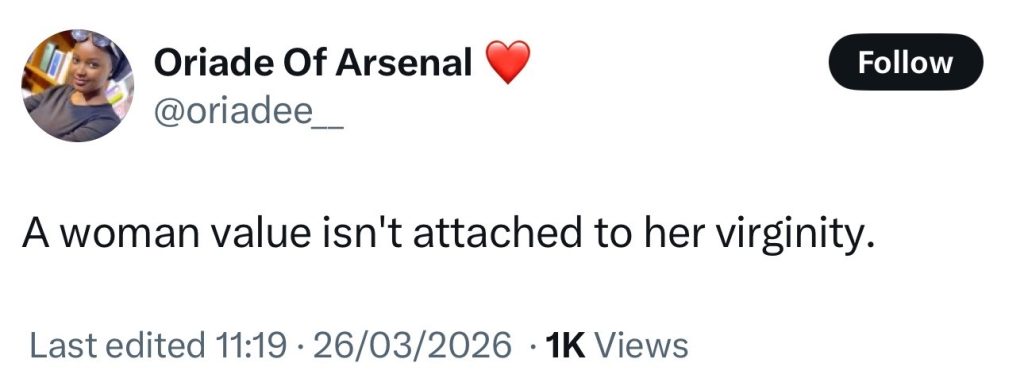
Let’s also not ignore the gendered elephant in this conversation. A woman’s virginity can be presented as something that protects her value, her family’s honour or her suitability for marriage, while men are often given considerably more passes to have sexual experiences without their character being egged on in the same way. A man with several sexual partners may be described as experienced, but at the same time, a woman with the same history can be labelled with all sorts of derogatory words intended to diminish her. That difference is not biological in any form. It comes from the different expectations we have created for male and female sexuality.
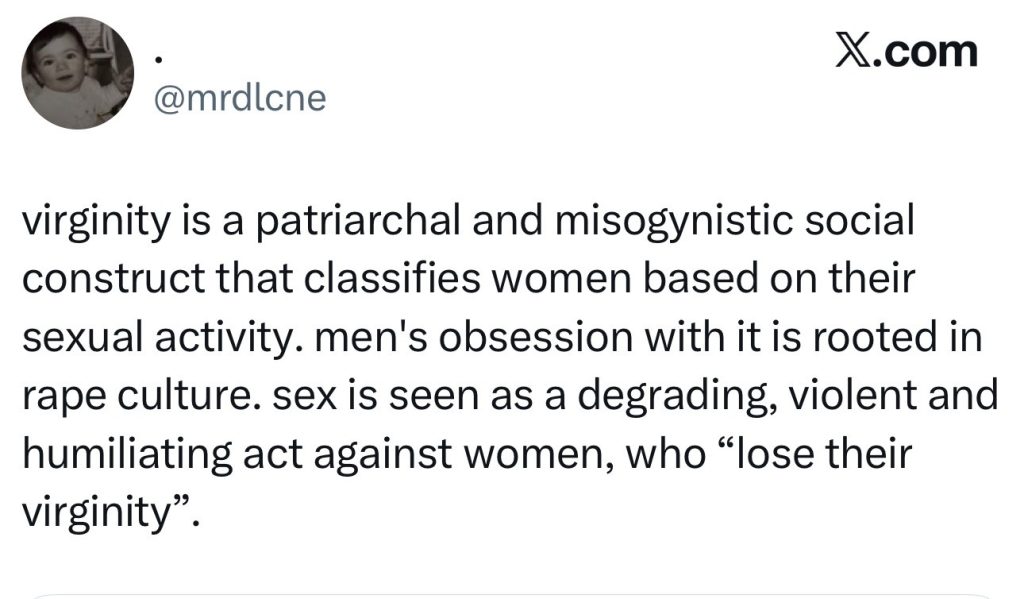
This is why regarding virginity as a social construct is needed. It does not mean that sex is imaginary, that someone’s first sexual experience cannot be important, or that people should not make personal decisions about when they want to have sex. Someone can choose to remain abstinent until marriage because of their religion, personal values, upbringing or simply because that is what they want. That’s fine, really. That decision can be meaningful without requiring the belief that virginity is a physical possession that determines one’s worth in life.
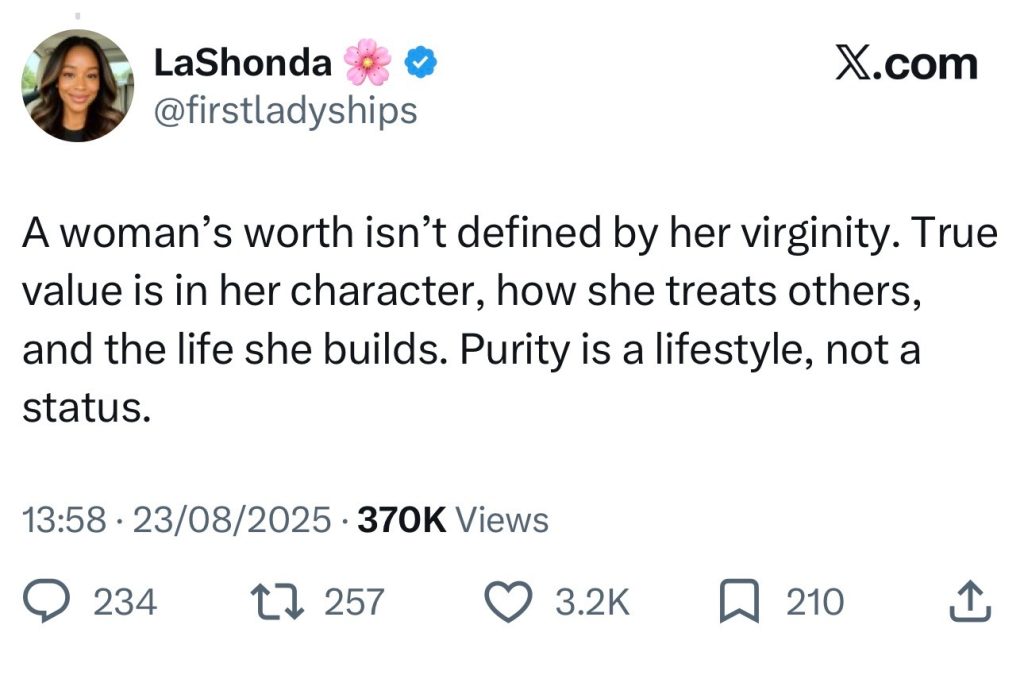
The problem begins when a personal value becomes a standard for judging other people. There is a vast difference between saying, “I want to wait until marriage before I have sex,” and saying, “A woman who has sex before marriage is less respectable.” The first describes a personal choice. The second, however, takes a socially constructed idea and turns it into a measure of someone else’s character.
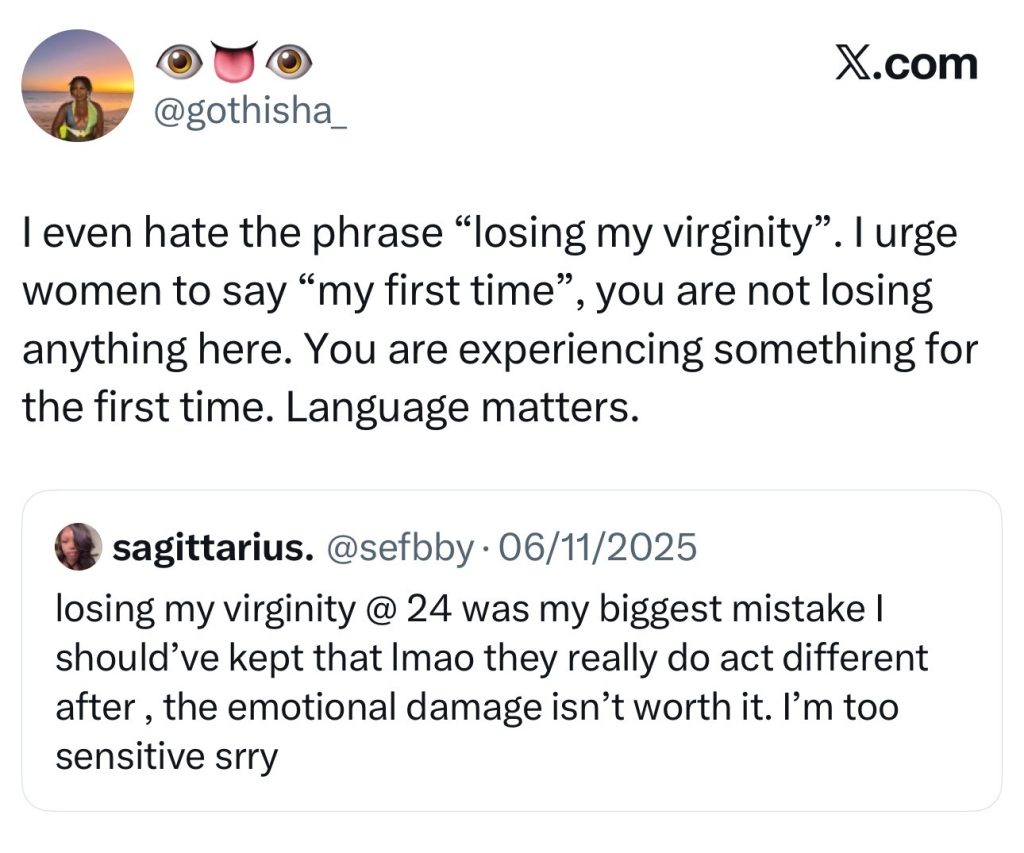
We should also question the language of “losing” virginity. Sex can be an important experience, and yes, it can change how someone understands themselves or their relationships, but it does not take a physical part of them away. In fact, someone who has had sex has not become less whole or less deserving of love. The idea that they have “lost” something valuable comes from this pointless meaning we have assigned to virginity.
You’ll Like: 4 Nigerian Women on Unlearning Everything Religion Taught Them About Sex
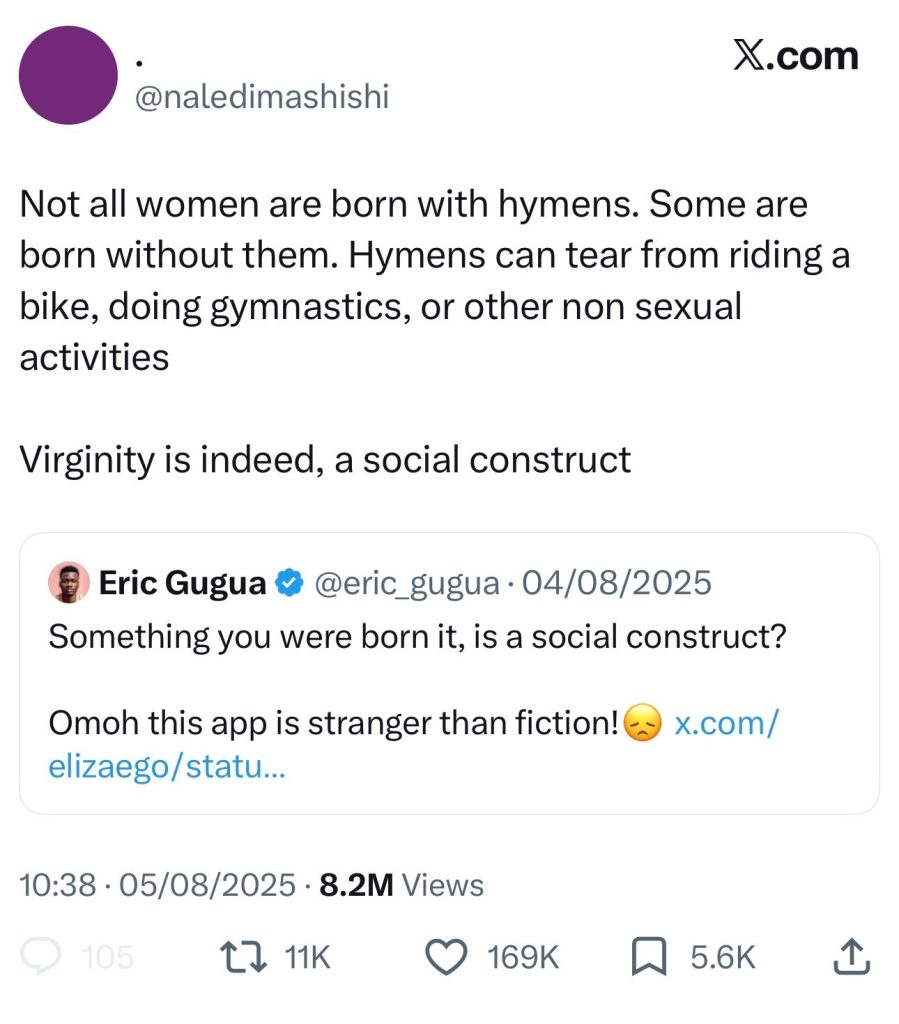
People are free to give their first sexual experience whatever significance it holds for them, but they are equally allowed to reject the idea that virginity should determine their worth. We believe that both positions can exist without contradiction.
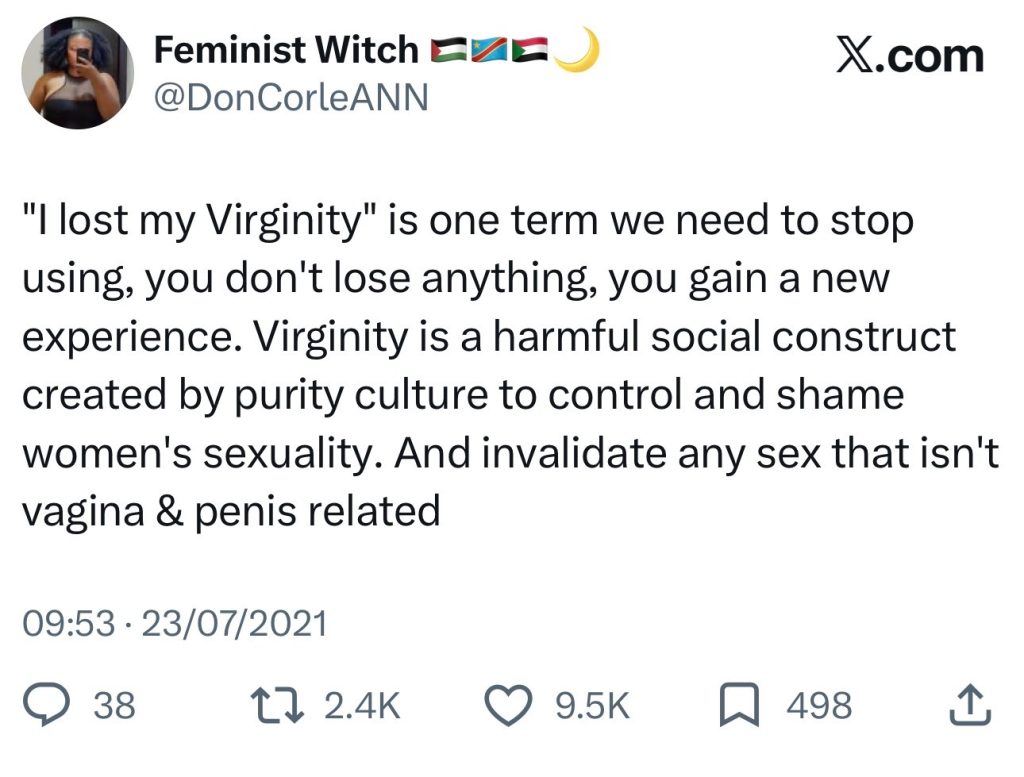
The more useful conversation, here, may not be about whether people should value virginity. They can, if that is what they choose. It is about why an idea created by society has been given so much authority over women’s bodies, sexuality and morality, and why having sex is still treated by many people as something that can reduce a woman’s value.
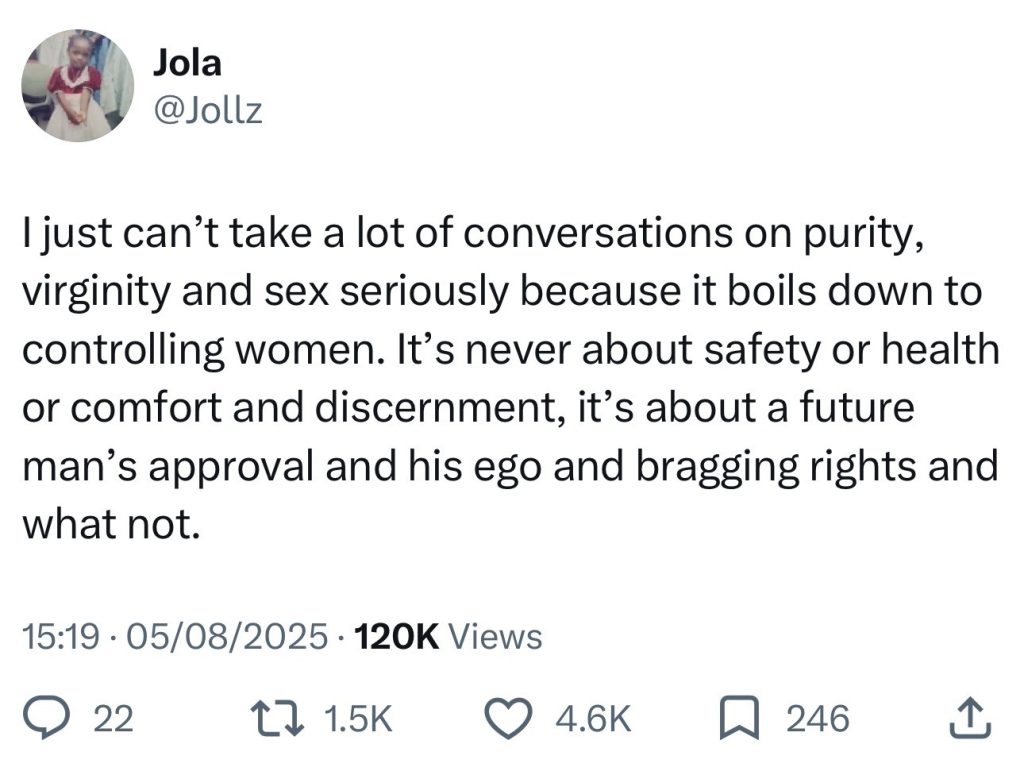
Virginity may be a social construct, but the consequences of believing in it are unfortunately very real. Women have been shamed for supposedly losing it and judged according to standards that are hardly, if ever, applied to men in the same way. Recognising that virginity is something society created does not take away anyone’s right to value it. It simply opens doors to questioning whether something we invented should have the power to define another person’s worth.
You’ll Also Enjoy: 6 Things Women Should Know About Sex For Better Experiences