WAX FABRIC: The Impersonator We Learned to Call African
I’ve been sitting with this subject in my head for months now, it came through a conversation with one of my dearest friends who enlightened me with the truth that “ the wax fabric “is not an African fabric!. I remember being so shocked because, my whole life, I’ve attributed wax to Africa as its […]
 Black News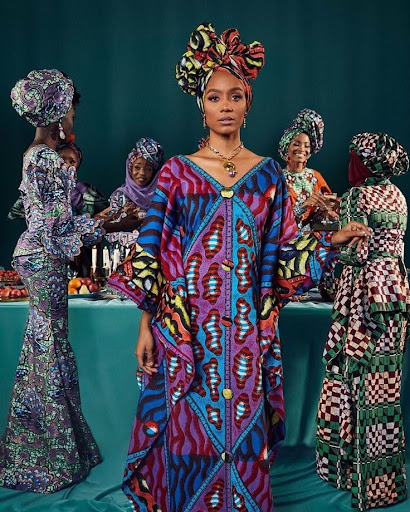
I’ve been sitting with this subject in my head for months now, it came through a conversation with one of my dearest friends who enlightened me with the truth that “ the wax fabric “is not an African fabric!. I remember being so shocked because, my whole life, I’ve attributed wax to Africa as its country of origin. But from that conversation, a desire to learn more about its origin and context became an opportunity to understand this subject more deeply, and raise awareness. Today, the Wax fabric is worn by Africans as a true identifier of culture and as the greatest impersonator of African fashion. This fabric is most consumed by Africans, not because of heritage but because of a borrowed identity, and an adaptation of African culture without being African. The wax fabric has long been an imposter, masquerading as a fabric that represents African culture and heritage, when in reality, it replaced our own, becoming the main competitor for African fabrics. A fabric we mistook for ourselves became the symbol of our presence in fashion. In my opinion, Wax is an illusion of authenticity, a heritage from colonialism that defined itself as African fabric, when in reality it’s a manipulation of what African fabric should look like, retwisted to be more pleasing and practical, undermining our own fabric, which demands specific techniques and preservation. My concern is not the rejection of Wax, but a resetting of the default parameters we learned, and an attempt to shift its place in African fashion. There is a whole pattern in this matter, such as colonial inheritance, collective acceptance, appropriation, familiarity, and identity construction, which supports my argument that fashion is very human because it participates in shaping society, mindset, beliefs, and culture through attire and clothing. Fabric is beyond simple garments; they carry meaning, spiritual connection, stories, cultural heritage, and a symbol, but with wax that heritage seems borrowed, and impersonated rather than lived in. It is clear that the Dutch fabric is more than an imposter; it’s a performance of African identity and culture. Stay with me in this article to learn what goes beyond calling a fabric our own when, in reality, it doesn’t represent us, but performs us.
DUTCH WAX – Origin and Context
It is fascinating to realize that a fabric often associated with African identity did not even originate in Africa. Wax fabric traces back to Indonesian batik, a fabric deeply rooted in handmade craftsmanship, symbolism, and slow creation processes. In the mid-1800s, during Dutch colonization in Indonesia, the Dutch attempted to industrialize batik production by reproducing designs as imitations, while corrupting the craft by using machines instead of the meticulous handwork for which Indonesian artisans were known. But to be honest, inspiration without credit is stealing, and in this case, it was also a corruption of the craft itself by prioritizing profit over craft. The Indonesian market rejected these machine-made textiles, criticizing the visible imperfections and the fabric’s lack of soul, due to their commercial nature, which was the main reason the Dutch imitated Indonesian fabric.
They wanted to imitate the designs, not to continue a heritage – profit was the Dutch pursuit, not craft, and they hoped that, with machines, they would produce more, competing with the Indonesian market for batik fabric.
Despite its failure in the Indonesian market, Wax (an imitation of the Indonesian batik fabric) found unexpected success in West Africa by the late 19th century, where the fabrics were embraced, renamed, and integrated into everyday life, celebrations, identity, and status. Over time, Wax became emotionally and culturally tied to Africa as a whole, despite its history of imitation, commerce, and colonization.
From a human perspective, I’ve studied this case very personally, more as a pursuit of clarity and understanding, rather than as a formal report. And this is what I understand.
A STOLEN DESIGN BECAME THE REPRESENTATION OF A WHOLE CONTINENT
Batik fabric originated in Java, Indonesia, in Southeast Asia. The Javanese batik is renowned for its intricate wax-resist, hand-drawn designs, rooted in Indonesian heritage and cultural significance, with certain batik patterns reserved for royalty in Java, serving as markers of social status and spiritual beliefs. The word Batik originates from the Javanese word “ambatik,” which means a cloth with small dots.
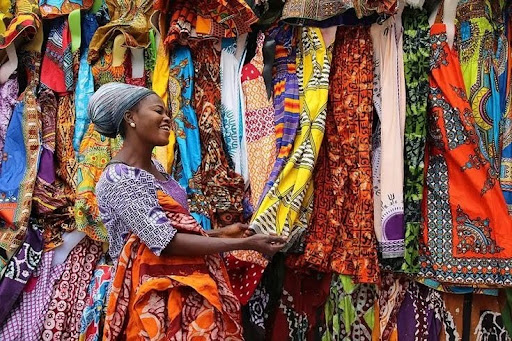
It struck me to see a fabric rooted in heritage, deeply cultural, casually imitated not as a continuation of one’s legacy but as an opportunity to make a profit. Pieter Van’s imitation of the wax fabric didn’t end there; he succeeded in using a stolen identity to attract a different group of people by appealing to aesthetics, prints, and color that resonated with Africans. Wax became more than an imitator of Indonesian’s fabric, it became the impersonator of African fashion. The Dutch label gave Wax meaning through motifs that carry stories and stopped selling for beauty and became a symbol, a dresser for special and cultural occasions, and even worn by African political figures as a symbol of elegance and social status. Wax became more than an imposter in Africa; it became a visual language through the mimicry of African aesthetics in fabrics. We started to claim it as our own, not because of its beauty, but because of how it blends and resonates with our visual identity. A simple fabric gifted to Ghanaian soldiers who served in the Netherlands during the war became a sentimental fabric. It is very hard to ignore how Wax has perfectly embodied the visual language of African identity and diversified itself through patterns that speak to the different countries of Africa. With well-known patterns such as speed birds, family gravel, records, wavers, santana, shell and leaf trail, each print carries proverbs, and even meanings according to the country that named it.
A fabric that noticed its appreciation in the African market and decided not only to produce for appearance but also to enhance its visual language to sell an identity and an illusion of representation. A fabric that spoke to African from a place of profit rather than heritage, a fabric that learned the language of Africa without considering its heritage, and a fabric that positioned itself as African when, in reality, it is a stolen design worked to fit an African aesthetic to become a cultural reference.
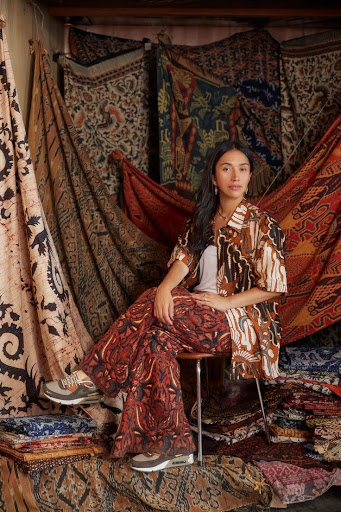
THE CONFLICT BETWEEN A DUTCH IMITATION AND AFRICAN HERITAGE
It is no news that Wax, now called Vlisco, is the most commonly worn African fabric. In weddings, it is used as currency and as a visual language through style; in social events, it represents class and social status; in families, it is used as a heritage passed down from generation to generation, a true treasure. In daily life, it’s a part of the African woman’s wardrobe symbolizing maturity, refinement, and womanhood.
I am Congolese, and I grew up seeing women in my community given collections of wax fabric as gifts for entering womanhood (at weddings and births). I have heard many times older women impelling on young ladies that an African woman is not a real one if she never wears a wax or doesn’t own one.
There is a whole debate in our society today stating that wax is an African fabric, no matter its origin, because it captures the essence of African aesthetic and visual language. My sincere opinion is that “ we cannot call a fabric African when it is not rooted in heritage and culture, imitation is never original, and producing fabric that resonates with a culture doesn’t mean understanding and representing that culture. The impersonification of Wax in African fashion has left visible scars on the infrastructure of the African fashion industry, which I believe matters more than the argument itself.
- CONSUMERISM
Vlisco not only perfected his product to speak to Africans, but he also gained loyal customers who buy into identity and status. The majority of consumers are African, particularly from West and Central Africa, where it is more popular and familiar. The diaspora, also a major consumer of the fabric, uses it as a gesture of connection to their heritage and for certain events to mark representation. The fact that a European company, designed with Indonesian heritage, is sold and worn primarily by Africans is very shocking to me. This behavior impacts the local fabric market, with Wax as the biggest competitor to African fabrics, enriching a European label rather than investing in our local textiles. This subtle issue contributes to the weakening of the fashion industry’s infrastructure in Africa. The biggest African competitor is the most familiar stranger, a stranger who holds the hearts of Africans without the need to hold their pocket, because everything we do flows from the heart. Seeing this matter from this angle proves that even purchases contribute to a system, and which one are we going to choose? A system that supports impersonators or a system that will support heritage and culture?
- IGNORANCE
Many, including me, were ignorant of the roots and intent behind a fabric that we called African and claimed with open arms. The legitimacy of the Wax fabric blurred the identity between representation and imitation, a performed identity and heritage, leading us to unconsciously and consciously ignore our own fabrics rooted in history, culture, and heritage. Africa is full of fabrics originating from different parts of the continent, such as Kuba cloth from the Southwestern region of the Democratic Republic of Congo, Kente cloth from Ghana, Adire from the Southwestern region of Nigeria, Bogolan from Mali, and Shweshwe from South Africa. This is a short list of the many African fabrics that carry history, heritage, and meanings. However, in some ways, Wax is still considered the dominant African fabric, casting a shadow that prevents African fabrics from fully existing and developing.
My joy is to see many fashion makers and creatives put our tradition, legacy, and cultural patrimony front and center through fabrics and textiles. Using our local fabrics speaks volumes about how we consider ourselves and how we want to narrate our stories and culture, giving us full authorship.
- EMOTIONAL IMPACT
Every time I discuss matters that concern Africa, whether it’s fashion, lifestyles, or propaganda, I always end up concluding that one of our biggest challenges is mental. The way we perceive ourselves, the way we speak about ourselves, and how we perceive everything that comes from us seem to be influenced by the colonial era. I had endless conversations with Africans who claimed that Wax was more African than our own fabric. Still, when I asked them to name 3 African fabrics they knew, they remained silent, unable even to name one. I argued with close friends multiple times who believed that wax appears more refined and ethical than our own fabric, but when I asked them about the production process of wax, they froze, as if I were a fool for asking. From all the conversation and argument, what I noticed is that it is not about how Wax was presented to Africa, but the idea that everything that comes from the Occident and outside of Africa is meant to be greater than us. An idea that is nurtured daily, yet quietly, in African countries, homes, and cities: a wedding gown from France is considered a luxury at first sight. At the same time, one made locally will have to be studied carefully before approval. Art from Italy will be perceived as high-priced instantly, whereas African art will be considered entertainment only, and the list goes on and on.
It was never about what was shown or given to us as colonial heritage, but about how we were taught to think of ourselves, our stories, and our creations. We were conditioned to embrace colonialism as heritage and to emulate it as part of our culture.
Here, the question is not whether we should stop consuming wax. But which narrative are we contributing to by positioning an Indonesian design reproduced by the Dutch that represents a whole continent using imitation and performed identity? I wonder if, through our own fabrics and textiles, we will still perceive ourselves as elegant, beautiful, and full of self-esteem, as we do while wearing Wax. My invitation for you is to reevaluate the place of Wax in African fashion and the narrative around it, because no matter how closely the Wax fabric has embodied African visual language, it is still not an African fabric.
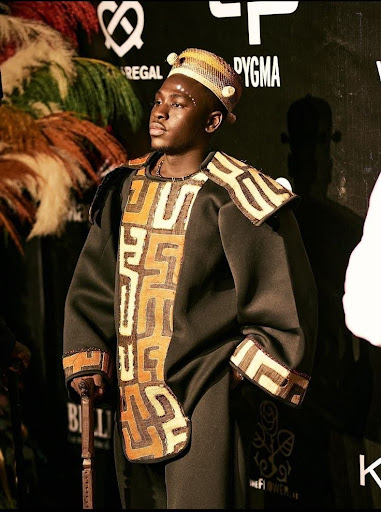
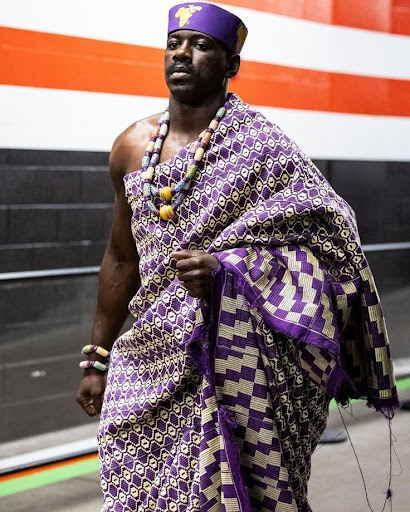
SOME ENGAGING STEPS THAT CAN LEAD TO CHANGE
With my 6 years of experience as a fashion enthusiast who loses herself in research and observation of the fashion industry, I came to realize that changes, especially in fashion, don’t always come as revolt, but rather as a subtle redirection, pivoting into different practices that support a system that is beneficial on both sides (the fashion industry and the audience). This change sometimes looks like supporting a brand that values an ecosystem and cohesiveness over fame, or purchasing from a brand because it resonates with us beyond aesthetics and trends. Coming back to our subject, I believe that in our current world, change is in the making through conscious mediators (influencers, digital media, etc.) and through African creatives and fashion makers. A change that starts with awakening and informing Africans, rather than a simple trend, and in that same atmosphere, I have three practices that can lead African fashion to thrive with its own fabric, stories, and heritage.
- REFRAMING THE MENTAL PICTURE
A work that no one can do for us but ourselves. We need to reconsider the narrative we have been told since the colonial era and the colonial heritage we carry, not as a simple cultural legacy but as a mindset. We need to decolonize our brains and our perspective on self; we need to stop reliving colonization in the guise of heritage, because a fabric is not a simple garment; it carries history, heritage, crafts, and the patrimony of people, tribes, and nations.
- AWARENESS IN CONSUMERISM
Awareness is one of my favorite fancy words, a word that incites a retrospective observation and a deeper understanding of humans and matters. With awareness of our culture, history, and heritage, the fabric we choose to use and present to the world through fashion will harmonize with our roots, leading to a fashion industry that becomes a communication tool in the hands of its makers and creatives. Awareness will also shape African consumers’ behavior, because authenticity always precedes imitation.
Awareness is where ignorance ends. It is where hard questions exist, and every action becomes a decision or a statement.
- STRONG MEDIATOR AND CONSERVATOR
We are currently living in an extremely digitalized world where social media is more than simple entertainment; it has become a whole platform for building systems and fostering conversations. In that same environment, you have what I call “mediators”. In my understanding, a mediator is someone who uses skills, talents, and knowledge to inform, educate, and contribute to building a system that benefits themselves and their community. The African fashion industry needs strong mediators – people who won’t solely highlight African designs and fabrics but who will wear, study, and explore them, mediators who will market African fashion with clarity and pride, and mediators who will participate in reframing the narrative around African fashion. By mediators, I also see public figures, authorities, and establishment choosing to represent African culture and heritage through clothing that relies on history and heritage rather than status and norms. Then we have conservators; they preserve the garment as intentionally as its history, introduce the younger generation to fabrics that existed long before their time, and document legacy through garments that carry heritage and meaning. Both mediators and preservers can be you and me, through simple gestures that build lasting impact.
The fashion industry in Africa won’t change overnight, but raising awareness is the surest way to begin. With each of us considering ourselves mediators and conservators of our culture, it will become instinctive to represent, wear, and choose our own fabric over someone else’s.
Fashion in general has a long history of cultural appropriation, colonial heritage, and stolen identity. But because we live in a time when we are saturated with information and awareness within communities rise daily, we are becoming aware of our history, patrimony, and legacy. I am still concerned that I have never questioned the Dutch Wax, even though it literally says “Dutch Wax,” yet I grew up assuming it was African and part of our heritage. I suppose I have never questioned its provenance, maybe because it embodied our culture in a very persuasive way, or because it was introduced to me as an African fabric. Another confirmation that ignorance is worse than lies.
“The greatest enemy of knowledge is not ignorance, it is the illusion of knowledge” – Stephen Hawking.







.jpg?#)