Why govt’s cheaper e-buses are struggling to win over Kampalans
When outgoing Works and Transport minister Gen Katumba Wamala launched the electric buses (E-Bus Xpress) on May 3 to ply the Ntinda-Nakawa-Wandegeya- Bukoto greenbelt route within the Kampala metropolitan area, one question dominated; why begin with only eight buses on a single route despite the anticipated demand? At the time, the 32-seater buses, each with […] The post Why govt’s cheaper e-buses are struggling to win over Kampalans appeared first on The Observer.
 Black News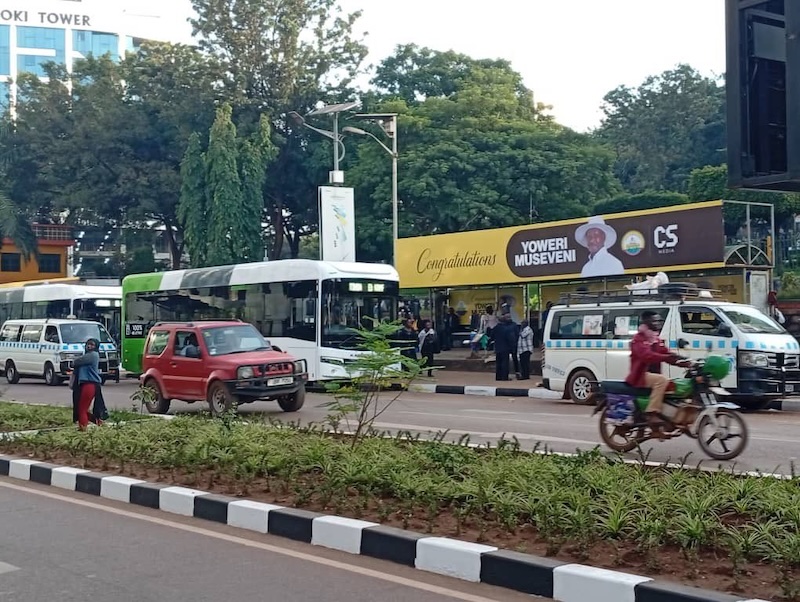

When outgoing Works and Transport minister Gen Katumba Wamala launched the electric buses (E-Bus Xpress) on May 3 to ply the Ntinda-Nakawa-Wandegeya- Bukoto greenbelt route within the Kampala metropolitan area, one question dominated; why begin with only eight buses on a single route despite the anticipated demand?
At the time, the 32-seater buses, each with an additional 32 standing handholds, appeared to be too few for the busy circular route linking Ntinda, Nakawa, Wandegeya, and Bukoto. Even the managing director of E-Bus Xpress, Eng Ian John Kavuma, acknowledged that the first eight buses were merely the beginning, revealing plans to deploy another 30 buses within 60 days across 16 cities.
Kavuma said the long-term target is to have at least 1,500 electric buses operating on various routes across the country by 2030. Yet nearly a month later, The Observer took several trips on the generally comfortable buses at different times of day and found that not a single journey came close to carrying even half of the expected 64 passengers.
Whereas the “romantic” buses, as they were described during the launch at the National Science Week exhibition in Kololo earlier this week, continue to attract curious glances from commuters along the roads and at bus stops, many passengers still ignore calls to board them.
Even assurances of punctual departures and cheaper fares have so far failed to draw crowds. At the time of filing this story, Dr Monica Musenero, the new Energy and Mineral Development minister-designate, was the minister for Science, Technology and Innovation Information.

She said at Kololo that the e-buses were among the initiatives she personally conceived after President Museveni appointed her minister without a clearly defined docket. She said she was determined to move science “from the laboratory to the economy.”
“This launch is deeply significant for the country. That is why we’re making a big fuss of the launch,” she said.
According to Musenero, Kampala loses an estimated Shs 800 million daily in wasted working hours and fuel due to traffic congestion. She argued that the e-buses are part of the solution to decongest the city while also providing more comfortable travel conditions, especially for the urban elite.
Indeed, the buses are comfortable and appealing enough for passengers who would prefer to work while in transit. The free Wi-Fi provided by MTN Uganda oscillates between 3 Mbps and 15 Mbps – not particularly quick, but sufficient for basic work and browsing.
The buses also feature six designated seats for the elderly, pregnant women and people with disabilities.
WHY LOW UPTAKE
If the Ntinda-Nakawa-Wandegeya route was intended to serve as the launchpad for the wider rollout across Kampala’s 300 routes, then the pilot has so far struggled to impress. The buses are also expected to launch soon in Entebbe, both on the old road and the motorway.
One of the drivers blamed the low uptake on poor service marketing. He added that many women passengers, who rarely watch television news or read newspapers, remain largely unaware of the buses.
During one of The Observer’s trips, the bus almost departed before the commuter taxis parked at the stage had filled up. Given the punctuality and cheaper fares, one would expect the buses to attract more passengers, but that has not yet happened.
Asked why commuters still preferred uncomfortable taxis, the driver said passengers are yet to appreciate the service. On one peak-hour trip on Monday, only 13 passengers boarded out of the expected 32 seated and 32 standing capacities.
Only two passengers had mobile money on their phones, yet the buses operate on a strictly cashless payment system. The Observer ended up helping at least four passengers pay for their trips. A passenger identified only as Nancy said many Ugandans are financially strained and often carry only cash because their mobile money balances are depleted by loans and other obligations.
CART BEFORE THE HORSE?
Although many government officials dislike comparisons with Kigali, critics accuse the Ugandan government of putting the cart before the horse by deploying buses on narrow, congested, and pothole-ridden roads.

In Rwanda, designated bus lanes are reserved for buses during peak hours, with access limited to emergency vehicles. This guarantees timely arrivals for commuters using public buses. In Uganda, however, Musenero argued that commuters could use time spent in traffic productively.
“Imagine you’re supposed to reach your desk so that you finish that paper quickly, but for some reason the rain has visited Kampala, and there is a traffic jam. You’re not going to wait to reach the office; you’ll pull out your smartphone, iPad, or laptop and begin working on the document on the bus. And so this is not time wasted; this is time that you can turn into productive time,” she said.
Kavuma said the rollout would require an investment of at least $315 million (about Shs 1.1 trillion) to establish 260 DC charging stations in 14 cities across the country.
“It’s going to take an entire nation to raise this child – meaning each responsible key stakeholder, whether it is KCCA [Kampala Capital City Authority], whether it is the ministry of works, whether it is Kiira Motors, whether it is e-buses, or whether it is you, the common commuter – we all must do our work,” he said.
“Ours is to buy, deploy and operate electric buses. If the ministry of Works’ role is to create that infrastructure, let it do its work. However, one thing that is true for all of us is that we must travel. We all feel the pain of the current transport system, and we won’t wait, whether we put the cart before the horse or vice versa. When we prioritise the horse over the cart, we begin by deploying the products. Let the other stakeholders do their job now,” he added.
According to Kavuma, the e-buses fit within the broader Kampala Metropolitan rapid transport plan. He hinted that the recent redesignation of roadside parking spaces in the city forms part of preparations for a larger bus deployment strategy.
The e-buses were first introduced in Jinja about two years ago, and Kavuma attributed their success there to lighter traffic congestion and wider adoption of cashless payment systems. In Jinja, school-going children commonly use payment cards.
“It is the second-largest economic city in the land, but it almost has no traffic jams.” In Jinja, when we say it is 7am, we leave at 7am. If the bus stop is at 7:15am, we leave at 7:15am. There is no congestion.”
Kampala alone will have a total of 300 electric buses, with a minimum of one bus replacing almost three taxis. But we’re not pushing off anyone outside. We’re saying seal off that old technology, get us that money as a cash down payment, and we’ll give you an electric bus; you operate it and enjoy better returns on investment.”
He argued that passengers increasingly desire dignified travel experiences featuring air-conditioning, safety, onboard security and Wi-Fi and are willing to pay for such services. Joseph Kabuye Kyofatogobye, the state minister for Kampala Capital City and Metropolitan Affairs, acknowledged that the transport system still requires substantial streamlining but argued that reforms must begin somewhere. He said the e-buses could even pressure the government into rehabilitating Kampala’s deteriorating roads.
The post Why govt’s cheaper e-buses are struggling to win over Kampalans appeared first on The Observer.