World Food Program joins the ongoing global response against Ebola
the US Department of State, in close coordination with the Centers for Disease Control and Prevention (CDC), and in partnership with the governments of the Democratic Republic of Congo and Uganda, is continuing to mount a rapid and comprehensive response to the Ebola outbreak.
 Black News

The United Nations World Food Program, is among the organizations that have joined the war against Ebola in the Eastern African Region.
The WFP, supported by funding from the United States and other donors, is providing food assistance to people suspected of having Ebola, patients confirmed to have contacted the virus, and health care workers in Goma, the capital city of the Democratic Republic of Congo’s North Kivu Province.
WFP has expanded its targeted food assistance to North Kivu’s Beni Territory and South Kivu Province’s capital city of Bukavu since May 31.
Meanwhile the US Department of State, in close coordination with the Centers for Disease Control and Prevention (CDC), and in partnership with the governments of the Democratic Republic of Congo and Uganda, is continuing to mount a rapid and comprehensive response to the Ebola outbreak.
Supporting the Regional Response
The Department of State’s foreign assistance announcements to date to combat the outbreak have exceeded US$162 million. The Department has rapidly established six dedicated Ebola response clinics and is supporting dozens of health clinics to screen potential cases and transport and treat confirmed cases.
U.S. assistance for the Ebola response is in addition to the significant U.S. health assistance to affected countries for HIV, TB, malaria, and other health areas.
Beyond health assistance, the Department is also providing US$350 million through United Nations Office for the Coordination of Humanitarian Affairs (OCHA) pooled funds to the DRC, South Sudan, and Uganda for humanitarian efforts.
It was part of US$1.8 billion in additional U.S. funding to OCHA previously announced on May 14, 2026.
Recent supported response activities by the United States include:
Border Screening and Surveillance
The United States funded partner, the International Organization for Migration (IOM), has established health screening and surveillance operations at points-of-entry and points-of-control in Burundi, the DRC, Rwanda, South Sudan, and Uganda.
Contact Tracing and Risk Communications
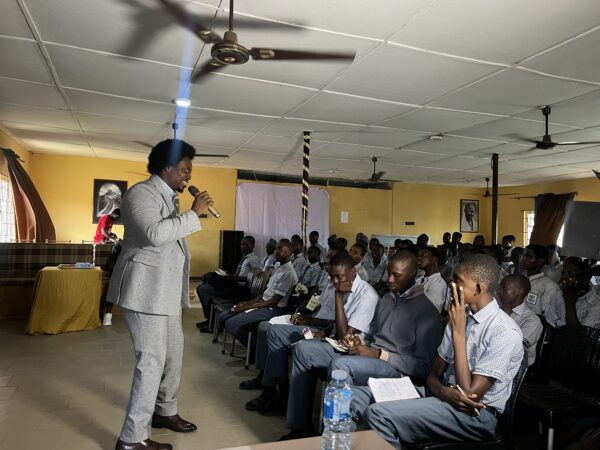
In the DRC, U.S.-funded partner FHI 360 has engaged local leaders, the faith community, and youth populations on Ebola risk communications.
Engagements with Provincial Youth Council Members and a national Congolese Parents Association, along with radio spots in French and Swahili, have enhanced awareness of Ebola prevention measures, dispelled false rumors related to the outbreak, and built trust in Ebola treatment centers and response teams.
Diagnostic Supplies
In the DRC, U.S.-funded partner FHI 360 has strengthened diagnostic and testing capacity through: training laboratory staff; transporting samples for analysis; and helping the DRC National Laboratory increase lab capacity in five additional health zones. Decentralizing lab activity will greatly increase testing capacity and speed up the time between sample collection and testing.
Detection and Treatment
Department of State-funded implementers have established six specialized facilities to isolate and treat suspected or confirmed Ebola cases, including five transit centers and one Ebola treatment unit. Implementers also continue to support 43 health clinics to prevent transmission, screen suspected cases, and transport patients to dedicated Ebola treatment facilities.
Protecting Americans
It seems the Department’s highest priority remains protecting the health of the American people and preventing this Ebola outbreak from reaching the United States.
But Ebola cases have already inched into South America, Brazil to be precise where a single case has so far been reported.
To that end, the Department of State has published guidance on a voluntary process to assist U.S. citizens who have possible Ebola exposure or who request assistance to depart the Democratic Republic of the Congo (DRC), South Sudan, or Uganda during the ongoing Ebola outbreak.
U.S. citizens will remain subject to relevant U.S. and foreign government health, travel, and screening measures. Information regarding this new process may be found on the Department’s Ebola information page.
U.S. citizens have been encouraged to enroll in the Smart Traveler Enrollment Program (STEP) for the most up to date information for their specific location.