Zimbabwe is taking another major step to stop it from losing money from its lithium exports
Zimbabwe is improving lithium-testing facilities to increase the accuracy of mineral appraisal, increase transparency, and optimize revenues from the country's rapidly developing mining industry.
 Black News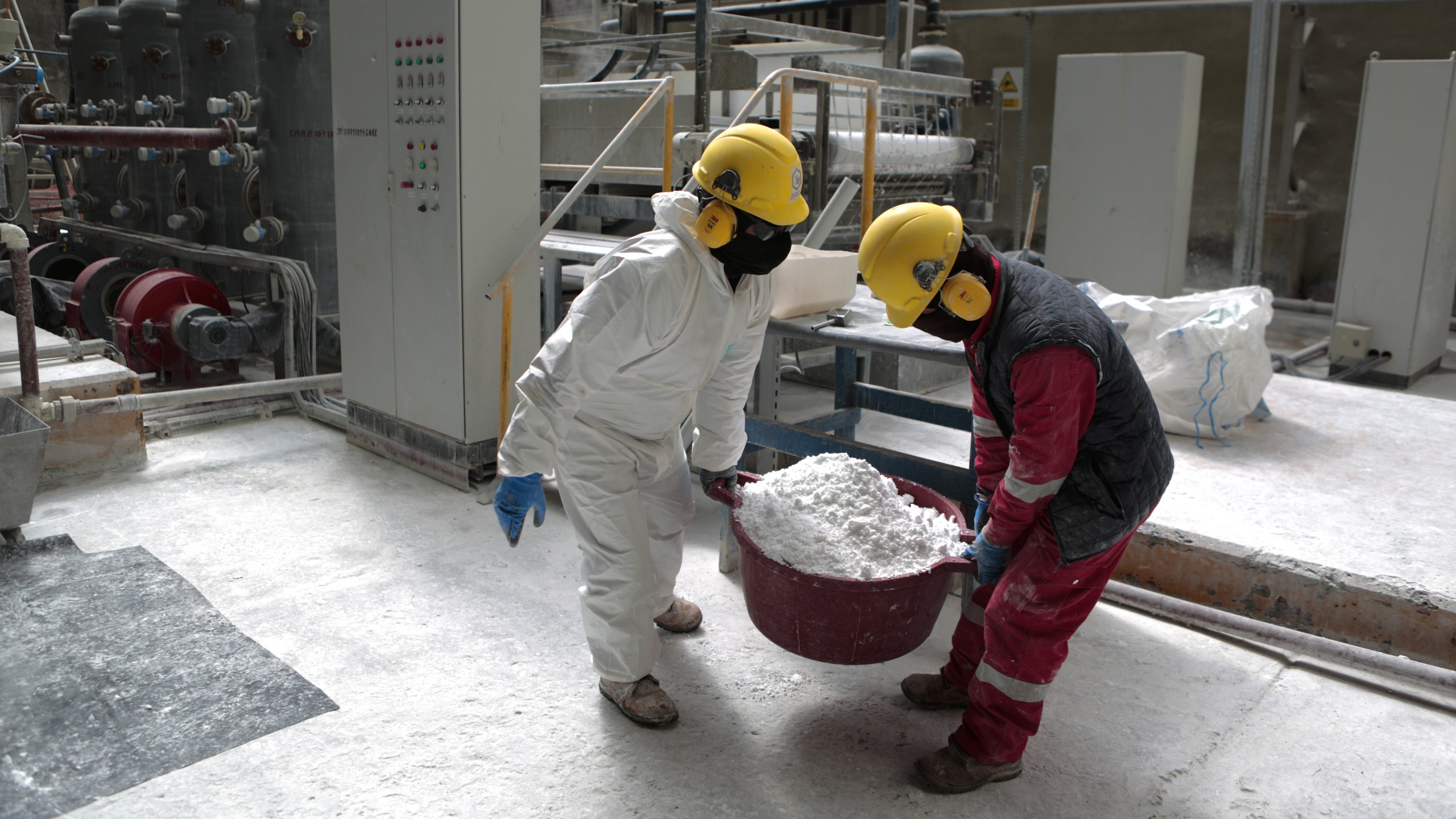

Zimbabwe is improving lithium-testing facilities to increase the accuracy of mineral appraisal, increase transparency, and optimize revenues from the country's rapidly developing mining industry.
- Zimbabwe is upgrading ore-testing facilities to enhance the accuracy of mineral assessments and boost transparency in the mining industry.
- The initiative, led by the Ministry of Mines and MMCZ, will start with enhancements at the National Metallurgical Laboratory in Harare before expanding nationwide.
- Improved laboratory capabilities are expected to ensure proper pricing and accountability for lithium and other rare minerals before exports.
- Efforts include acquiring advanced analytical equipment, with support from universities and under a five-year development plan.
The effort, coordinated by the Ministry of Mines and Mining Development in collaboration with the Mineral Marketing Corporation of Zimbabwe (MMCZ), would upgrade laboratories that evaluate the composition, grade, and commercial worth of lithium ore.
Authorities believe the increased testing capability would help ensure that minerals are appropriately appraised before export, reducing the risk of underpricing and fostering greater accountability across the industry.
Ahead of being expanded to other testing sites around the country, the initiative will begin at the National Metallurgical Laboratory in Harare.
Finance, Economic Development and Investment Promotion Minister, Professor Mthuli Ncube, recently stated that additional capacity and assistance would be directed to determine the precise list of rare minerals in lithium ore, as seen in The Herald.
“On the issue of minerals in a multi-ore body that we call lithium ore, there are other rare minerals in there being separated.
For pure lithium, the beneficiation story is the story; it will continue. For lithium ore, as the Government, we are investing in and setting up laboratories to test the ore so we can set the right royalties for these other minerals.
DON’T MISS THIS: Zimbabwe's top industrial city at risk of suffering the same fate as one of the US’s top factory towns
However, it is clear that the list of rare minerals is long and we may need more capacity and support to really know what is in this ore, but it will start with investment in testing labs.
We are doing this as Government through the Ministry of Mines, and we are collaborating with our universities like the University of Zimbabwe and the School of Mines, among others,” he explained.
Dr. Thomas Utete-Wushe, the Permanent Secretary of Mines and Mining, stated in an interview that the development and enhanced capacity of the laboratories will enable mineral testing to be conducted across the entire mining value chain.
“The Ministry has resolved to capacitate and expand the National Metallurgical Laboratory in Harare into a comprehensive national reference laboratory capable of testing minerals across the entire mining value chain, from exploration samples to beneficiation and final product analysis,” Dr Utete- Wushe said.
“The programme is being implemented under a five-year development plan with funding support from MMCZ.
Significant progress has already been made through the procurement of key analytical equipment, including an X-Ray Fluorescence (XRF) spectrometer, an Inductively Coupled Plasma Optical Emission Spectrometer (ICP-OES), and a Carbon and Sulphur analyser,” he added.
The decision comes as global demand for lithium continues to climb, due to its importance in the production of electric car batteries and energy storage systems.
Lithium ban in Zimbabwe
Zimbabwe, which possesses some of Africa's greatest hard-rock lithium reserves, has increased efforts to advance up the mining value chain and extract more value from its natural resources.
In February, Zimbabwe suspended the export of raw lithium concentrates due to allegations of government malpractice and leakages.
While the decisions seemed abrupt, Zimbabwe in 2025 already touted plans to ban the exportation of lithium concentrates starting January 2027.
At the time, the country’s Mines Minister Winston Chitando noted that such a decision would only serve to boost local value addition in the mining sector.
By June 2026, Lithium miners in Zimbabwe noted that they were seeking more time to build processing facilities before a planned ban on lithium concentrate exports takes effect, highlighting the challenges facing the country’s push to move up the global battery minerals value chain.
They asked the government to extend the January 2027 deadline to around mid-2027, arguing that ongoing projects need additional time to reach completion, according to comments made by industry representatives at a mining conference in Victoria Falls.
By improving its laboratory infrastructure, the government hopes to boost investor trust, promote fair mineral pricing, and increase its position as a significant supplier to the global lithium market.