5 truth bombs Africa’s richest man dropped about doing business in Africa
Few business leaders have had a greater impact on Africa's economic landscape than Aliko Dangote.
 Black News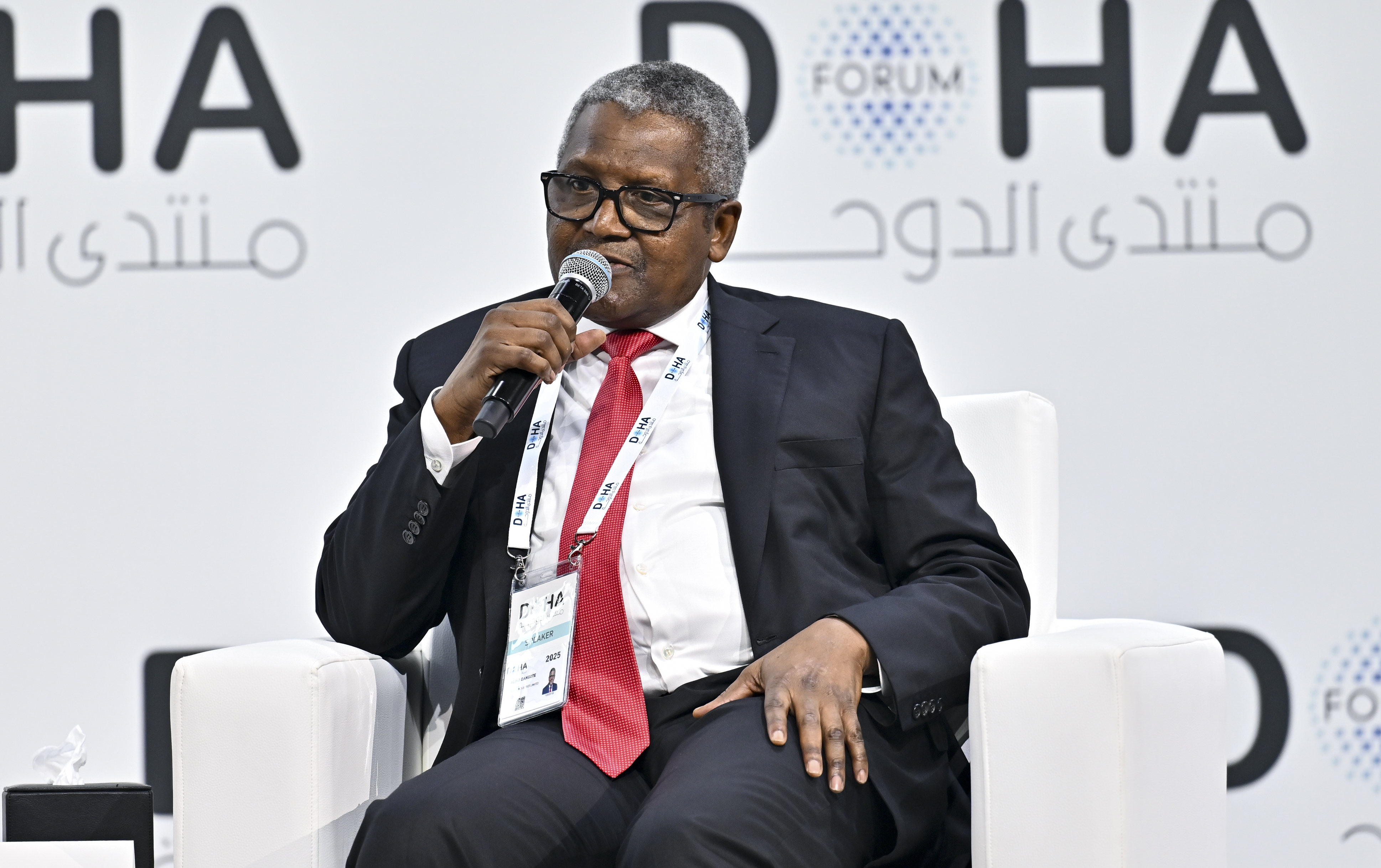
![Aliko Dangote, President of the Dangote Foundation, and Dangote Group of Company. [Photo by Noushad Thekkayil/NurPhoto via Getty Images]](https://ocdn.eu/pulscms/MDA_/e7706ee37d6d7c1ad96fc7c6a395b145.jpg)
Few business leaders have had a greater impact on Africa's economic landscape than Aliko Dangote.
- Aliko Dangote attributes China's dominance in Africa to its willingness to invest when Western countries hesitated.
- He identifies unpredictable political environments and policy inconsistencies, not competition or inflation, as the biggest risks to African businesses.
- Dangote emphasizes that local African investors must first believe and invest in their own markets to attract global capital.
- He highlights that Africa offers numerous investable opportunities across at least ten countries, challenging stereotypes of the continent as a high-risk region.
From a small trading operation in Lagos to the Dangote Group, a gigantic conglomerate that includes cement, fertilizer, petrochemicals, and the world's largest single-train refinery, Dangote has spent decades investing big in Africa when many others would not.
In a candid interview with Nicolai Tangen for the In Good Company podcast, the Nigerian billionaire revealed what it truly takes to build at scale on the continent.
Dangote didn't mince words on China's growing dominance in African commerce, the hard realities of political risk, why local investors must step up, and the brutal lessons of building a $20 billion refinery.
Here are five of the most significant truth bombs he dropped
1. China didn’t dominate Africa by accident; it showed up when others didn’t
For years, Western investors have spoken about Africa’s potential, but Dangote believes China did something far more important: it acted. In his view, China’s dominance on the continent is less about luck and more about commitment, putting money on the table when others stayed cautious.
“Honestly, you want me to be very open? China really has dominated business in Africa because of the absence of others. They are making money, they are dominating the landscape, and even our governments don’t joke with China because they put their balance sheet on the table.”
2. Africa’s biggest business risk isn’t competition, it’s unpredictability
Dangote has built businesses across 17 African countries, giving him a front-row seat to what can make or break investments. His answer wasn’t inflation, exchange rates, or even competition; it was instability and policy inconsistency.
“The biggest risk for us is if there are civil wars, the second largest threat is government inconsistencies in policies…” he said concerning doing business across several markets on the continent.
DON’T MISS THIS: Africa’s richest man, Aliko Dangote, eyes $250 billion via a $45 billion gamble
3. Africa must believe in Africa before anyone else will
Dangote’s message to African investors was direct: stop waiting for foreign capital to validate local opportunities. In his view, domestic confidence is the magnet that draws global capital.
“One thing that baffles them is… how come Africans are not investing in our own economies? The mistakes that we’ve been making in the past are that we are looking for foreign investors, but foreign investors are only attracted by domestic investors.”
He made this remark in response to the question of what it is that foreign investors don’t understand when it comes to doing business in Africa.
4. Africa is far more investable than many assume
Dangote is clear that the continent is not a single risk story, but a patchwork of strong opportunities.
From West Africa to Central Africa, he points to multiple countries showing strong economic signals and rising investor interest.
“There are more than 10 very good countries in Africa that you can go and invest in. Ghana is doing extremely well, Côte d'Ivoire is doing extremely well, and even in Guinea, you look at the mines that were just opened by Rio Tinto, which cost over 20 billion dollars. People are coming in now, and they realize that Africa is open for business.”
“Nigeria, Ethiopia, Kenya, Tanzania, Rwanda, it's small but very, very promising. Egypt, Algeria is also promising, even though it is not very open.”
5. When you’re halfway across the ocean, your only option is forward
Dangote explained that every transformative project eventually reaches a painful middle, when the obstacles seem endless, and retreat feels just as difficult as pressing on. That’s where belief matters most.
This response was to the question of what motivated him to keep pushing to build Africa’s largest refinery.
“Luckily for us, we didn’t know what we were building. If we knew, I wouldn’t have built this refinery. I would have actually chickened out,” he stated.
Using an analogy, he added: “Its like starting to swim across the ocean, when you get to the middle of the ocean, you realize the tide was bad, when you go forward its bad and even if you turn back its bad, so you must go forward, and that’s what we did, we had to keep working and believe that we will deliver.”
For Dangote, building in Africa has never been about avoiding risk; it has been about having the courage to outlast it.





.jpg?width=1200&auto=webp&crop=3:2#)