A Death in Bissau: Vigário Luís Balanta and the Risks of Civic Life in Guinea-Bissau
The body of Vigário Luís Balanta was found on March 31, 2026, in the Ndam area, about 30 kilometers from Bissau. Early reporting and statements from the UN human rights office indicate that he may have been beaten to death, though the full circumstances remain under investigation. Balanta was not an unknown figure. He was a young civil society activist who had openly criticized Guinea-Bissau’s post-coup authorities and called for public resistance after the military takeover in November 2025. His death comes at a moment when the United Nations has already warned of a ‘progressive reduction of civic and democratic […] The post A Death in Bissau: Vigário Luís Balanta and the Risks of Civic Life in Guinea-Bissau appeared first on African Arguments.
 Black News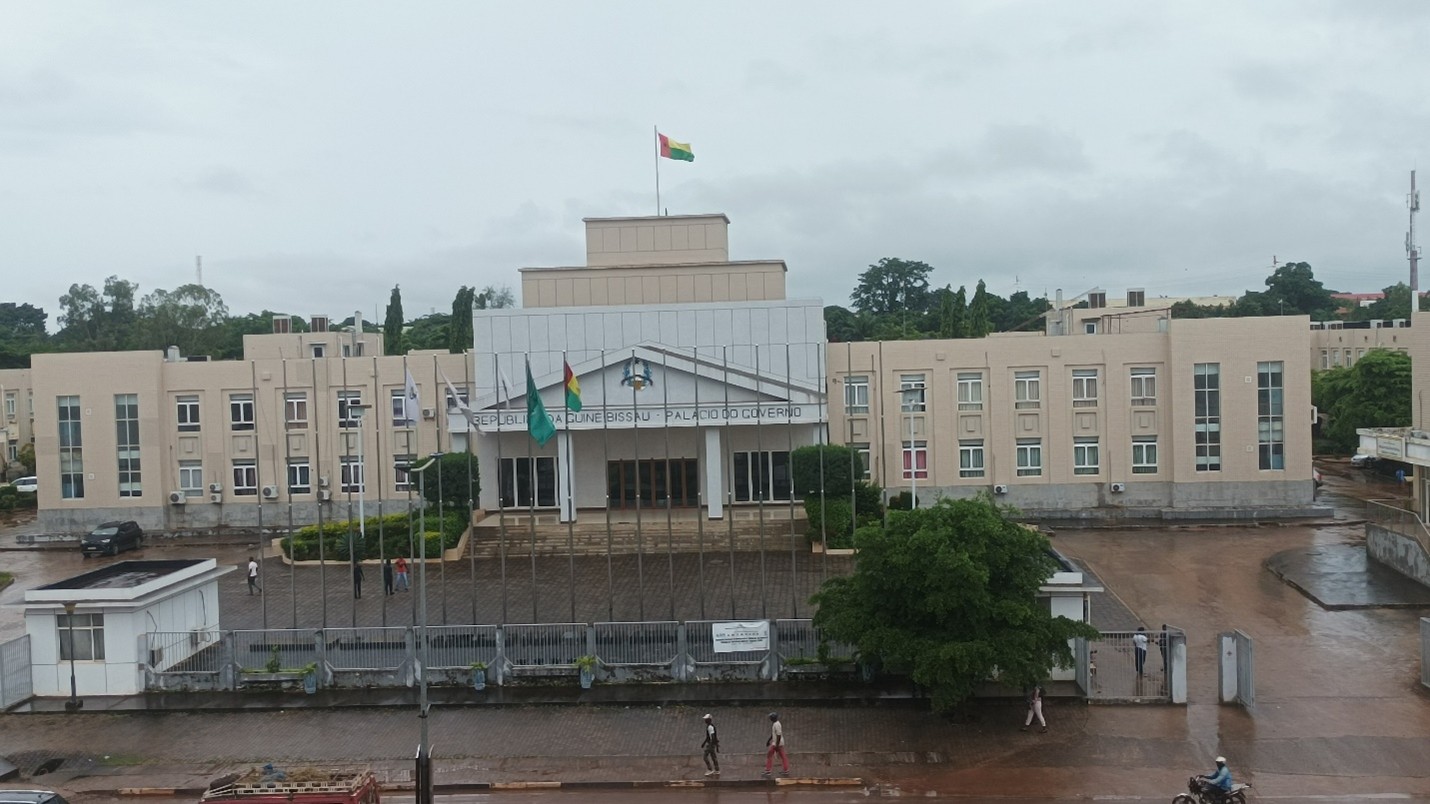
The body of Vigário Luís Balanta was found on March 31, 2026, in the Ndam area, about 30 kilometers from Bissau. Early reporting and statements from the UN human rights office indicate that he may have been beaten to death, though the full circumstances remain under investigation. Balanta was not an unknown figure. He was a young civil society activist who had openly criticized Guinea-Bissau’s post-coup authorities and called for public resistance after the military takeover in November 2025. His death comes at a moment when the United Nations has already warned of a ‘progressive reduction of civic and democratic space’ in the country, including arbitrary detention, harassment of activists, and the suppression of media.
It is still too early to establish legal responsibility. But it is not too early to ask what this moment represents. In Guinea-Bissau, the death of a visible critic rarely reads as an isolated event. It sits within a longer pattern in which political fragility, military intervention, and weak institutions have shaped the risks of speaking publicly. This is not only a continuation of a familiar pattern. The current moment indicates a shift in how that pattern is being produced, with the post-coup political order shaping the risks of civic participation in more direct and sustained ways.
I have been to Guinea-Bissau twice, first more than a decade ago and most recently in December 2024. What struck me on both visits was not only the country’s political instability, which is well documented, but the way people navigated it. Conversations often moved indirectly. People spoke carefully. Criticism was present but constrained by circumstance. People understood the boundaries of what could be said, and to whom. That kind of environment does not always register in formal political analysis, but it is central to understanding how civic life operates. Balanta’s death makes those boundaries newly visible. What is changing is not only the level of risk, but its character. Civic life no longer operates within relatively understood limits. Those limits are becoming harder to read and less stable, and in that uncertainty, more difficult to navigate.
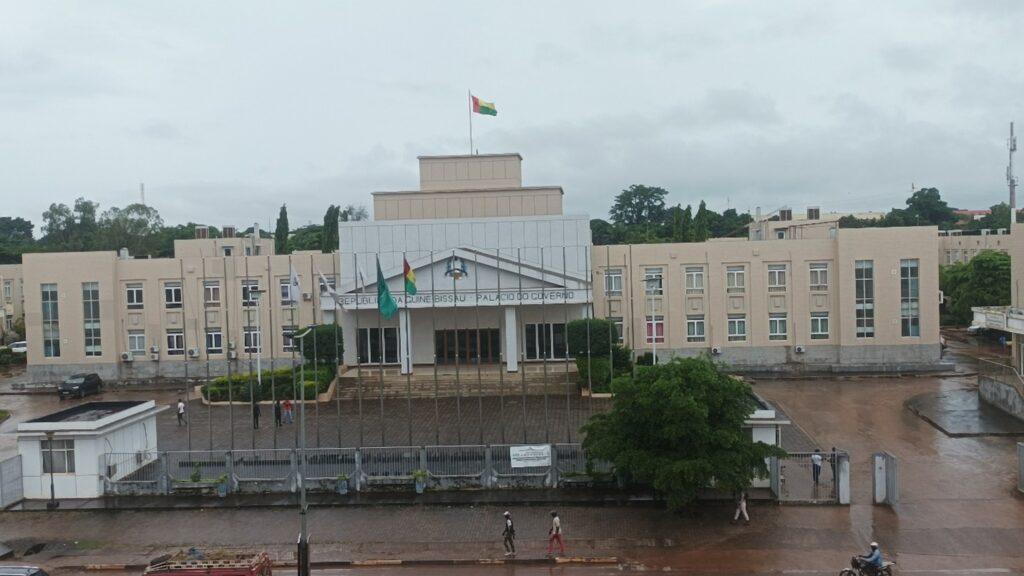
Palácio do Governo Bissau (seat of government, Guinea Bissau).
A familiar pattern of political rupture
Guinea-Bissau’s political history is often described through its coups, and for good reason. Since independence, the country has experienced repeated interruptions of constitutional rule. Luís Cabral was overthrown in 1980. João Bernardo Vieira was forced out in 1999 and later assassinated in 2009. Kumba Ialá was deposed in 2003. President Malam Bacai Sanhá died in office in 2012 before completing his term. No president has fully served a stable constitutional cycle without disruption.
The most recent rupture came on November 26, 2025, when army officers seized power just before the electoral commission was expected to announce the results of a closely contested presidential election. Gunfire was reported near key state institutions in Bissau as soldiers moved to suspend the electoral process. The following day, Major-General Horta Inta-a was sworn in as transitional president, and the military announced a one-year transition period. Opposition figures argued that the coup was intended to prevent confirmation of a possible electoral defeat for incumbent president Umaro Sissoco Embaló, though this remains an allegation rather than an established fact.
Regional and international actors responded quickly. ECOWAS suspended Guinea-Bissau, rejected the transition plan, and warned of targeted sanctions unless constitutional order was restored. Observers noted that the elections held on November 23 had been considered free and transparent by international monitors, complicating the justification for the military intervention. As of April 2026, Guinea-Bissau remains under de facto authorities rather than a restored constitutional government.

Civic space in Guinea-Bissau has been under sustained pressure.
Civic space under sustained pressure
Civil society in Guinea-Bissau has long operated in a constrained and uneven political environment. Even during periods of relative openness, that space has been tested through interference, intimidation, and occasional violence.
In 2021, activists and journalists who criticized the government reported harassment, arbitrary detention, and physical assault, including an assassination attempt against Luís Vaz Martins, the former president of the Guinean League of Human Rights. That same year, it was reported that a coast guard officer assaulted and detained community radio presenter Emerson Gomes after accusing his station of spreading false information.
The pattern continued in subsequent years. In 2022, armed men in police uniform went to Rádio Galáxia de Pindjiguiti and later to the home of journalist Tiano Badjana in an apparent attempt to arrest him, forcing him into hiding. Earlier cases included the beating and attempted abduction of journalist Adão Ramalho in 2020 and an attack on editor Serifo Camara, both linked by observers to their reporting. These incidents did not fully close civic space, but they shaped how it was negotiated. Journalists continued to report, and activists continued to organize, often within understood limits.
What has changed since the November 2025 coup is not the existence of pressure, but how consistently and systematically it is applied. The UN human rights office has described a broader pattern of arbitrary detention, intimidation of opposition figures and human rights defenders, dispersal of demonstrations, and the suspension of radio stations. Repression appeared early in the post-coup period. On December 1, 2025, the junta banned protests and strikes ahead of an ECOWAS visit. In the weeks that followed, protesters marched in Bissau to denounce the coup and demand the release of opposition leaders. Protesters clashed with security forces and reportedly at a press conference Balanta publicly rejected the transitional government, stating ‘We do not recognize the transitional government’ and called for a general strike and a week of civil disobedience.
At the same time, the coup disrupted the electoral process itself. The electoral commission reported that armed men destroyed much of the vote tally, making it impossible to publish results. Resistance did not disappear after the takeover, but it was met with increasing constraint. Taken together, these developments suggest that the narrowing of civic space was not accidental but embedded in the post-coup order.
Reading Balanta’s death in context
There are several ways to interpret Balanta’s death. The most cautious reading is that it is a criminal act that requires a thorough and independent investigation. There is however, another way to understand this moment, one grounded in context. Guinea-Bissau has already seen activists targeted, journalists assaulted, and critics forced into hiding. Figures like Luís Vaz Martins have survived assassination attempts, while journalists such as Emerson Gomes and Tiano Badjana have faced detention or the threat of arrest. Since the 2025 coup, these pressures have become more sustained, with the United Nations documenting arbitrary detentions, intimidation, and restrictions on basic freedoms.
Balanta’s death is first and foremost a loss. It also points to a shift in how civic life is now experienced more broadly. What I observed during my visits was a form of navigation. Criticism was present but measured. Civic life functioned within understood limits.
Those limits now appear to be tightening. What distinguishes the current moment is not simply the presence of these incidents, but their convergence. Harassment, detention, and restrictions on protest are no longer episodic or loosely connected. They appear increasingly aligned with the post-coup political order, shaping both who is targeted and the conditions under which dissent can occur. The line between permissible dissent and personal risk is less predictable. Where civic space once operated through informal boundaries, those boundaries are now shifting and restricting, and the consequences of crossing them are becoming more severe. This is not the disappearance of civil society, but a change in the conditions and risks under which it operates.
A test for the current transition
The authorities have called for an investigation into Balanta’s death, and that should be acknowledged. But the significance of this moment goes beyond whether an inquiry is opened. It goes to the conditions under which political life is currently taking place.
In a context where activists have already been harassed, journalists detained, and protests restricted, the killing of a prominent critic raises a deeper question about whether participation in public life can occur without fear. I In Guinea-Bissau, events like this shape expectations about what is possible. They influence not only whether individuals speak, but how they speak, and whether they speak at all. Over time, this is how civic space contracts, not only through formal restrictions, but through shifts in what people believe is possible or dangerous.
The coup did not simply interrupt an election. It disrupted the conditions under which political contestation takes place. What is now at stake is not only a return to constitutional order, but whether that order will include a civic space in which dissent can still be expressed. The trajectory is not yet fixed but moments like this shape how people understand the risks of participation, and over time those perceptions determine whether civic life contracts further or remains contested.
The post A Death in Bissau: Vigário Luís Balanta and the Risks of Civic Life in Guinea-Bissau appeared first on African Arguments.