Africa’s $4 trillion capital is failing to create jobs, new report reveals
Africa’s expanding domestic capital base, now estimated at more than $4 trillion, is failing to translate into large-scale job creation and industrial growth, according to a new report by the Africa Finance Corporation (AFC).
 Black News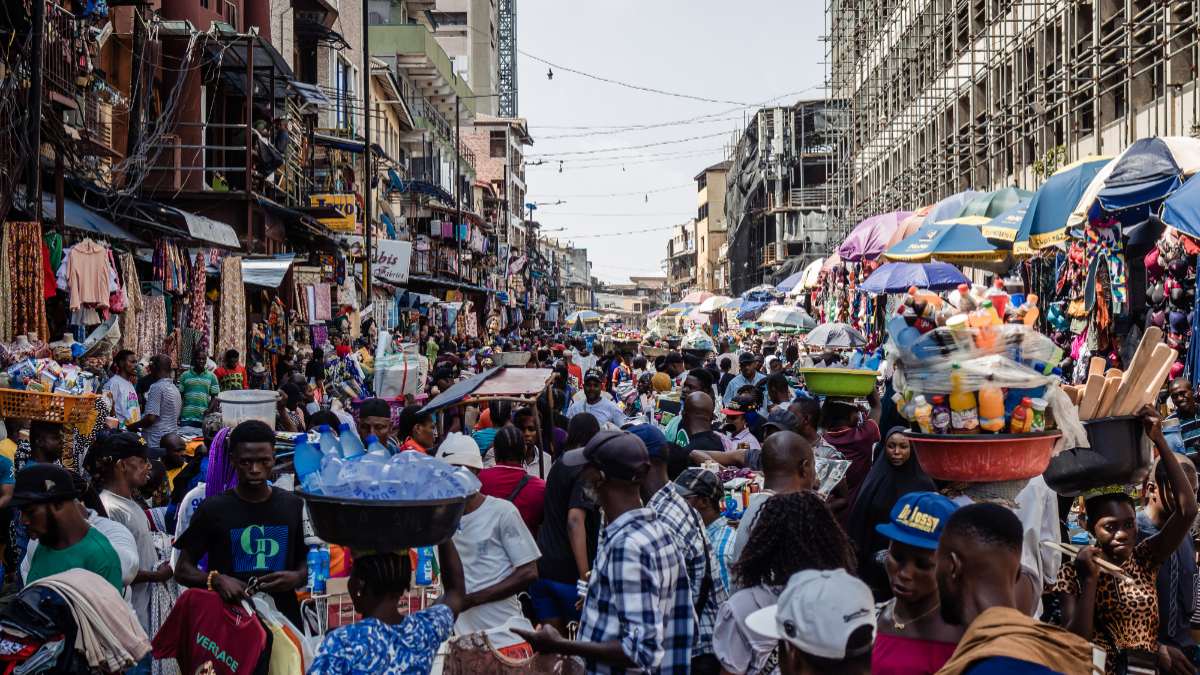

![Shoppers and traders in a congested street market in Lagos, Nigeria, on Monday, July 17, 2023. [Benson Ibeabuchi/Bloomberg via Getty Images]](https://ocdn.eu/pulscms/MDA_/c3d9307e628d563f400ef09eee9e7c79.jpg)
Africa’s expanding domestic capital base, now estimated at more than $4 trillion, is failing to translate into large-scale job creation and industrial growth, according to a new report by the Africa Finance Corporation (AFC).
- Africa’s domestic capital has surpassed $4 trillion, yet job creation and industrial growth remain weak, according to a new AFC report.
- The study highlights poor capital allocation and weak financial intermediation as key constraints.
- Much of the continent’s capital is tied up in low-risk assets rather than in productive sectors such as infrastructure and manufacturing.
- Experts warn that without urgent reforms, Africa risks missing its demographic opportunity for sustained economic transformation.
The report, titled The Africa We Build: From Capital to Systems, argues that while financial resources across the continent have grown significantly, they remain poorly allocated and inadequately channelled into productive sectors. As a result, Africa continues to grapple with high unemployment, weak industrialisation, and persistent infrastructure deficits.
According to the AFC, the issue is no longer a shortage of capital but a systemic failure in its deployment. Domestic financial resources, including bank assets, pension funds, insurance pools, and sovereign capital, now exceed $4 trillion. However, these funds have not translated into the scale of industrial output or employment needed to support Africa’s rapidly growing population.
“Capital is accumulating across Africa, but it is not creating jobs at scale. That is the disconnect we must fix,” said Samaila Zubairu.
The report highlights a structural imbalance in African economies, where countries continue to export raw materials while importing finished goods. This dynamic, it notes, effectively shifts job creation abroad while exposing domestic markets to imported inflation.
“The consequences are structural. Africa continues to export raw materials and import finished goods, exporting jobs embedded in value chains while importing inflation embedded in products,” Zubairu said.
Capital misallocation slows growth
Despite the growth in financial systems, the AFC found that capital is largely concentrated in low-risk, short-term instruments such as government securities. This trend limits the flow of long-term financing into critical sectors like infrastructure, manufacturing, and industrial processing.
“Capital is present, but it is not being deployed in ways that transform economies,” Zubairu added, emphasising that the continent’s “binding constraint has shifted from capital availability to capital allocation and intermediation at scale.”
The report also points to declining and increasingly unreliable external financing. Official development assistance has begun to fall from previous peaks, while access to international bond markets has become more volatile. These shifts, the AFC warns, reinforce the need for Africa to rely more heavily on its domestic capital base.
“External financing into Africa is declining in both scale and reliability,” the report stated, adding that foreign capital will likely play a more limited, complementary role going forward.
Beyond financing, the AFC identifies fragmented infrastructure systems as a key barrier to economic transformation. While many countries have invested in roads, ports, and rail networks, these assets often operate in isolation, reducing their overall efficiency and economic impact.
“Infrastructure must be approached not as a series of discrete projects, but as integrated systems that link energy, transport, and industry to markets,” Zubairu said.
Infrastructure gaps and funding risks
The report further argues that Africa’s vast natural resources remain underutilised due to limited value addition. Instead of processing raw materials domestically, many countries export them in unrefined form, missing out on higher-value manufacturing opportunities.
“Africa is not resource-constrained. It is value-capture constrained,” Zubairu said, calling for a strategic shift towards industrial processing and manufacturing.
Sectors such as steel, fertiliser, refining, and aluminium are identified as potential drivers of industrial growth, provided they are supported by a reliable energy supply, efficient logistics, and stronger market linkages.
The AFC also stresses the urgency of reform, warning that Africa’s demographic growth presents a narrowing window of opportunity. With millions entering the labour market each year, delays in restructuring economic systems could deepen unemployment and inequality.
“Africa stands at a defining moment. What is required now is disciplined execution at scale, with urgency, and with purpose,” Zubairu said.
To address these challenges, the report calls for stronger financial intermediation frameworks, improved project pipelines, and the mobilisation of domestic institutional capital into productive investments. It also highlights the need for innovative financial instruments and risk-sharing mechanisms, such as blended finance, to attract long-term investment.
While acknowledging reform efforts in several countries, the AFC concludes that progress remains uneven and insufficient relative to the scale of available capital. Bridging the gap between financial resources and real economic outcomes, it says, will be critical to unlocking Africa’s potential as a driver of global growth.