Africa's second richest man Johann Rupert secures $950 million Mediclinic deal to gain control of 50 hospitals
South African billionaire Johann Rupert has secured approval for one of the country’s biggest healthcare transactions in recent years, strengthening his control over a network of 50 hospitals and nearly 9,000 beds as debates intensify over the future of private healthcare under the government’s National Health Insurance (NHI) plans.
 Black News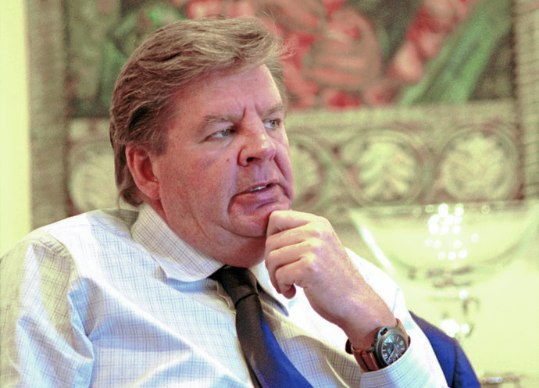
South African billionaire Johann Rupert has secured approval for one of the country’s biggest healthcare transactions in recent years, strengthening his control over a network of 50 hospitals and nearly 9,000 beds as debates intensify over the future of private healthcare under the government’s National Health Insurance (NHI) plans.
- South Africa’s Competition Tribunal has approved Remgro’s $950 million (R16.2 billion) acquisition of Mediclinic Southern Africa.
- The deal gives Johann Rupert’s investment group control of 50 hospitals, Intercare and emergency services provider ER24.
- The transaction comes as South Africa’s private healthcare sector faces growing scrutiny under National Health Insurance reforms.
- It marks one of Remgro’s biggest healthcare bets and deepens Rupert’s exposure to a sector increasingly central to the group’s earnings.
South Africa’s Competition Tribunal has approved Remgro’s acquisition of full ownership of Mediclinic Southern Africa in a transaction valued at $950 million (R16.2 billion), clearing a major domestic regulatory hurdle for a deal that will give Rupert’s investment vehicle outright control of one of the largest private healthcare platforms in southern Africa.
The approval advances a restructuring agreement announced in March between Remgro and Investment Holding Limited (IHL), a subsidiary of Mediterranean Shipping Company (MSC), under which the two partners are unwinding part of their joint ownership of Mediclinic International.
Under the arrangement, IHL will assume full ownership of Switzerland’s Hirslanden private hospital group, while Remgro will take complete ownership of Mediclinic Southern Africa.
The two businesses are valued equally at $950 million (R16.2 billion) each.
The companies will continue to share ownership of healthcare assets in the Middle East through the EHH Group and in the United Kingdom through Spire Healthcare.
Rupert makes a bigger healthcare bet
The transaction represents more than a corporate restructuring.
It signals a deliberate decision by Rupert to increase his exposure to South Africa’s healthcare sector at a time when many investors remain cautious about the long-term impact of regulatory reforms.
Before the deal, Remgro’s healthcare interests were spread across South Africa, Switzerland, the Middle East and the United Kingdom. The latest transaction allows each partner to focus on markets where they possess deeper local expertise and stronger operating relationships.
For Remgro, that means doubling down on South Africa.
The company has argued that full ownership will enable it to deepen relationships with patients, clinicians and regulators while pursuing more targeted growth opportunities in its home market.
The decision also reflects the growing importance of healthcare to Remgro’s earnings profile.
Mediclinic’s contribution to Remgro’s headline earnings increased 57.5% to R2.386 billion in the group’s most recent reporting period, making it one of the investment company’s strongest-performing businesses.
Control of a healthcare giant
Mediclinic Southern Africa is the third-largest private healthcare provider in southern Africa by licensed inpatient beds.
Its network includes 50 hospitals across South Africa, 15 day-case clinics, six sub-acute facilities and six mental health centres.
The group operates 8,991 inpatient beds and employs more than 21,400 people. It also includes three private hospitals in Namibia.
Importantly, the acquisition brings several strategic healthcare assets under Remgro’s direct control.
These include the Intercare group of companies, which operates primary healthcare facilities and day hospitals, and ER24 EMS, one of South Africa’s largest private emergency medical services providers with a nationwide footprint.
The scale of the acquisition means Rupert is not simply acquiring hospitals. He is consolidating ownership of a healthcare ecosystem that spans emergency response, primary care, specialised treatment and hospital services.
A vote of confidence amid policy uncertainty
The acquisition comes at a pivotal moment for South Africa’s healthcare industry.
The country’s proposed National Health Insurance framework continues to generate intense debate among private hospital operators, medical schemes, healthcare professionals and investors.
Questions remain over how private healthcare providers will operate under the new system, how services will be reimbursed and what future profitability could look like for the sector.
Against that backdrop, Rupert’s decision to commit $950 million (R16.2 billion) to private healthcare represents a significant vote of confidence in the industry’s long-term prospects.
The Competition Tribunal approved the transaction subject to employment-related conditions.
According to the Competition Commission, the merger parties agreed not to retrench permanent or fixed-term contract employees as a result of the transaction during the agreed moratorium period.
A strategic split with MSC
DON'T MISS THIS:South African billionaire, Rupert acquires international hospital group in strategic move
The restructuring also highlights diverging priorities between two influential shareholders.
While Remgro is concentrating ownership in South Africa, MSC’s investment arm is taking sole control of Hirslanden, one of Switzerland’s leading private hospital operators.
The move effectively allows both parties to focus on markets where they believe they can create the greatest long-term value while maintaining exposure to selected international healthcare assets through their continuing joint ventures.
For Rupert, who turned 75 earlier this month and remains South Africa’s richest individual with an estimated net worth of about $11.5 billion, the transaction ranks among the most consequential healthcare investments of his career.
More importantly, it shows that one of Africa’s most influential businessmen sees opportunity in private healthcare at a time when the sector faces growing political scrutiny, rising costs and sweeping reform proposals.