Bilateral Ties Strained as Somalia Seeks Urgent Breakthrough to Overcome Reported Diplomatic Standoff with Uganda
Bilateral Ties Strained as Somalia Seeks Urgent Breakthrough to Overcome Reported Diplomatic Standoff with Uganda
Facebook

Twitter (X)

Instagram

Somali Magazine - People's Magazine
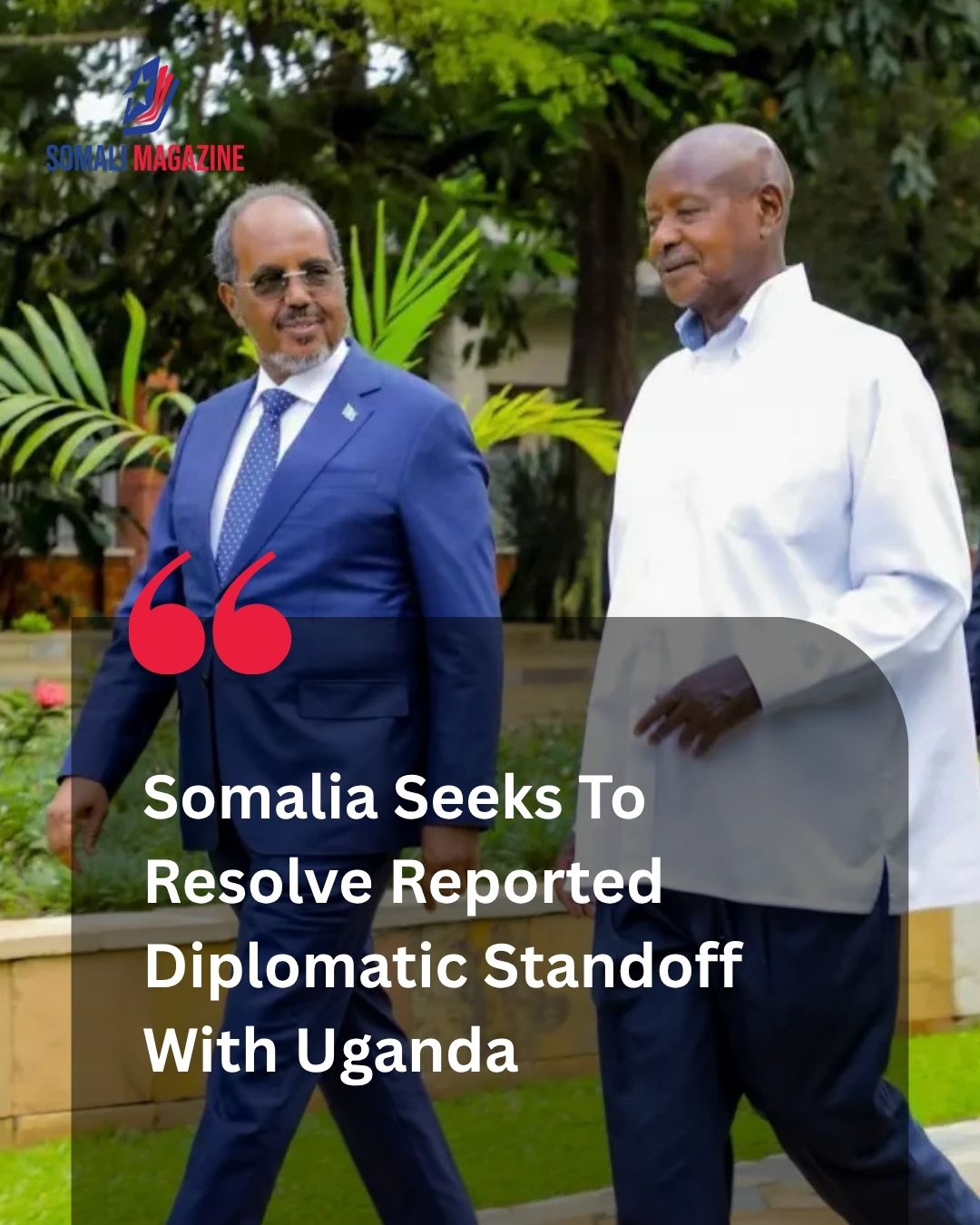
A reported diplomatic standoff between the federal government of Somalia and its long-standing partners in Kampala has prompted urgent behind-the-scenes reconciliation efforts by prominent administrative officials in Mogadishu. According to confidential sources within Villa Somalia, senior diplomatic advisers and a high-ranking federal minister have recently launched […]
The post Bilateral Ties Strained as Somalia Seeks Urgent Breakthrough to Overcome Reported Diplomatic Standoff with Uganda first appeared on Somali Magazine.
A reported diplomatic standoff between the federal government of Somalia and its long-standing partners in Kampala has prompted urgent behind-the-scenes reconciliation efforts by prominent administrative officials in Mogadishu. According to confidential sources within Villa Somalia, senior diplomatic advisers and a high-ranking federal minister have recently launched discrete interventions aimed at repairing fractured ties with Ugandan President Yoweri Museveni. The visible strain in bilateral communication became apparent during a recent multi-nation diplomatic tour, where Somali officials unsuccessfully attempted to secure an official itinerary or a formal meeting for President Hassan Sheikh Mohamud in Uganda. This regional outreach was originally conceptualized to project strong unified support among East African neighbors, particularly as the country navigates the immense logistical and financial implications stemming from the United States’ decision to terminate funding for foreign military forces operating within the territory.
Insider reports suggest that the political friction traces back to a high-level meeting held on May 10, during which President Museveni, accompanied by his son and military chief, explicitly advised his Somali counterpart to establish open channels of communication with key domestic opposition groups. The Ugandan leadership reportedly offered to help facilitate a comprehensive electoral understanding between rival factions to ensure a stable, uncontentious political transition ahead of upcoming national cycles. However, certain influential members of the Somali federal delegation strongly rejected the mediation proposal, a decision that reportedly caused considerable offense to both the Ugandan head of state and his senior defense command. In the weeks following this contentious interaction, the standard diplomatic dialogue between the two nations chilled significantly, raising immediate concerns over the continuity of long-term strategic alliances.
Neither the Somali presidency nor the Ugandan government has issued a public statement validating or denying these reports, leaving independent analysts to closely evaluate the potential impact on regional security cooperation. Uganda remains the largest and longest-serving contributor of military personnel to the continental stabilization missions operating inside Somalia, making any prolonged breakdown in strategic communication highly consequential for the ongoing campaign against resilient al-Shabaab networks. Observers note that maintaining seamless operational coordination between Mogadishu and Kampala is especially vital as local security forces prepare to assume greater autonomous defensive responsibilities amid international troop drawdowns and evolving peacekeeping frameworks. The current diplomatic push by Mogadishu’s emissaries reflects a pragmatic recognition that resolving the underlying institutional grievances is imperative to preserving the integrity of the regional security architecture and ensuring that internal political transitions do not isolate the federal government from its most reliable continental defense partners at a time when the region faces unprecedented geopolitical fragmentation.

 Black News