Black Friday boom puts household budgets under pressure
By Tinswalo Baloyi Johannesburg – South Africa’s festive shopping season presents a major trading opportunity for retailers, but the surge in consumer spending comes as households face mounting financial pressure, a new report has found. The Festive Trading Gap, published by South African retail research studio Brand Journal on 9 November 2026, examines consumer spending, stokvels, household costs and shopping... Read more → The post Black Friday boom puts household budgets under pressure appeared first on African Insider.
 Black News
By Tinswalo Baloyi
Johannesburg – South Africa’s festive shopping season presents a major trading opportunity for retailers, but the surge in consumer spending comes as households face mounting financial pressure, a new report has found.
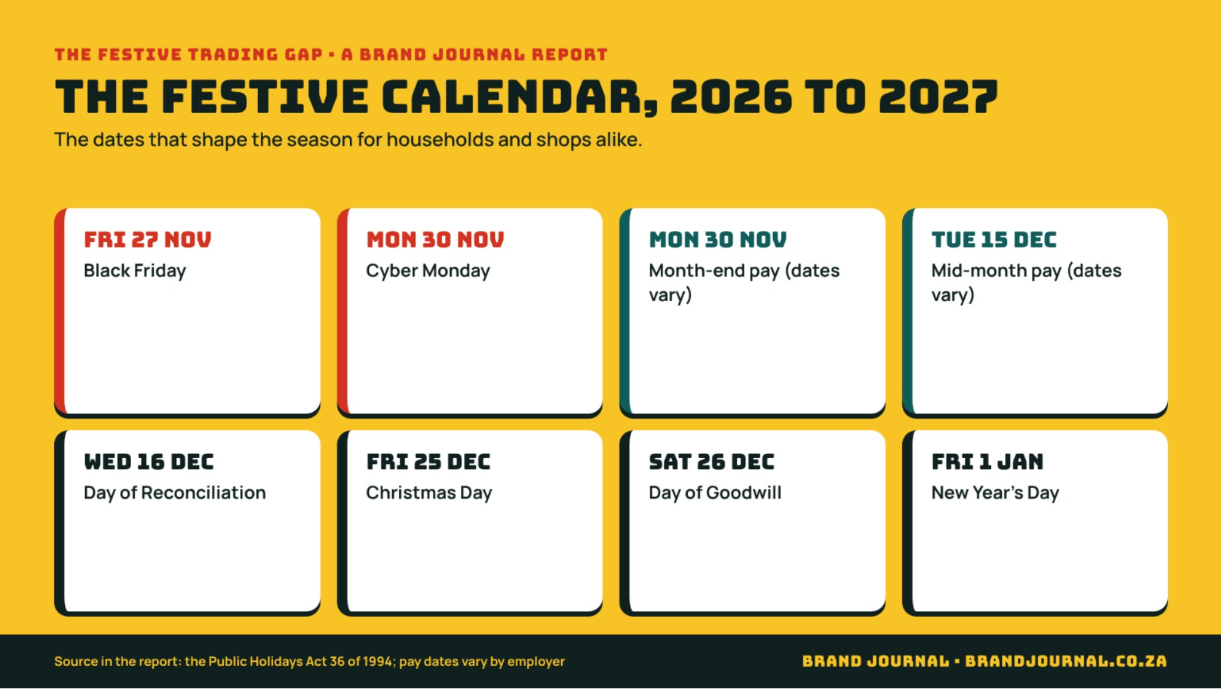
The Festive Trading Gap, published by South African retail research studio Brand Journal on 9 November 2026, examines consumer spending, stokvels, household costs and shopping trends during the eight weeks from Black Friday to the January school reopening.
The report highlights the commercial importance of November and December, which together accounted for 21.1% of South Africa’s annual retail sales in 2025. After adjusting for price changes, November sales were about 23% above the average monthly level recorded between January and October, while December sales were approximately 45% higher, based on Statistics South Africa data.
The seasonal surge is also benefiting township economies. Festive card-machine spending in Soweto rose 35.2%, according to data from a payment company, while a developer of township shopping centres recorded a 42% increase in sales per square metre between November and December 2025.
However, the spending boom masks growing pressure on household finances.
A national survey of more than 5,400 people found that 65% considered every month financially difficult, up from 61% a year earlier, while 43% said they borrowed money before month-end. December and January were identified as the most financially challenging months.
The pressure is reflected in household food costs. A monitored food basket reached R5,512.53 in October 2026, an increase of R24.48 from September.
Consumers are responding by becoming more price-conscious. An online retailer’s survey found that 76% of shoppers compare prices across platforms before buying, while 37% believe most Black Friday discounts are misleading.
The report highlights the implications for retailers, particularly around pricing transparency and consumer protection. Under the Consumer Protection Act, advertised previous prices must reflect prices genuinely charged, while customers whose advertised or prepaid items are unavailable may choose between a substitute and a full refund.
Businesses must also comply with the Protection of Personal Information Act when sending marketing messages, including obtaining the required consent and providing a way for recipients to opt out.
Despite the financial pressures, the report identifies three opportunities for businesses: mobile commerce, stokvels and proximity to customers.
Mobile engagement is already well established in township markets. A 2026 survey found that 66% of township residents were online throughout the day, while 41% had ordered from a local business by phone. Research by a bank found that 74% of the township businesses surveyed used WhatsApp to reach customers.
However, data affordability remains a constraint, with 37% of residents saying data costs limit their time online. This makes accessible, low-data communication and direct messaging important tools for local businesses.
Stokvels also represent a significant source of seasonal demand. The survey found that 34% of township residents belonged to a stokvel, with 61% of members saving towards major annual expenses.
One national wholesaler serves approximately 10,000 stokvel customers in December, roughly three times its usual monthly number. Orders placed in November give retailers greater visibility over demand and allow savings groups to plan collections ahead of the holidays.
Physical retail remains equally important. Online shopping accounts for about 10% of retail turnover, leaving the remaining 90% of purchases taking place in physical stores.
For retailers, the report identifies several priorities ahead of the trading peak, including confirming stock before advertising, maintaining consistent pricing across sales channels, communicating accurate trading hours and securing stokvel orders early.
It also advises businesses to plan for January’s operating costs, including rent, wages and supplier payments, while keeping customer deposits allocated to the orders for which they were paid.
The report examines wider structural challenges facing small retailers, including access to support programmes and competition in the grocery sector.
Of approximately 82,000 shops registered with the Spaza Shop Support Fund, 44,696 had been verified. About 15,000 held permits or licences, while 2,369 had been approved for support worth approximately R179.6 million. The responsible departments have stressed that registration does not amount to licensing.
It also revisits the Competition Commission’s 2019 Grocery Retail Market Inquiry, which found exclusive leases restricting smaller retailers’ access to shopping centres in more than 70% of centres. One major grocery group subsequently agreed to stop enforcing such clauses by December 2026.
The report identifies important gaps in the available data, including how much festive spending represents genuinely new demand, how much profit retailers retain after operating costs and the contribution of cash transactions, which card-payment data does not capture.
It concludes with ten recommendations for retailers, stokvel organisers, wholesalers, payment providers, banks, municipalities, government departments and marketing professionals.
Brand Journal said the report was intended to make evidence on the festive trading period freely accessible to households, businesses and policymakers.
The Festive Trading Gap is available at no cost and may be shared and quoted under a Creative Commons Attribution 4.0 licence.
CAJ News
Picture: Supplied
The post Black Friday boom puts household budgets under pressure appeared first on African Insider.