Black Sash hosts community workshop on social grants
Black Sash visited the ENS Pro Bono Office in Eastridge, Mitchells Plain, on 17 September 2026 to host a community workshop on social grants, Regulation 13 and access to support services. The workshop gave community members practical information about the social assistance system, the grants available to qualifying applicants, common challenges experienced during the application ... Read more The post Black Sash hosts community workshop on social grants appeared first on Black Sash.
 Black News
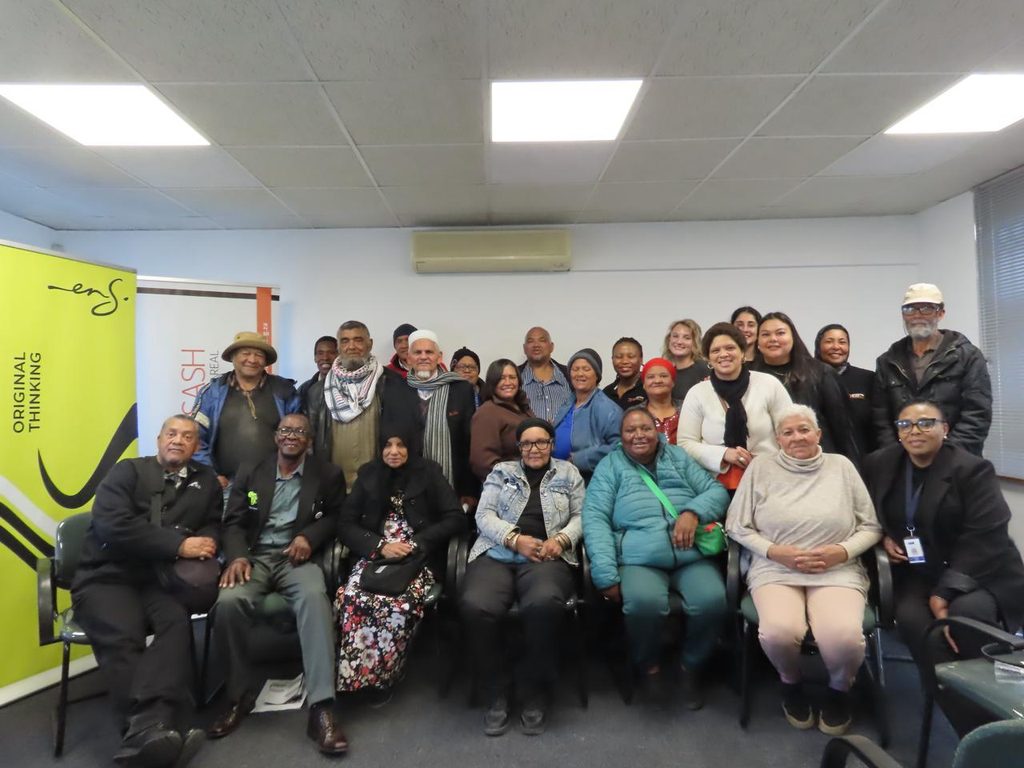
Black Sash visited the ENS Pro Bono Office in Eastridge, Mitchells Plain, on 17 September 2026 to host a community workshop on social grants, Regulation 13 and access to support services.
The workshop gave community members practical information about the social assistance system, the grants available to qualifying applicants, common challenges experienced during the application process, and where to seek help.
ENS is an African law firm with offices across the continent. Its Mitchells Plain office, located in Eastridge, was established in 2005 to serve communities in Mitchells Plain and Khayelitsha. Through its pro bono programme, ENS provides free legal services and legal education to qualifying disadvantaged individuals, offering community members access to legal advice, education and support close to home.
Understanding Regulation 13
Black Sash Paralegal Field Worker Palesa Kapa facilitated a session on Regulation 13 of the regulations to the Social Assistance Act. Regulation 13 provides an alternative route for people to apply for certain social grants when they do not have the identity documents or birth certificates normally required to support an application.
Kapa explained the importance of knowing about this provision.
“Regulation 13 is important because it recognises that people should not automatically be excluded from social assistance simply because they do not have the required documents.”
Regulation 13 may assist people who have never had an identity document or birth certificate, as well as those whose documents have been lost, are unavailable or cannot be obtained. In these circumstances, alternative forms of proof, including a sworn statement or affidavit in the format prescribed by the South African Social Security Agency (SASSA), may be accepted.
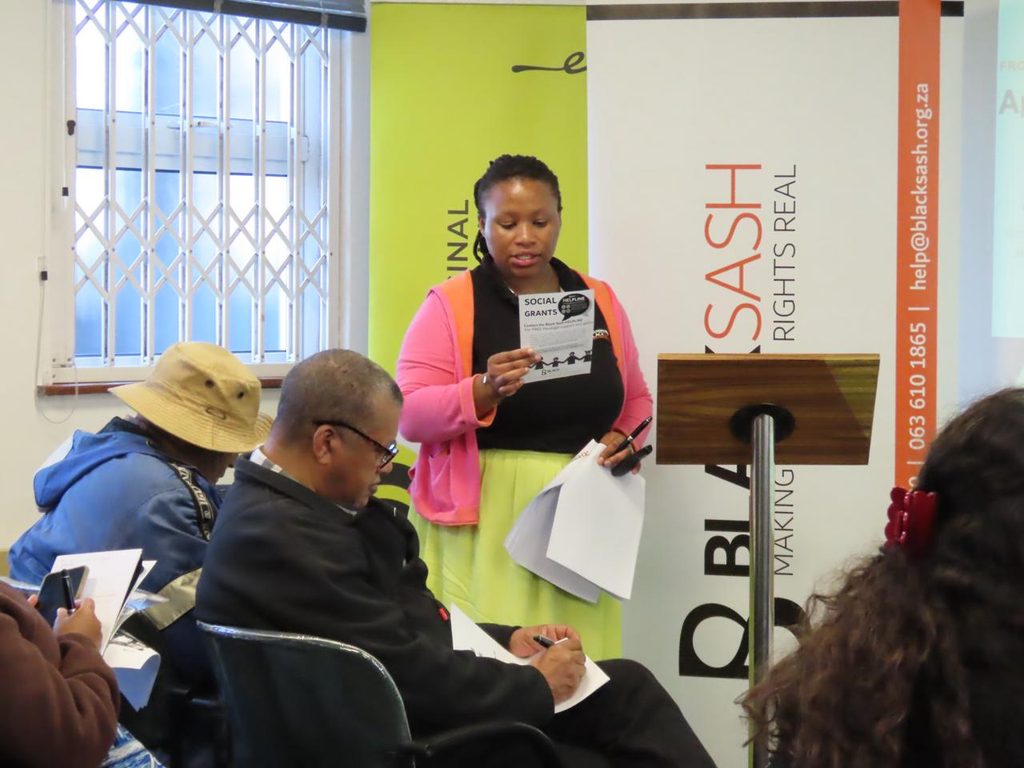
Participants learned that Regulation 13 may be relevant when applying for grants such as the Child Support Grant, Older Persons Grant and Disability Grant, as well as other applicable social grants. It does not apply to the Social Relief of Distress (SRD) grant.
“Many people believe that they cannot apply for a grant if they do not have an ID or birth certificate,” said Kapa. “It is important that applicants know they can ask SASSA about Regulation 13 and seek advice if they are turned away because of documentation challenges.”
Black Sash continues to raise awareness of Regulation 13 because eligible people may remain without social assistance while trying to resolve documentation problems. Awareness of the provision can help caregivers and grant applicants understand their rights and take informed action when they encounter barriers.
Accessing support through Black Sash
The workshop also introduced participants to the Black Sash National Helpline and SashChat.
SashChat is a free, multilingual online assistant that helps members of the public find information, advice and referrals related to their rights and access to services. It is available through WhatsApp, the Black Sash website and Facebook, allowing people to seek information outside the Helpline’s normal operating hours. Users who need additional assistance can request support from a paralegal during working hours or log a query for follow-up.

SashChat is intended to make rights-based information easier to access, but people need an internet connection to use the service. The Black Sash Helpline remains available for people who need direct assistance from a paralegal.
“The purpose of services such as the Helpline and SashChat is to ensure that people are not left to navigate the social assistance system on their own,” said Kapa. “Accurate information can help community members understand the next step and identify where to get further support.”
By sharing practical information about social grants and documentation barriers, the workshop strengthened community members’ ability to understand their rights and seek assistance. It also highlighted the value of partnerships that bring rights-based information and support directly into communities.
For free paralegal advice on Regulation 13 or any social grant issue, contact the Black Sash National Helpline on 072 66 33 73, 072 633 3739 or 063 610 1865, or email helpline@blacksash.org.za.
The post Black Sash hosts community workshop on social grants appeared first on Black Sash.